Commercial Real Estate Devaluation: Macroeconomic Exposure
Advertisements
The ongoing commercial real estate devaluation, impacting a $2.2 trillion sector, is primarily driven by macroeconomic factors such as rising interest rates, inflation, and shifting demand patterns, necessitating strategic risk management.
The landscape of commercial real estate is currently undergoing a significant transformation, with substantial implications for investors, developers, and the broader economy. The phenomenon of commercial real estate devaluation, particularly across the vast $2.2 trillion sector, presents unique challenges and demands a nuanced understanding of its underlying macroeconomic drivers. This article delves into the complexities of this devaluation, exploring how shifts in interest rates, inflation, and evolving market dynamics are reshaping property values and what strategies can be employed to manage this exposure effectively.
Understanding Commercial Real Estate Devaluation
Commercial real estate devaluation refers to the decline in the market value of properties such as office buildings, retail spaces, and industrial facilities. This trend is not merely a localized issue but a systemic challenge influencing a significant portion of the U.S. economy. Various macroeconomic forces are converging to create a perfect storm, leading to substantial adjustments in property valuations across the nation.
The sheer scale of the commercial real estate market, valued at over $2.2 trillion, means that any significant downturn has ripple effects far beyond individual property owners. Financial institutions, pension funds, and countless investors hold substantial stakes in this sector, making its stability a critical component of overall economic health. Understanding the mechanisms behind this devaluation is the first step toward developing resilient strategies.
Key Macroeconomic Drivers
Several macroeconomic factors are at play, each contributing to the current devaluation. These drivers often interact, amplifying their collective impact on property values.
- Rising Interest Rates: The Federal Reserve's aggressive rate hikes to combat inflation have significantly increased borrowing costs, making new commercial real estate investments less attractive and refinancing existing loans more expensive.
- Inflationary Pressures: While some might assume inflation would boost asset values, it also increases operational costs (maintenance, utilities, labor), squeezing net operating income (NOI) for property owners.
- Remote Work Trends: The lasting impact of remote and hybrid work models has dramatically reduced demand for traditional office spaces, leading to higher vacancy rates and downward pressure on rents.
- Supply Chain Disruptions: Global supply chain issues continue to affect construction costs and project timelines, impacting new developments and renovations.
These factors collectively create an environment where the traditional valuation models for commercial properties are being challenged. Investors must recalibrate their expectations and adapt to a new reality where past performance may not be indicative of future returns.
The confluence of these macroeconomic factors is not just theoretical; it is manifesting in real-world scenarios. Property owners are facing difficult decisions regarding refinancing, potential sales, and strategic repositioning of their assets. The market is demanding greater scrutiny and a proactive approach to risk management.
Impact of Interest Rate Hikes on Property Values
The Federal Reserve's decision to aggressively raise interest rates has been a primary catalyst for the current commercial real estate devaluation. Higher interest rates directly impact property values through several channels, fundamentally altering the economics of real estate investment.
Firstly, an increase in interest rates translates to higher borrowing costs for both new acquisitions and existing loans. Developers and investors rely heavily on debt financing, and a rise in the cost of capital makes projects less feasible and reduces the profitability of existing holdings. This directly affects the capitalization rate (cap rate), a key metric used to value commercial properties.
Understanding Capitalization Rates
The capitalization rate is calculated by dividing a property's net operating income (NOI) by its current market value. As interest rates rise, investors typically demand higher cap rates to compensate for the increased cost of capital and perceived risk. A higher cap rate, assuming stable NOI, implies a lower property value. This inverse relationship is fundamental to understanding the current market dynamics.

For example, if a property generates $100,000 in NOI, and investors previously accepted a 5% cap rate, its value would be $2 million. If interest rates push the expected cap rate to 6%, the property's value drops to approximately $1.67 million, even if the NOI remains constant. This demonstrates the direct and significant impact of interest rate movements on valuations.
- Increased Debt Service: Existing property owners with floating-rate debt or maturing fixed-rate loans face significantly higher debt service payments, reducing their cash flow and potentially leading to financial distress.
- Reduced Investor Demand: Higher borrowing costs deter new investors, decreasing overall demand for commercial properties and contributing to a buyer's market.
- Refinancing Challenges: Many commercial mortgages are coming due in the next few years. With higher interest rates, refinancing these loans becomes more challenging and expensive, potentially forcing distressed sales.
The ripple effect of higher interest rates extends beyond direct financing costs. It influences investor sentiment, liquidity in the market, and the overall perception of risk associated with commercial real estate. Properties that were once considered safe havens are now under intense scrutiny, requiring meticulous financial management.
Inflation's Double-Edged Sword for Commercial Real Estate
Inflation, while often associated with rising asset values, presents a complex and often contradictory challenge for commercial real estate devaluation. While property values might appear to keep pace with inflation in the long term, the short-to-medium term effects can be detrimental, particularly when combined with high interest rates.
On one hand, real estate is traditionally seen as a hedge against inflation, as property values and rents tend to increase over time. This holds true in a stable inflationary environment where economic growth supports rising incomes and demand. However, the current inflationary climate is characterized by rapid price increases in key sectors without commensurate economic growth, leading to a different outcome.
Operational Cost Escalation
The most immediate impact of high inflation on commercial real estate is the escalation of operational costs. Property owners face rising expenses for:
- Utilities: Electricity, gas, and water costs increase, directly impacting the bottom line.
- Maintenance and Repairs: The cost of materials and labor for property upkeep rises significantly.
- Insurance Premiums: Inflation often leads to higher replacement costs, pushing up insurance premiums.
- Property Taxes: In many jurisdictions, property taxes are tied to assessed values, which can increase with inflation, adding to the owner's burden.
These increased operational costs directly erode a property's net operating income (NOI). As NOI decreases, and assuming cap rates remain stable or even increase due to higher interest rates, property valuations inevitably decline. This creates a challenging environment where revenues may not keep pace with expenses, leading to reduced profitability and potential devaluation.
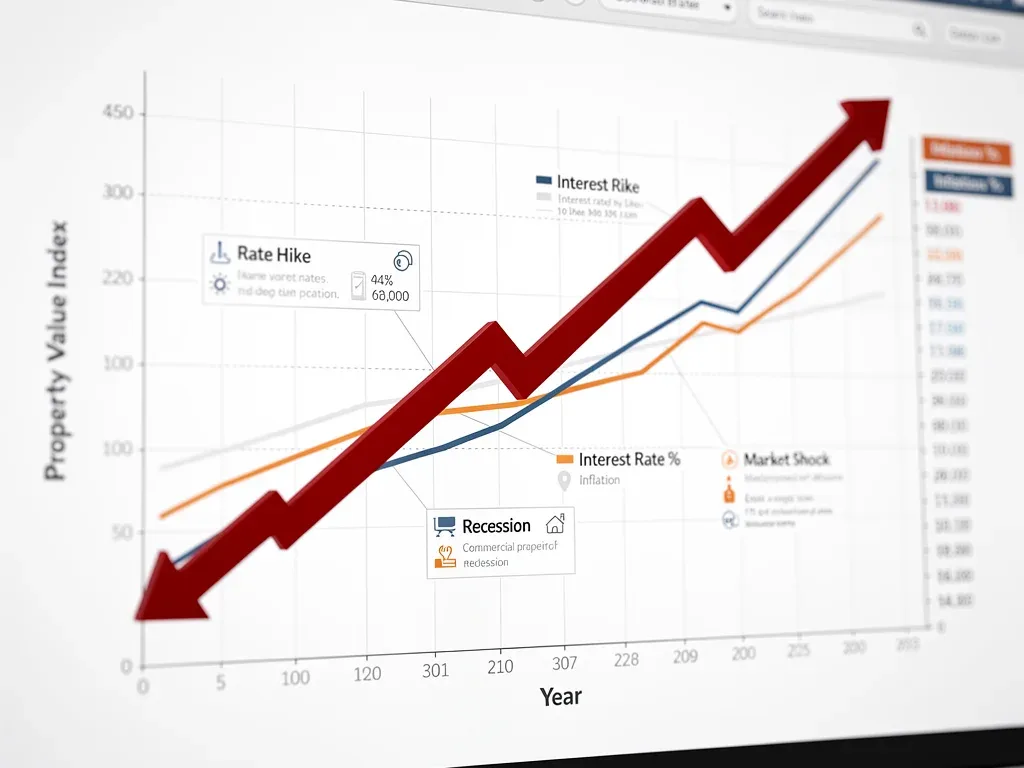

Moreover, high inflation can also suppress consumer spending and business investment, which in turn reduces demand for retail and office spaces. When businesses face higher input costs and consumers have less discretionary income, the ability of tenants to pay higher rents or expand their operations is compromised. This demand-side pressure further exacerbates the devaluation trend, creating a cycle of reduced income and declining asset values.
Shifting Demand and Occupancy Trends
Beyond interest rates and inflation, profound shifts in demand and occupancy trends are significantly contributing to commercial real estate devaluation. The most prominent of these is the lasting impact of remote and hybrid work models, which have fundamentally altered the role and necessity of traditional office spaces.
Before the pandemic, office buildings were central to corporate operations. Today, many companies have adopted flexible work policies, leading to reduced physical footprint requirements. This has resulted in higher vacancy rates in many urban centers and a significant decrease in demand for new office leases. The oversupply of available office space gives tenants greater bargaining power, pushing rents down and further impacting property values.
The Remote Work Revolution
The shift to remote work is not a temporary blip but a structural change. Businesses are reassessing their real estate needs, prioritizing flexibility, collaboration spaces, and amenities over sheer square footage. This has led to a bifurcation in the office market:
- Class A Office Spaces: Premium, amenity-rich buildings in desirable locations are generally performing better, attracting tenants looking for high-quality, collaborative environments.
- Older, Less Amenitized Offices: These properties are struggling the most, facing high vacancy rates and significant pressure to lower rents or undergo costly renovations to remain competitive.
The retail sector is also experiencing significant shifts. E-commerce continues its relentless growth, challenging traditional brick-and-mortar retail. While some retail segments, particularly experiential retail and essential services, remain robust, many shopping malls and traditional retail centers are struggling to attract foot traffic and tenants. This necessitates a reimagining of retail spaces, often involving conversion to mixed-use developments or alternative uses.
Industrial real estate, particularly warehouses and logistics centers, initially benefited from the e-commerce boom. However, even this segment is facing headwinds from rising interest rates and a potential slowdown in consumer spending. The rapid expansion seen in recent years may be moderating, leading to a more balanced, albeit still strong, market.
Strategies for Managing Macroeconomic Exposure
In the face of widespread commercial real estate devaluation, proactive and strategic management of macroeconomic exposure is paramount. Investors and property owners must adopt a multi-faceted approach to mitigate risks and identify opportunities in a challenging market.
One critical strategy is portfolio diversification. Relying too heavily on a single property type or geographic market increases vulnerability to localized downturns and specific macroeconomic shocks. Diversifying across different asset classes (office, retail, industrial, multifamily), and various regions, can help spread risk and provide a buffer against adverse market conditions.
Financial Hedging and Debt Management
Effective debt management is another cornerstone of navigating this environment. With rising interest rates, property owners should:
- Review Debt Structures: Assess current loan terms, particularly those with floating rates or upcoming maturity dates.
- Consider Interest Rate Swaps: Explore hedging strategies like interest rate swaps to fix borrowing costs and protect against further rate increases.
- Proactive Refinancing: Engage with lenders early to explore refinancing options, even if it means accepting higher rates, to avoid last-minute distress.
Beyond financial instruments, operational efficiency and asset repositioning are vital. For office properties, this might involve investing in upgrades to create more attractive, flexible, and amenity-rich spaces that appeal to modern tenants. For retail, it could mean redeveloping properties into mixed-use centers that combine residential, office, and entertainment components.
Understanding local market dynamics and identifying sub-markets that are more resilient or even growing despite broader trends is also crucial. Data analytics and market intelligence play an increasingly important role in making informed decisions about acquisitions, dispositions, and property management.
The Role of Technology and Innovation
Technology and innovation are becoming increasingly critical tools in combating commercial real estate devaluation and managing macroeconomic exposure. The industry, traditionally slower to adopt new technologies, is now embracing digital solutions to enhance efficiency, attract tenants, and optimize asset performance.
PropTech, or property technology, encompasses a wide range of innovations from smart building systems to advanced data analytics platforms. These technologies can provide property owners with granular insights into building performance, tenant behavior, and market trends, enabling more informed decision-making.
Smart Building Technologies
Implementing smart building technologies can lead to significant operational cost savings, a crucial factor in an inflationary environment. These technologies include:
- Energy Management Systems: Optimizing HVAC, lighting, and other energy-consuming systems to reduce utility bills.
- Predictive Maintenance: Using sensors and data to anticipate equipment failures, reducing repair costs and downtime.
- Space Utilization Analytics: Understanding how tenants use space can help landlords optimize layouts and offer more flexible solutions, particularly in office environments.
Beyond operational efficiencies, technology can also enhance the tenant experience, a key differentiator in a competitive market. Mobile apps for building access, amenity booking, and communication can improve tenant satisfaction and retention. Virtual and augmented reality tools are also being used for property tours and marketing, expanding reach and appeal.


Furthermore, advanced data analytics and artificial intelligence (AI) are transforming how real estate professionals assess risk and identify opportunities. AI-powered platforms can analyze vast datasets, including economic indicators, demographic shifts, and property transaction data, to provide more accurate valuations and predict future market movements. This foresight is invaluable for strategic planning and mitigating the impact of macroeconomic shifts.
Future Outlook and Resilience in CRE
The future of commercial real estate devaluation is complex and will depend on the evolution of macroeconomic conditions, but there are clear pathways to building resilience within the $2.2 trillion sector. While challenges persist, particularly in specific sub-markets like traditional office spaces, opportunities for growth and adaptation also emerge.
The market is likely to continue its recalibration, with a greater emphasis on properties that offer flexibility, sustainability, and an enhanced user experience. Properties that can adapt to changing tenant demands, whether through conversion to alternative uses or significant upgrades, will be better positioned for long-term success.
Emerging Opportunities
Despite the broader devaluation trends, certain segments of commercial real estate are showing resilience or even growth:
- Data Centers: Driven by the expanding digital economy and cloud computing, demand for data center space remains robust.
- Life Sciences Properties: The biotechnology and pharmaceutical sectors continue to drive demand for specialized lab and research facilities.
- Affordable Housing: Persistent housing shortages in many urban areas create ongoing demand for well-managed affordable housing projects.
- Specialized Industrial: Niche industrial properties, such as cold storage or advanced manufacturing facilities, are seeing continued investment.
Investors are increasingly focusing on environmental, social, and governance (ESG) factors. Sustainable buildings not only attract environmentally conscious tenants but also often benefit from lower operating costs and higher long-term value. Integrating ESG principles into development and management strategies will be crucial for future resilience.
The ability to access diverse capital sources, including private equity, institutional funds, and alternative financing models, will also be vital. A strong relationship with lenders and a clear understanding of financial markets will enable property owners to navigate periods of tighter credit and higher interest rates. The commercial real estate market is undergoing a significant transformation, but with strategic foresight and adaptability, stakeholders can build resilient portfolios that withstand macroeconomic pressures and thrive in the evolving landscape.
| Key Point | Brief Description |
|---|---|
| Interest Rate Impact | Rising rates increase borrowing costs and cap rates, directly lowering property valuations. |
| Inflationary Pressures | Increases operational costs, eroding Net Operating Income (NOI) and contributing to devaluation. |
| Shifting Demand | Remote work and e-commerce reduce demand for traditional office and retail spaces, increasing vacancies. |
| Risk Management | Diversification, debt hedging, and technology adoption are key to mitigating macroeconomic exposure. |
Frequently Asked Questions About Commercial Real Estate Devaluation
What are the primary causes of commercial real estate devaluation?▼The primary causes include rising interest rates, which increase borrowing costs; high inflation, which escalates operational expenses; and shifting demand patterns, particularly the impact of remote work on office space occupancy.
How do rising interest rates affect commercial property values?▼Rising interest rates increase the cost of debt financing, making new investments less attractive and refinancing more expensive. This leads investors to demand higher capitalization rates, which in turn reduces property valuations.
Is commercial real estate still a good investment during devaluation?▼While challenging, devaluation periods can present opportunities for strategic investors. Focus on diversified portfolios, resilient asset classes like data centers or life sciences properties, and properties with potential for adaptive reuse and strong ESG credentials.
What role does remote work play in office building devaluation?▼Remote and hybrid work models have significantly reduced the demand for traditional office space. This leads to higher vacancy rates, downward pressure on rents, and ultimately, a decrease in the market value of many office buildings, especially older ones.
What strategies can mitigate macroeconomic exposure in commercial real estate?▼Effective strategies include diversifying portfolios across asset types and geographies, proactively managing debt through hedging, enhancing operational efficiency with technology, and repositioning assets to meet evolving tenant demands and market trends.
Conclusion
The current climate of commercial real estate devaluation, impacting a monumental $2.2 trillion sector, underscores the critical need for vigilance and adaptability. Macroeconomic forces such as rising interest rates, persistent inflation, and transformative shifts in demand, particularly from remote work, are reshaping the industry's landscape. Navigating this complex environment requires a deep understanding of these drivers and the implementation of robust risk management strategies. By embracing diversification, strategic debt management, technological innovation, and a forward-looking approach to asset repositioning, stakeholders can not only mitigate the risks associated with devaluation but also uncover new opportunities for resilience and growth in a dynamic market.
