Consumer Spending Rises 1.8%: Real Wage Gains Reshape Economy
Advertisements
Fueled by significant real wage gains, consumer spending has risen by 1.8%, profoundly reshaping the macroeconomic trajectory in the United States and influencing future economic stability and growth prospects.
The latest economic data reveals a compelling narrative: consumer spending rises 1.8%: how real wage gains are reshaping the macroeconomic trajectory. This surge in consumer activity, directly linked to a sustained increase in real wages, signals a significant shift in the economic landscape. Understanding the underlying forces and potential implications of this trend is crucial for businesses, policymakers, and individuals alike.
the engine of growth: understanding the 1.8% surge
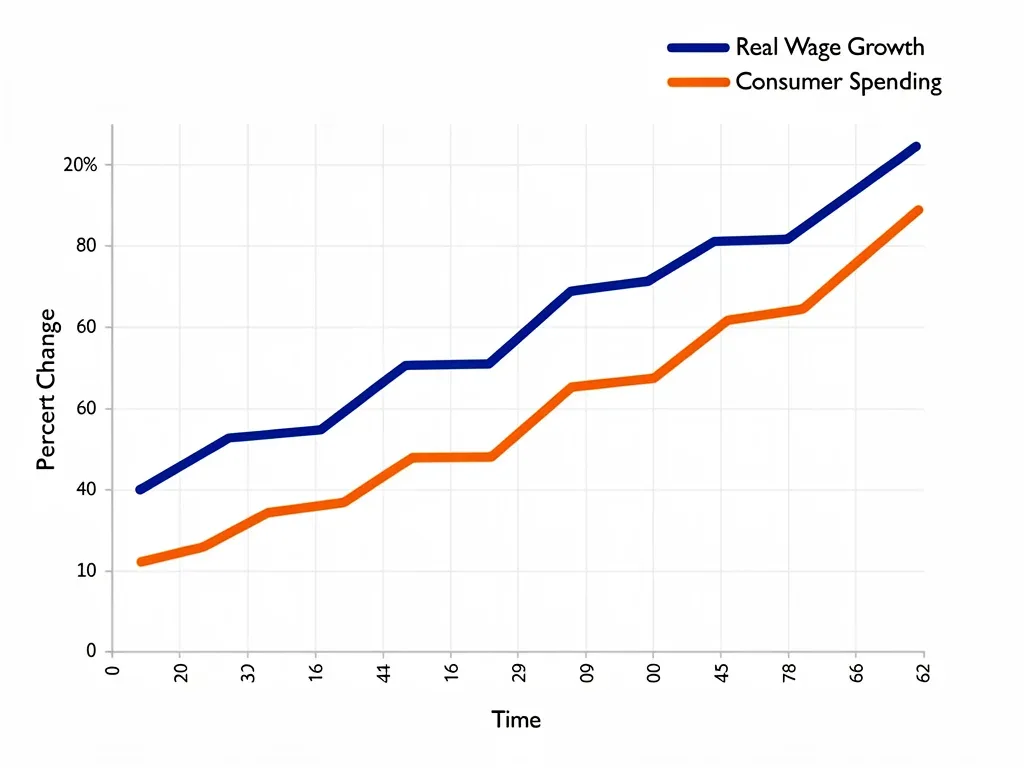
The recent 1.8% increase in consumer spending is far more than just a statistic; it represents a powerful economic signal. This growth is a direct reflection of increased household purchasing power, driven by real wage gains that have outpaced inflation. Consumers, feeling more secure about their financial standing, are now more willing to open their wallets, injecting vitality into various sectors of the economy.
Historically, consumer spending has been a critical determinant of economic health in the United States, often accounting for a substantial portion of the nation's gross domestic product (GDP). When consumers spend more, businesses respond by increasing production, hiring more workers, and investing in expansion. This creates a virtuous cycle, fostering further economic growth and stability. The current surge suggests a robust underlying economic foundation, moving beyond mere recovery and into a phase of genuine expansion.
the role of real wage gains
Real wage gains are pivotal in this scenario. Unlike nominal wage increases, which can be eroded by inflation, real wage gains signify an actual improvement in living standards. This means that after accounting for the rising cost of goods and services, workers have more disposable income. This enhanced purchasing power is the primary catalyst behind the observed increase in consumer spending.
- Increased Disposable Income: Higher real wages directly translate to more money available for discretionary spending and savings.
- Boosted Consumer Confidence: Financial security from rising wages encourages optimism about future economic conditions.
- Stimulated Demand: Greater disposable income fuels demand across various goods and services, from retail to leisure.
The interplay between real wage growth and consumer spending is a classic economic relationship, and its current manifestation is particularly strong. This dynamic highlights the importance of wage growth that keeps pace with, or ideally exceeds, inflation, ensuring that economic prosperity is broadly distributed and sustainable.
In essence, the 1.8% rise in consumer spending, directly attributable to real wage gains, underscores a healthy and potentially transformative period for the U.S. economy. It's a clear indicator that the financial well-being of the average American is improving, leading to widespread economic benefits.
unraveling the macroeconomic trajectory: a new era?
The significant rise in consumer spending, propelled by real wage gains, is not merely a short-term blip; it appears to be reshaping the broader macroeconomic trajectory. This shift suggests a potential departure from previous economic cycles characterized by stagnant wages and cautious consumer behavior. We might be entering an era where sustained wage growth plays a more central role in driving economic expansion.
This reshaping has profound implications for various economic indicators, from inflation and interest rates to investment and employment. A consistently strong consumer base, supported by rising real incomes, provides a stable foundation for businesses to plan and invest, reducing uncertainty and fostering long-term growth. The traditional economic models are being tested and perhaps redefined by these emerging trends.
impact on inflation and monetary policy
The relationship between increased consumer spending and inflation is complex. While higher demand can push prices up, sustained real wage gains can also support increased productivity and supply, which can help to mitigate inflationary pressures. Policymakers at the Federal Reserve are closely monitoring these dynamics to determine the appropriate course for monetary policy.
- Demand-Pull Inflation: Increased spending can lead to higher prices if supply cannot keep up.
- Wage-Price Spiral Concerns: A cycle where rising wages lead to higher prices, which in turn demand higher wages, is a potential risk.
- Productivity Offsets: If real wage gains are tied to increased productivity, the inflationary impact may be tempered.
The challenge for monetary authorities is to manage this growth without overheating the economy. The goal is to sustain a healthy level of demand that supports employment and investment, while keeping inflation within target ranges. The current environment demands a nuanced approach, recognizing the unique drivers of this consumer spending surge.
Ultimately, the macroeconomic trajectory is being influenced by a powerful consumer base with enhanced purchasing power. This calls for a re-evaluation of long-held assumptions and a proactive approach to ensure that the benefits of this economic shift are broadly realized and sustained for the long term.
sector-specific impacts: who benefits most?
The broad increase in consumer spending, driven by real wage gains, is not uniformly distributed across all sectors of the economy. While the overall effect is positive, certain industries are experiencing a more pronounced boost than others. Understanding these sector-specific impacts is crucial for investors, businesses, and policymakers aiming to capitalize on or adapt to the changing economic landscape.
Discretionary spending categories tend to see the most significant uplift when consumers have more disposable income. This includes sectors such as retail, hospitality, entertainment, and travel. However, even essential goods and services can experience increased demand as households upgrade their consumption patterns or invest in higher-quality items.
retail and e-commerce boom
The retail sector, particularly e-commerce, is a primary beneficiary. With more money in their pockets, consumers are more likely to purchase non-essential goods, upgrade existing items, or simply indulge in more frequent shopping. This trend is further amplified by the convenience and accessibility of online shopping platforms.
- Increased Sales Volume: Retailers report higher transaction volumes and average basket sizes.
- Premiumization Trend: Consumers opt for higher-quality or branded products.
- E-commerce Dominance: Online sales continue to capture a larger share of overall retail spending.
The hospitality and leisure industries are also seeing a resurgence. People are more inclined to dine out, travel, and participate in recreational activities when their financial outlook is positive. This creates a ripple effect, supporting jobs and investment in these service-oriented sectors.
However, it's not just discretionary spending. Even sectors like housing and automotive can see indirect benefits as a stronger economy and improved financial health make consumers more confident about making large purchases. The overall sentiment created by real wage gains acts as a powerful stimulant across the economic spectrum, leading to a more dynamic and interconnected market.
challenges and opportunities: navigating the new economic landscape
While the surge in consumer spending driven by real wage gains presents numerous opportunities, it also introduces several challenges that require careful management. The new economic landscape demands adaptability from businesses and strategic foresight from policymakers to ensure sustainable growth and mitigate potential risks.
One of the primary challenges lies in managing inflation. While real wage gains are positive, an uncontrolled increase in demand could lead to inflationary pressures if supply chains cannot keep pace. This delicate balance requires continuous monitoring and responsive economic policies to prevent overheating.
supply chain resilience and investment
The increased demand stemming from higher consumer spending puts pressure on existing supply chains. Businesses must invest in enhancing their resilience and capacity to meet this heightened demand without incurring significant delays or cost increases. This presents both a challenge and an opportunity for innovation and efficiency improvements.
- Capacity Expansion: Companies need to invest in new production facilities and technologies.
- Logistics Optimization: Efficient transportation and distribution networks become even more critical.
- Diversification of Suppliers: Reducing reliance on single sources can enhance resilience.
For businesses, the opportunity lies in adapting to evolving consumer preferences and leveraging the increased purchasing power. This might involve introducing new products, expanding service offerings, or enhancing customer experiences. Those that can nimbly respond to these shifts are likely to thrive in this new environment.
Furthermore, policymakers face the task of ensuring that the benefits of real wage gains are broadly distributed across all segments of the population. Addressing income inequality and providing support for sectors that may not directly benefit from the spending surge will be crucial for fostering inclusive economic growth.
the long-term outlook: sustainable growth or temporary boom?
The central question surrounding the current economic climate is whether the rise in consumer spending, fueled by real wage gains, represents a sustainable path to long-term growth or merely a temporary boom. The answer hinges on several factors, including ongoing productivity improvements, responsible monetary policy, and continued investment in human capital and infrastructure.
For this trend to be sustainable, real wage gains must be supported by genuine increases in productivity. If wages rise without a corresponding increase in output per worker, it could lead to inflationary pressures that erode the purchasing power of those very wage gains. Therefore, investments in technology, education, and skill development are paramount.
productivity and innovation as cornerstones
Innovation and productivity improvements are the bedrock of sustainable real wage growth. When workers become more efficient or produce higher-value goods and services, their labor commands a higher price without necessarily increasing the cost of production proportionally. This allows for both higher wages and stable prices.
- Technological Adoption: Implementing advanced technologies to streamline processes.
- Workforce Training: Investing in education and upskilling programs for employees.
- Research and Development: Fostering innovation to create new products and markets.

Government policies also play a crucial role. Fiscal policies that support infrastructure development, scientific research, and accessible education can create an environment conducive to long-term productivity growth. Similarly, monetary policy must remain agile, balancing the need to support growth with the imperative of maintaining price stability.
Ultimately, the long-term outlook for this new macroeconomic trajectory depends on a concerted effort from all stakeholders. Businesses must continue to innovate, workers must adapt and acquire new skills, and governments must provide a stable and supportive framework for growth. If these elements align, the current surge in consumer spending could indeed mark the beginning of a sustained period of prosperity.
policy implications and future economic strategies
The profound impact of rising consumer spending and real wage gains necessitates a re-evaluation of existing economic policies and the development of new strategies to harness these trends effectively. Policymakers face the dual challenge of sustaining growth while also addressing potential risks and ensuring equitable distribution of prosperity.
One critical area for policy focus is maintaining wage growth that continues to outpace inflation. This involves not only supporting minimum wage adjustments but also encouraging policies that foster collective bargaining and ensure fair labor practices. The goal is to empower workers to share in the economic gains they help create.
investing in human capital and infrastructure
To ensure the sustainability of real wage gains and productivity, significant investment in human capital and infrastructure is essential. This includes enhancing educational opportunities, from early childhood to vocational training and higher education, to equip the workforce with the skills needed for future industries.
- Education Reform: Modernizing curricula to meet the demands of a changing economy.
- Infrastructure Upgrades: Investing in transportation, energy, and digital networks to improve efficiency.
- Research Funding: Allocating resources to scientific and technological advancements.
Furthermore, policies aimed at fostering competitive markets and preventing monopolistic practices can help ensure that the benefits of increased consumer spending are passed on to a broader segment of the population. Regulations that promote fair competition can lead to lower prices and higher quality goods and services, further enhancing consumer welfare.
The future economic strategies must also consider the global context. While the U.S. economy is showing strength, global economic conditions, trade policies, and geopolitical events can all influence domestic trends. A balanced approach that combines domestic strength with strategic international engagement will be crucial for navigating the complexities of the modern economy.
| Key Economic Impact | Brief Description |
|---|---|
| Consumer Spending Surge | A 1.8% increase driven by enhanced purchasing power from real wage gains. |
| Real Wage Gains | Wages increasing faster than inflation, boosting disposable income for households. |
| Macroeconomic Shift | Redefining economic models with sustained consumer demand and potential for long-term growth. |
| Policy Implications | Need for adaptive monetary and fiscal policies to manage inflation and foster equitable growth. |
frequently asked questions about consumer spending and real wages
What does a 1.8% rise in consumer spending signify?▼A 1.8% rise in consumer spending indicates robust economic activity and increased confidence among households. It suggests that consumers have more disposable income and are willing to spend, which typically fuels business growth, job creation, and overall economic expansion.
How do real wage gains contribute to increased consumer spending?▼Real wage gains mean that workers' incomes are growing faster than the rate of inflation. This effectively increases their purchasing power and disposable income. With more money available after covering essential costs, consumers are more likely to spend on goods and services, driving up overall consumption.
What are the macroeconomic implications of this trend?▼The macroeconomic implications include a potential reshaping of economic trajectory, with sustained consumer demand forming a stronger growth foundation. It can influence inflation rates, interest rate decisions by central banks, and business investment strategies, potentially leading to a more stable and prosperous economy.
Which sectors benefit most from increased consumer spending?▼Sectors that typically benefit most from increased consumer spending are those related to discretionary purchases, such as retail (especially e-commerce), hospitality, entertainment, and travel. However, a general uplift in economic sentiment can also indirectly boost demand in other sectors like housing and automotive.
Is this consumer spending surge sustainable in the long term?▼The long-term sustainability of this surge depends on continued productivity growth, responsible monetary policy, and investments in human capital and infrastructure. If real wage gains are supported by genuine increases in efficiency and innovation, the current trend could lead to a prolonged period of economic prosperity.
conclusion
The recent 1.8% surge in consumer spending, directly attributable to robust real wage gains, marks a pivotal moment in the United States' macroeconomic landscape. This trend signifies more than just a temporary uptick; it suggests a fundamental reshaping of economic dynamics, where enhanced household purchasing power acts as a powerful engine for growth. While opportunities abound in various sectors, careful management of inflation, strategic investments in productivity, and adaptive policy-making will be crucial to ensure this trajectory leads to sustainable and inclusive prosperity for all Americans. The current economic narrative underscores the vital connection between worker well-being and national economic strength, paving the way for a potentially brighter and more stable future.
