DDR5 vs. LPDDR6 Memory: Benchmarks for High-Performance Workstations
Advertisements
The choice between DDR5 and LPDDR6 memory for high-performance workstations hinges on understanding their distinct latency and throughput characteristics, which directly impact overall system responsiveness and data processing capabilities.
Choosing the right memory for a high-performance workstation is more critical than ever, especially with the emergence of new standards. This article dives deep into DDR5 vs. LPDDR6 Memory: Latency and Throughput Benchmarks for High-Performance Workstations, providing a comprehensive analysis to help you make informed decisions. Understanding these differences is crucial for optimizing your system's performance for demanding tasks.
Understanding DDR5 Memory Architecture
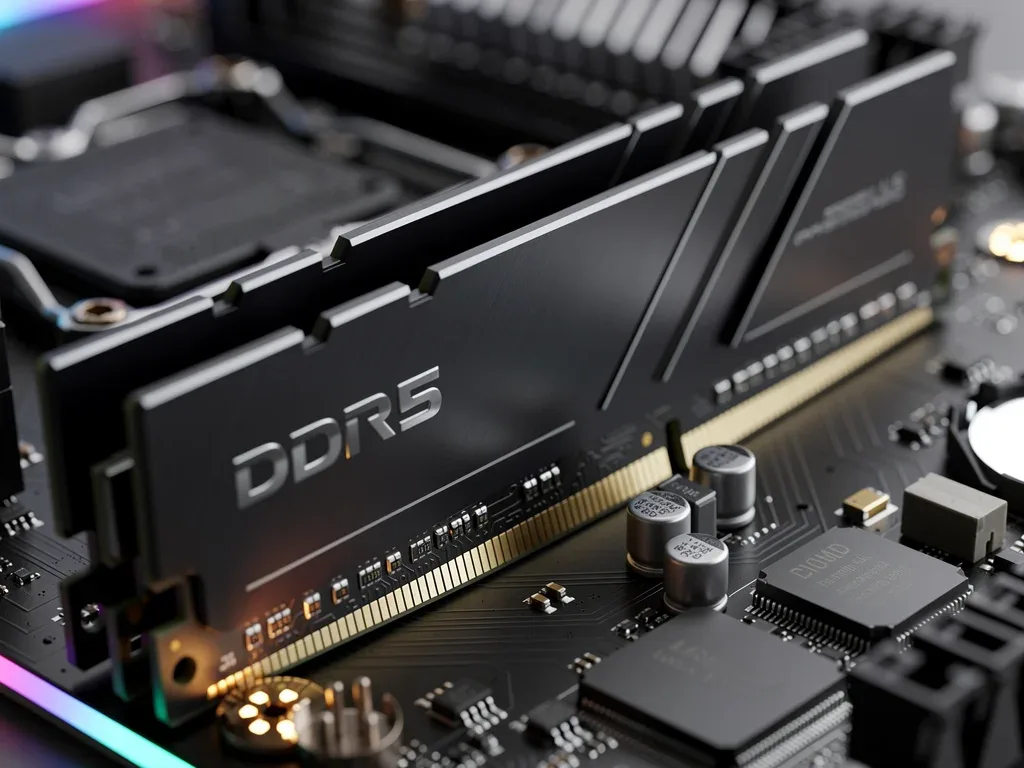
DDR5, or Double Data Rate 5, represents a significant leap forward from its predecessor, DDR4. Introduced to the market with promises of higher bandwidth and improved power efficiency, DDR5 has become the standard for many modern desktop and server platforms. Its architecture is designed to handle the increasing demands of multi-core processors and data-intensive applications, making it a cornerstone for high-performance computing. The core improvements in DDR5 revolve around its increased burst length, dual 32-bit channels per DIMM, and integrated power management IC (PMIC).
These architectural enhancements contribute directly to its superior performance characteristics. The dual-channel design within each DIMM allows for more efficient data access, effectively doubling the internal bus width compared to DDR4. Furthermore, the on-die error correction code (ECC) in DDR5 modules enhances data integrity, which is particularly vital for professional workstations where data accuracy is paramount. This internal ECC helps detect and correct single-bit errors before they can cause system instability or data corruption, ensuring greater reliability in critical operations.
Key Architectural Innovations
The innovations within DDR5 are not merely incremental; they represent a fundamental shift in memory design aimed at maximizing efficiency and speed. The shift from a single 64-bit channel to two independent 32-bit channels per DIMM allows for more parallel data processing, which is crucial for modern CPUs that juggle numerous tasks simultaneously. This parallel processing capability is a key factor in DDR5's ability to deliver higher theoretical bandwidths, directly translating to faster data transfer rates for applications that are memory-bound.
- Dual 32-bit Channels: Each DDR5 DIMM operates as two independent 32-bit channels, enhancing concurrency.
- Increased Burst Length: DDR5 supports a burst length of 16 (BL16), allowing more data to be fetched per cycle.
- On-Die ECC: Integrated error correction improves data reliability without external ECC modules.
- Integrated PMIC: Power management moved from the motherboard to the DIMM, improving power efficiency.
These features collectively enable DDR5 to offer substantial performance gains over previous generations. The integrated PMIC, for instance, allows for more granular power control, reducing power consumption and heat generation, which can be a significant advantage in densely packed workstation environments. The ability to manage power at the module level contributes to overall system stability and can extend the lifespan of components by operating at cooler temperatures. These design choices underscore DDR5's suitability for demanding applications.
In essence, DDR5 memory is engineered to provide a robust and high-speed foundation for contemporary computing platforms. Its architectural advancements address the bottlenecks inherent in older memory technologies, ensuring that high-performance workstations can process vast amounts of data with greater speed and reliability. Understanding these foundational aspects is crucial for appreciating its role in modern systems and for comparing it effectively with other memory types like LPDDR6.
Exploring LPDDR6 Memory Characteristics
LPDDR6, or Low Power Double Data Rate 6, is the latest iteration in a line of memory technologies primarily designed for mobile and embedded devices, where power efficiency is paramount. While traditionally associated with smartphones and ultrabooks, LPDDR6's advancements in speed and efficiency are making it an increasingly attractive option for certain high-performance workstation applications, particularly those prioritizing power consumption and compact form factors. Unlike standard DDR memory, LPDDR is optimized for minimal power draw, which is achieved through various design choices.
LPDDR6 builds upon its predecessors by further reducing voltage requirements and introducing more sophisticated power-saving states. These features allow devices to operate longer on battery power or reduce overall thermal output in systems with limited cooling capabilities. Despite its low-power focus, LPDDR6 also boasts impressive data transfer rates, often rivaling or even exceeding standard DDR memory in terms of raw bandwidth. This dual focus on power efficiency and performance makes it a compelling choice for a new generation of compact, yet powerful, computing devices.
Innovations for Power Efficiency and Performance
The design philosophy behind LPDDR6 prioritizes efficiency without sacrificing performance. This is achieved through several key innovations that differentiate it from traditional DDR memory. One of the most significant aspects is its integrated design, often soldered directly onto the motherboard, which reduces signal integrity issues and allows for shorter trace lengths. This direct integration minimizes electrical interference and enables higher clock speeds, contributing to faster data access and lower latency in certain scenarios.
- Lower Operating Voltages: Significantly reduced voltage requirements lead to substantial power savings.
- Enhanced Power-Saving States: More aggressive idle and sleep modes extend battery life and reduce energy consumption.
- Integrated Packaging: Often soldered directly, leading to a smaller footprint and improved signal integrity.
- Higher Frequency Capabilities: Despite low power, LPDDR6 can achieve very high clock speeds, boosting bandwidth.
These combined characteristics enable LPDDR6 to deliver a compelling balance of performance and power efficiency. The direct integration also allows for a more compact system design, which is beneficial for workstations that prioritize a smaller physical footprint or require specialized cooling solutions. While its primary application remains in mobile and embedded systems, the evolving capabilities of LPDDR6 are beginning to challenge the traditional dominance of DDR memory in certain high-performance computing niches, especially where space and power are at a premium. The seamless integration and inherent power advantages make LPDDR6 a strong contender for specific workstation designs.
In summary, LPDDR6 is a testament to how memory technology can evolve to meet the diverse needs of modern computing. Its focus on power efficiency, coupled with advancements in speed and integration, makes it a powerful option for workstations that demand a balance of high performance and low energy consumption. Understanding these unique characteristics is vital for a thorough comparison against DDR5 and for determining the best fit for specific high-performance workstation requirements.
Latency Benchmarks: DDR5 vs. LPDDR6
Latency, often measured in nanoseconds (ns) and clock cycles (CL), is a critical performance metric for memory, particularly in high-performance workstations where rapid data access is paramount. It refers to the delay between when a memory controller requests data and when that data is actually available. While both DDR5 and LPDDR6 aim for high performance, their architectural differences lead to varying latency profiles. DDR5, with its higher clock speeds and dual-channel architecture per DIMM, often boasts lower absolute latency figures in many synthetic and real-world benchmarks, especially in scenarios involving large, contiguous data blocks.
LPDDR6, on the other hand, while designed for power efficiency, has made significant strides in reducing its inherent latency. Its direct-on-board integration and optimized signal pathways can sometimes lead to surprisingly competitive latency figures, particularly for smaller data access patterns. However, the overhead associated with its power-saving states can occasionally introduce slight delays compared to DDR5, which is typically always in a high-power, ready state for maximum responsiveness. The trade-off between power and latency is a constant balancing act in memory design.
Comparative Latency Analysis
When conducting direct comparisons, it's essential to consider the specific workloads. For tasks that involve frequent, small data requests, such as database lookups or certain types of AI inference, LPDDR6's optimized pathways can sometimes offer competitive or even superior latency. This is because the data doesn't have to travel as far, and the integrated design reduces potential signal degradation. However, for large-scale scientific simulations, video editing, or complex CAD applications, DDR5's raw speed and burst capabilities generally provide a more consistent low-latency experience across a broader range of operations.
- DDR5 Strengths: Consistently lower latency for large data sets and sequential access.
- LPDDR6 Strengths: Competitive latency for small, random access patterns due to integrated design.
- Workload Impact: Latency performance is highly dependent on the application's memory access patterns.
- Power State Influence: LPDDR6's power-saving states can introduce variable latency, whereas DDR5 maintains more consistent low latency.
Real-world benchmarks often reveal that while DDR5 might have higher CAS Latency (CL) numbers in terms of clock cycles, its significantly higher clock frequencies often translate to lower absolute latency in nanoseconds. For example, a DDR5-6400 CL32 module might have an actual latency of around 10 nanoseconds, whereas an LPDDR6 equivalent, even with a seemingly lower CL, might end up with similar or slightly higher absolute latency due to lower maximum clock speeds. This nuance is critical for understanding actual performance.
Ultimately, the choice between DDR5 and LPDDR6 based on latency depends on the specific demands of the workstation. For applications that are extremely sensitive to every nanosecond of delay, DDR5 often holds an edge due to its design for maximum performance. However, for systems where power consumption and compact design are equally important, LPDDR6 offers a compelling alternative with increasingly optimized latency characteristics. Benchmarking with specific applications is always recommended to determine the best fit for your unique needs.
Throughput Benchmarks: Maximizing Data Flow
Throughput, often referred to as bandwidth, measures the amount of data that can be transferred to and from memory per unit of time, typically expressed in gigabytes per second (GB/s). For high-performance workstations, especially those involved in tasks like large file transfers, complex scientific computing, or high-resolution video processing, maximizing memory throughput is crucial. Both DDR5 and LPDDR6 have made significant advancements in this area, pushing the boundaries of data transfer capabilities. DDR5, by design, focuses on raw bandwidth, leveraging higher clock speeds and its dual 32-bit channels per DIMM to achieve impressive data rates.
LPDDR6, despite its low-power origins, has also evolved to deliver substantial throughput. Its integrated packaging and optimized signal pathways allow for very high frequencies, contributing to its competitive bandwidth figures. While DDR5 often achieves higher peak theoretical throughput, LPDDR6's efficiency in handling data bursts and its ability to maintain high speeds in a compact, power-constrained environment make it a strong contender for specific use cases. The difference in how they achieve and sustain these rates is key to understanding their practical implications.
Comparative Throughput Analysis
When evaluating throughput, it is important to look beyond theoretical maximums and consider sustained performance under various loads. DDR5 typically excels in scenarios requiring sustained, high-volume data transfers. Its architecture is better suited for continuous, heavy memory access, making it ideal for applications that frequently load large datasets into memory or perform intensive computations that require constant data shuffling. This is particularly evident in benchmarks involving memory-intensive tasks like rendering, simulation, and large-scale data analytics.
- DDR5 Bandwidth: Designed for maximum raw bandwidth, ideal for continuous heavy loads.
- LPDDR6 Bandwidth: High frequencies and integrated design provide competitive throughput for specific workloads.
- Real-World Usage: DDR5 often shows better sustained throughput in workstation-level tasks.
- Power vs. Performance: LPDDR6 balances high throughput with significantly lower power consumption.
LPDDR6's throughput, while robust, is often optimized for bursty workloads typical of mobile devices, where data is accessed in short, intense bursts rather than continuous streams. However, its latest iterations have significantly improved its ability to handle more sustained loads, blurring the lines between traditional desktop and mobile memory performance. For workstations requiring a balance of high throughput and energy efficiency, LPDDR6 presents a compelling option, especially in designs where thermal management and power draw are critical considerations.

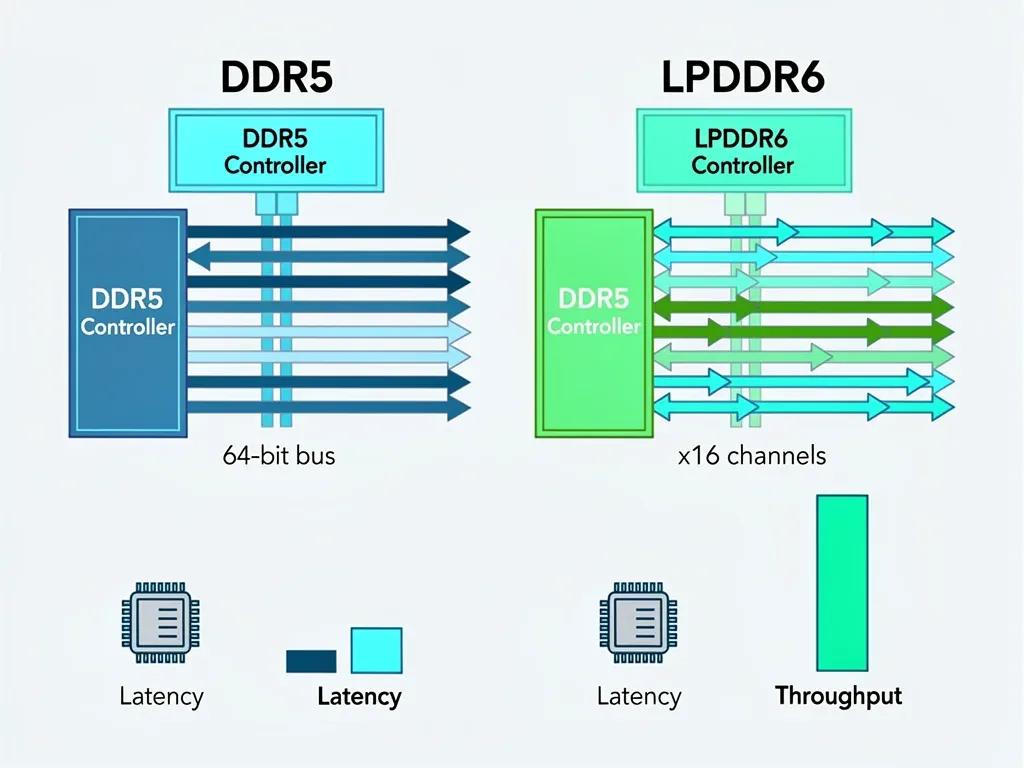
In practical terms, a workstation used for professional video editing, where large video files are constantly being streamed and processed, would likely see greater benefit from DDR5's higher sustained throughput. Conversely, a compact workstation designed for on-location data analysis, where power efficiency is crucial but burst data processing is common, might find LPDDR6 to be a more suitable and efficient choice. The ultimate decision should be guided by the specific demands of the applications and the overall system design philosophy.
Power Efficiency and Thermal Management
Beyond raw speed and data transfer rates, power efficiency and thermal management are increasingly important factors in high-performance workstation design. As components become more powerful, they also tend to consume more energy and generate more heat. This is where the fundamental design philosophies of DDR5 and LPDDR6 diverge significantly, offering distinct advantages depending on the workstation's intended use and form factor. DDR5 has made strides in power efficiency compared to DDR4, primarily through its integrated PMIC and lower operating voltages (1.1V compared to DDR4's 1.2V).
However, LPDDR6 is engineered from the ground up with power efficiency as its primary goal. Operating at even lower voltages and incorporating advanced power-saving states, LPDDR6 significantly reduces energy consumption, which directly translates to less heat generation. This characteristic makes LPDDR6 particularly appealing for compact workstations, fanless designs, or systems where acoustic noise and energy costs are major concerns. The ability to achieve high performance with minimal power draw is a key differentiator.
Impact on Workstation Design
The choice between DDR5 and LPDDR6 has profound implications for workstation design. Systems utilizing DDR5, while offering top-tier performance, typically require more robust cooling solutions due to higher power consumption and heat output. This often means larger heatsinks, more powerful fans, or even liquid cooling systems, which can increase the overall size, weight, and cost of the workstation. For traditional tower workstations or those where space is not a limitation, this is often a manageable trade-off for maximum performance.
- DDR5 Power: Lower voltage than DDR4, but still higher than LPDDR6, requiring more cooling.
- LPDDR6 Power: Ultra-low voltage operation, ideal for passive cooling and compact designs.
- Thermal Considerations: DDR5 systems demand more aggressive thermal solutions.
- Form Factor: LPDDR6 enables significantly smaller and lighter workstation designs.
LPDDR6, conversely, allows for much more compact and energy-efficient workstation designs. Its lower thermal footprint means that less aggressive cooling is needed, potentially enabling fanless operation or smaller, quieter cooling systems. This is ideal for mobile workstations, mini-PCs, or embedded systems that require substantial processing power but must adhere to strict size and power budgets. The integrated nature of LPDDR6 also contributes to a smaller physical footprint on the motherboard, freeing up space for other components or allowing for more compact overall system dimensions.
For instance, a workstation designed for field research or on-site data acquisition might benefit immensely from LPDDR6 due to its lower power draw and reduced heat, allowing for longer battery life and reliable operation in varied environments. In contrast, a high-end gaming or rendering workstation that runs continuously under heavy load would likely favor DDR5 for its raw, sustained performance, accepting the trade-off of higher power consumption and more elaborate cooling. Understanding these power and thermal implications is essential for making an informed decision that aligns with the workstation's operational context.
Application-Specific Performance Considerations
The optimal memory choice between DDR5 and LPDDR6 is rarely a one-size-fits-all decision; it heavily depends on the specific applications and workloads a high-performance workstation is expected to handle. Different types of software and computational tasks interact with memory in distinct ways, emphasizing either latency, throughput, or a balance of both. Understanding these application-specific demands is crucial for tailoring your memory configuration to achieve the best possible performance and efficiency. For example, tasks like CAD design, 3D rendering, and scientific simulations often benefit significantly from high memory bandwidth.
These applications typically involve processing vast datasets and require constant, high-speed data transfers between the CPU and memory. In such scenarios, the raw throughput capabilities of DDR5 often provide a noticeable advantage, reducing bottlenecks and accelerating computation times. Conversely, applications that involve frequent, small data lookups or real-time responsiveness, such as certain database operations, trading algorithms, or specific AI inference models, might be more sensitive to memory latency. Here, the lower absolute latency of a well-optimized DDR5 system, or even the optimized access patterns of LPDDR6, could prove beneficial.
Optimizing for Diverse Workloads
Consider a professional video editor working with uncompressed 8K footage. This workload demands immense memory bandwidth to handle the continuous stream of high-resolution data. DDR5, with its higher theoretical and sustained throughput, would likely be the superior choice, allowing for smoother playback, faster rendering, and more efficient processing of large media files. The ability to move gigabytes of data per second without significant delays directly impacts productivity in such a demanding field. The scale of data involved makes bandwidth a primary concern.
- 3D Rendering/CAD: High bandwidth (DDR5) is crucial for complex model loading and scene rendering.
- Scientific Simulations: Benefits from high throughput (DDR5) for large dataset processing.
- Database Management: Latency-sensitive; DDR5's consistent low latency or LPDDR6's optimized access can be key.
- AI Inference/Edge Computing: LPDDR6's power efficiency and compact design are highly advantageous.
- Video Editing (High-Res): Demands high sustained throughput (DDR5) for smooth workflow.
On the other hand, for a mobile workstation used by a data scientist for on-site machine learning inference on smaller datasets, LPDDR6 might be the more practical choice. Its excellent power efficiency extends battery life, and its increasingly competitive latency and throughput can adequately handle many inference tasks without the need for the absolute highest bandwidth. The compact form factor and reduced thermal output also contribute to a more portable and versatile solution. This flexibility in application makes LPDDR6 a strong contender in specific niches.
Ultimately, the decision should be driven by a thorough analysis of the primary applications and the overall operational environment. Benchmarking your specific software on both memory types, if possible, will provide the most accurate insight into which technology offers the greatest advantage for your high-performance workstation. It's a balance between raw performance, power consumption, thermal considerations, and the specific demands of your daily tasks.
Future Outlook and Emerging Trends
The landscape of memory technology is continuously evolving, with both DDR5 and LPDDR6 representing significant milestones. However, the future holds even more advancements, and understanding these emerging trends is crucial for making forward-looking decisions about high-performance workstations. The trajectory for both memory types points towards continued increases in speed, reductions in power consumption, and further integration of intelligent features. We can expect even higher clock frequencies and improved latency figures in future iterations of DDR, pushing the boundaries of what's possible for desktop and server performance.
For LPDDR, the focus will likely remain on enhancing efficiency while simultaneously boosting performance to rival or even surpass traditional DDR in more applications. As computing paradigms shift towards edge computing, AI acceleration, and highly integrated systems, the demand for memory that offers a compelling balance of power, performance, and compactness will only grow. This ongoing innovation ensures that workstation users will have even more sophisticated options to choose from in the years to come, tailored to increasingly specialized needs.
Impact on High-Performance Workstations
The continuous evolution of DDR and LPDDR technologies will directly influence the design and capabilities of future high-performance workstations. As DDR memory continues to scale in bandwidth and capacity, it will unlock new possibilities for data-intensive tasks, enabling more complex simulations, faster data analytics, and richer multimedia content creation. Workstations will be able to handle larger datasets in memory, reducing reliance on slower storage and significantly accelerating workflows. This will be particularly beneficial for industries like scientific research, animation, and engineering, where computational demands are constantly increasing.
- DDR Evolution: Expect higher speeds, larger capacities, and potentially more refined ECC implementations.
- LPDDR Evolution: Further power reductions, increased bandwidth, and enhanced integration for compact systems.
- AI and Edge Computing: LPDDR's efficiency will make it a cornerstone for AI at the edge.
- Hybrid Memory Solutions: Potential for systems leveraging both types of memory for optimal balance.
- New Standards: Research into DDR6 and LPDDR7 is already underway, promising even greater leaps.
LPDDR's advancements, particularly its prowess in power efficiency and compact integration, will drive the development of a new class of powerful, portable, and energy-conscious workstations. These could be instrumental for professionals who require high computational power on the go, such as field scientists, on-location filmmakers, or architects needing to run complex software outside of a traditional office setup. The trend towards smaller, yet more powerful, devices aligns perfectly with LPDDR's strengths, enabling innovative form factors and use cases.
Moreover, the increasing convergence of these memory types might lead to hybrid memory solutions, where systems intelligently utilize both DDR for peak performance and LPDDR for areas requiring extreme power efficiency. This synergistic approach could offer the best of both worlds, adapting memory usage based on workload demands. The future promises a diverse and highly optimized memory ecosystem, providing workstation users with unprecedented flexibility and performance capabilities. Staying informed about these trends will be key to future-proofing your workstation investments.
| Key Feature | Description |
|---|---|
| Latency | DDR5 generally offers lower absolute latency for large data. LPDDR6 is competitive for small, random access. |
| Throughput | DDR5 excels in sustained, high-volume data transfers. LPDDR6 provides strong throughput with efficiency. |
| Power Efficiency | LPDDR6 is designed for ultra-low power, ideal for compact and mobile workstations. DDR5 is more power-hungry. |
| Application Suitability | DDR5 for heavy rendering, simulations. LPDDR6 for mobile workstations, AI edge computing. |
Frequently Asked Questions About Memory for Workstations
What is the primary difference between DDR5 and LPDDR6 memory?▼DDR5 is designed for maximum performance and capacity in traditional desktops and servers, prioritizing raw speed. LPDDR6, conversely, focuses on extreme power efficiency and compact integration, typically for mobile and embedded systems, while still offering competitive performance.
Which memory type is better for high-performance workstations?▼For most high-performance workstations, DDR5 generally offers superior sustained throughput and consistent low latency, making it ideal for intensive tasks like 3D rendering, video editing, and complex simulations. LPDDR6 is better for compact, power-efficient workstations.
Does LPDDR6 have lower latency than DDR5?▼While LPDDR6 has made significant strides in latency reduction, DDR5 often achieves lower absolute latency in nanoseconds due to higher clock speeds and dedicated performance architecture. LPDDR6 can be competitive for specific small, bursty data access patterns.
How does power consumption compare between DDR5 and LPDDR6?▼LPDDR6 is significantly more power-efficient than DDR5, operating at lower voltages and featuring advanced power-saving states. This makes LPDDR6 ideal for battery-powered devices and systems where thermal management is a critical design constraint.
Can I mix DDR5 and LPDDR6 memory in a single workstation?▼No, DDR5 and LPDDR6 memory modules are architecturally incompatible and cannot be mixed in the same system. They use different physical interfaces, voltage requirements, and controller designs. Workstations are designed to support one memory type or the other.
Conclusion
Choosing between DDR5 and LPDDR6 for a high-performance workstation is a nuanced decision that hinges on a clear understanding of their respective strengths and the specific demands of your workload. DDR5, with its robust architecture, high bandwidth, and consistent low latency, remains the go-to choice for maximum raw performance in traditional workstation environments, particularly for tasks that require sustained, heavy data processing. Its ability to handle large datasets and complex computations without bottlenecking makes it indispensable for industries like 3D rendering, scientific research, and high-resolution video production. However, this often comes with higher power consumption and greater thermal output, necessitating more elaborate cooling solutions.
LPDDR6, on the other hand, carves out its niche by offering an exceptional balance of performance and unparalleled power efficiency. Its advancements in speed, coupled with its ultra-low voltage operation and compact, integrated design, make it an increasingly viable option for specialized high-performance workstations. These include mobile workstations where battery life and portability are paramount, compact designs with strict thermal budgets, or edge computing systems running AI inference. While it may not always match DDR5's peak theoretical bandwidth, LPDDR6's real-world performance for many workloads is highly competitive, especially where efficiency is a primary concern. The future of memory technology promises even greater innovation, with both DDR and LPDDR continuing to evolve, potentially leading to hybrid solutions that combine the best attributes of both for even more optimized computing experiences. Ultimately, the best memory for your workstation will depend on a careful evaluation of your application needs, power constraints, and desired form factor.
