Dollar Index Above 103: Multinational Revenue Impact
Advertisements
A dollar index consistently above 103 significantly impacts multinational corporations, leading to reduced reported revenues, increased competitive pressures, and requiring strategic financial and operational adjustments to mitigate adverse effects.
When the Dollar Index Above 103: Economic Consequences of Currency Strength on Multinational Revenues becomes a sustained reality, it sends ripples through the global economy, profoundly affecting businesses with international operations. This elevated dollar strength isn't merely a number; it represents a significant shift in financial dynamics that can either bolster or severely challenge the profitability and strategic decisions of multinational corporations.
Understanding the Dollar Index and its Ascent Above 103
The Dollar Index (DXY) serves as a crucial benchmark, measuring the value of the United States dollar relative to a basket of six major world currencies: the Euro, Japanese Yen, British Pound, Canadian Dollar, Swedish Krona, and Swiss Franc. Its movement reflects the dollar's overall strength or weakness in global markets. When the DXY climbs above 103, it signals a period of substantial dollar appreciation, often driven by factors such as higher interest rates in the U.S., economic uncertainty elsewhere, or strong domestic economic performance.
This rise in the DXY is not an isolated event; it's a symptom of broader economic forces at play. Investors often flock to the dollar during times of global instability, perceiving it as a safe-haven asset. Additionally, a hawkish stance from the Federal Reserve, characterized by interest rate hikes, makes dollar-denominated assets more attractive, drawing capital from across the globe and further strengthening the currency. The implications of such sustained strength extend far beyond mere currency traders, reaching into the core operations and financial statements of multinational corporations.
Key Drivers of Dollar Strength
- Interest Rate Differentials: Higher interest rates in the U.S. compared to other major economies make dollar-denominated investments more appealing, increasing demand for the dollar.
- Global Economic Uncertainty: In times of geopolitical tension or economic slowdowns in other regions, investors often seek the safety and liquidity of the U.S. dollar.
- Strong U.S. Economic Performance: Robust economic growth, low unemployment, and controlled inflation in the United States can attract foreign investment, bolstering the dollar.
The sustained ascent of the Dollar Index above 103, therefore, is a multifaceted phenomenon. It reflects a combination of monetary policy, investor sentiment, and comparative economic health. For multinational companies, understanding these underlying drivers is the first step in anticipating and responding to the significant financial consequences that inevitably follow.
Direct Impact on Multinational Revenues and Profitability
One of the most immediate and tangible effects of a strong dollar index above 103 on multinational revenues is the phenomenon of currency translation. Companies that generate a significant portion of their sales in foreign currencies will see those revenues shrink when converted back into a stronger U.S. dollar. This isn't a reflection of decreased sales volume or market share, but rather an accounting reality that can significantly depress reported earnings.
Consider a U.S.-based multinational selling goods in Europe. If the Euro weakens against the dollar, the Euros earned from sales, when translated back into dollars for financial reporting, will yield fewer dollars. This directly impacts top-line revenue figures and can lead to lower reported profits, even if local market performance remains strong. This translation effect can be particularly pronounced for companies with extensive international operations and diverse revenue streams.
Currency Translation Headwinds
The stronger dollar creates a significant headwind for companies reporting in USD. Foreign earnings, when converted, are worth less. This can lead to:
- Reduced Reported Revenues: The dollar value of international sales decreases, impacting overall financial statements.
- Lower Profit Margins: Even if operational costs in local currencies remain stable, the translated profit margin can shrink.
- Analyst Downgrades: Financial analysts often adjust their forecasts downward for companies heavily exposed to currency fluctuations, affecting stock performance.
Beyond translation, a strong dollar also makes U.S. exports more expensive for foreign buyers, potentially reducing demand for American-made products and services abroad. Conversely, it makes imports cheaper for U.S. consumers and businesses, which can benefit domestic companies relying on imported components but can also increase competitive pressure on domestic producers. The net effect on profitability is complex, requiring careful analysis of a company's specific revenue and cost structures.
Competitive Pressures and Market Dynamics
A dollar index sustained above 103 doesn't just affect a multinational's financial statements; it fundamentally alters competitive landscapes and market dynamics. For U.S.-based companies operating globally, their products and services become relatively more expensive in foreign markets when priced in local currencies. This can put them at a significant disadvantage against local competitors or rivals from countries with weaker currencies.
Imagine a scenario where a U.S. technology company is competing with a European counterpart for a contract in Asia. If the dollar is strong, the U.S. company's bid, when converted to the local Asian currency, might appear significantly higher than the European company's, even if their underlying cost structures are similar. This makes it harder for U.S. multinationals to win new business or maintain existing market share, leading to potential erosion of their competitive edge.
Impact on Export Competitiveness
The increased cost of U.S. exports due to a strong dollar can lead to:
- Decreased Demand: Foreign buyers may opt for cheaper alternatives from other countries.
- Pricing Pressure: U.S. companies might be forced to lower their dollar prices to remain competitive, sacrificing margins.
- Market Share Loss: Over time, sustained pricing disadvantages can lead to a significant reduction in international market share.
Conversely, a strong dollar makes imports cheaper for U.S. consumers. While this can be good for purchasing power, it intensifies competition for domestic industries. Foreign goods and services, now more affordable, can flood the U.S. market, putting pressure on American companies that primarily serve the domestic market. This dual effect – making exports more expensive and imports cheaper – creates a challenging environment for many multinational businesses, forcing them to re-evaluate their pricing strategies, supply chains, and market positioning.
Strategic Responses and Mitigation Strategies
In the face of a strong dollar index exceeding 103, multinational corporations are compelled to implement robust strategic responses to mitigate the adverse effects on their revenues and profitability. Proactive financial management, operational adjustments, and strategic repositioning become paramount for navigating this challenging currency environment. Companies cannot simply absorb the impact; they must actively manage their exposure.
One primary strategy involves hedging against currency risk. Financial instruments such as forward contracts, options, and currency swaps can be used to lock in exchange rates for future transactions, thereby reducing the volatility of converted revenues. While hedging incurs costs, it provides a level of predictability and stability that can be invaluable in budgeting and financial planning. However, effective hedging requires sophisticated financial expertise and a clear understanding of market movements.
Financial Hedging Techniques
- Forward Contracts: Agreeing to exchange a set amount of currency at a predetermined rate on a future date.
- Currency Options: Providing the right, but not the obligation, to exchange currency at a specific rate, offering flexibility.
- Natural Hedging: Balancing revenues and costs in the same foreign currency to offset currency fluctuations.
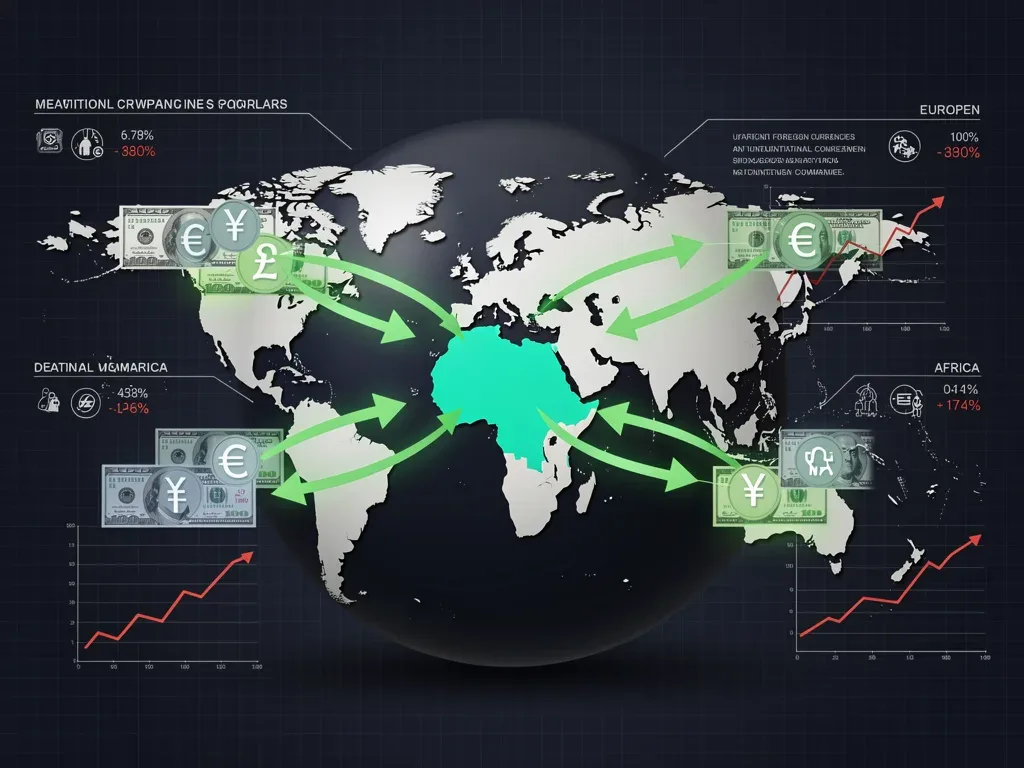
Beyond financial strategies, operational adjustments are also critical. Companies might consider shifting production to countries with weaker currencies to lower manufacturing costs, or localizing their supply chains to reduce reliance on dollar-denominated imports. Re-evaluating pricing strategies in foreign markets, potentially accepting lower margins in local currency terms to maintain market share, is another common response. Furthermore, diversifying revenue streams across multiple currencies and geographies can naturally reduce exposure to the strength of any single currency, including the U.S. dollar. These strategic shifts require long-term planning and can involve significant investment.
Impact on Global Supply Chains and Sourcing
The sustained strength of the dollar index above 103 has profound implications for global supply chains and sourcing strategies for multinational corporations. For U.S.-based companies, a stronger dollar makes imported raw materials, components, and finished goods cheaper when purchased from abroad. This can be a boon for companies that rely heavily on international sourcing, potentially lowering their cost of goods sold and improving domestic profit margins.

However, this benefit is not universal. Companies that produce goods in the U.S. using domestically sourced materials and then export them face a dual challenge: their exports become more expensive for foreign buyers, while they may not see the same cost-saving benefits on the input side. This can create an uneven playing field and necessitate a re-evaluation of where production occurs and from where materials are sourced. The incentive to "reshore" or "nearshore" production might decrease if international sourcing becomes significantly more cost-effective.
Supply Chain Considerations
A strong dollar influences supply chain decisions in several ways:
- Cheaper Imports: U.S. companies can purchase foreign goods and components at lower dollar costs.
- Sourcing Shifts: Incentives may increase to source from countries with weaker currencies to maximize cost savings.
- Inventory Management: Companies might adjust inventory levels based on anticipated currency movements to optimize purchasing.
Moreover, for multinational companies with production facilities spread across different countries, the strong dollar can complicate inter-company transfers and pricing. Transfer pricing policies, which dictate the prices at which divisions of the same company trade goods or services with each other, need to be carefully managed to avoid adverse tax implications and to accurately reflect the economic reality of currency movements. The overall effect is a push towards greater flexibility and resilience in supply chain design, allowing companies to adapt quickly to evolving currency dynamics and optimize their global footprint.
Long-Term Economic Repercussions and Future Outlook
The sustained presence of the Dollar Index above 103 is not merely a short-term blip; it can have significant long-term economic repercussions, shaping future investment patterns, trade balances, and the strategic positioning of multinational corporations. A persistently strong dollar can contribute to a widening U.S. trade deficit as imports become cheaper and exports more expensive, potentially impacting domestic industries and employment.
Over time, companies may adjust their long-term investment strategies, favoring expansion in countries with weaker currencies where operating costs are lower, or focusing more on domestic market growth if international competitiveness is severely hampered. This could lead to a reallocation of capital and resources globally, influencing economic development in various regions. The strength of the dollar also affects foreign direct investment (FDI) into the U.S., as it becomes more expensive for foreign entities to acquire U.S. assets or establish operations.
Strategic Long-Term Adjustments
- Investment Diversification: Companies may diversify investments into regions with more favorable currency valuations.
- Market Focus Shift: Increased focus on domestic markets or regions less affected by dollar strength.
- Innovation and Efficiency: Greater emphasis on technological innovation and operational efficiency to offset currency-related cost disadvantages.

Looking ahead, the future outlook for the dollar index above 103 depends on a confluence of global economic factors, including inflation rates, central bank policies, geopolitical stability, and relative economic growth. While a strong dollar can be a sign of U.S. economic health, its prolonged strength can also create imbalances and challenges for the global economy. Multinational corporations must therefore adopt a dynamic and forward-looking approach, continuously monitoring currency markets and adapting their strategies to ensure sustained growth and profitability in an ever-changing global financial landscape. The ability to forecast and react to currency movements will remain a critical competitive advantage.
Navigating Currency Volatility and Risk Management
Beyond the direct impacts, a dollar index consistently above 103 underscores the critical importance of robust currency risk management for multinational corporations. The volatility inherent in foreign exchange markets, exacerbated by significant currency strength, demands sophisticated approaches to protect financial performance. Companies must move beyond simple hedging and embrace a holistic risk management framework that integrates financial, operational, and strategic considerations.
Effective currency risk management involves not only identifying exposure but also developing comprehensive strategies to mitigate it. This includes establishing clear policies for hedging, defining acceptable levels of risk, and regularly reviewing the effectiveness of implemented strategies. Training finance teams in advanced currency analytics and utilizing specialized software can significantly enhance a company's ability to monitor and respond to market movements in real-time. Moreover, integrating currency risk considerations into broader business planning ensures that potential impacts are factored into budgeting, forecasting, and investment decisions from the outset.
Comprehensive Risk Management Pillars
- Exposure Identification: Thoroughly understanding all transactional, translational, and economic exposures to currency fluctuations.
- Policy Formulation: Developing clear, consistent, and well-documented hedging policies.
- Continuous Monitoring: Regularly tracking currency markets and the effectiveness of hedging strategies.
- Scenario Planning: Conducting stress tests and scenario analyses to prepare for various currency movement outcomes.
Furthermore, a strong dollar highlights the need for flexibility in treasury operations. Companies with centralized treasury functions can often achieve better economies of scale in hedging and managing cash flows across different currencies. Implementing internal netting and pooling arrangements can reduce the number of external foreign exchange transactions, thereby lowering costs and simplifying operations. Ultimately, navigating prolonged currency strength and volatility requires a culture of proactive risk awareness and a commitment to continuous adaptation, ensuring that multinational operations remain resilient and profitable regardless of market conditions.
| Key Impact Area | Description of Consequence |
|---|---|
| Revenue Translation | Foreign earnings convert to fewer U.S. dollars, reducing reported revenues for multinationals. |
| Competitive Disadvantage | U.S. exports become more expensive, challenging market share against local and foreign competitors. |
| Supply Chain Costs | Imports are cheaper, potentially lowering input costs but also increasing pressure on domestic production. |
| Strategic Adjustments | Companies must implement hedging, operational shifts, and re-evaluate investment strategies. |
Frequently Asked Questions About a Strong Dollar Index
What does a Dollar Index above 103 signify?▼A Dollar Index (DXY) above 103 indicates a strong U.S. dollar relative to a basket of major currencies. This strength is often driven by higher U.S. interest rates, robust economic performance, or its status as a safe haven during global uncertainty, making dollar-denominated assets more attractive.
How does a strong dollar affect multinational revenues?▼A strong dollar negatively impacts multinational revenues through currency translation. Foreign earnings, when converted back to a stronger U.S. dollar for reporting, result in lower dollar-denominated revenues and profits, even if local sales volumes remain strong. It also makes U.S. exports more expensive.
What strategies can multinationals use to mitigate currency risk?▼Multinationals can employ several strategies, including financial hedging (forward contracts, options), operational adjustments (shifting production, localizing supply chains), and natural hedging (balancing revenues and costs in the same foreign currency). Diversifying revenue streams across geographies also helps.
Does a strong dollar benefit any part of a multinational's operations?▼Yes, a strong dollar can benefit multinationals that rely on imported raw materials or components, as these become cheaper in dollar terms, potentially lowering their cost of goods sold. It also makes it cheaper for U.S. companies to acquire foreign assets or expand abroad.
What are the long-term economic consequences of a persistently strong dollar?▼Long-term consequences include a potential widening of the U.S. trade deficit, shifts in global investment patterns, and a reallocation of capital. Companies might favor expansion in countries with weaker currencies, affecting international trade balances and long-term economic growth trajectories.
Conclusion
The sustained presence of the Dollar Index above 103 presents a complex and multifaceted challenge for multinational corporations. While indicating underlying strength in the U.S. economy or its safe-haven appeal, this elevated dollar value directly impacts reported revenues, compresses profit margins through currency translation, and intensifies competitive pressures in international markets. Companies must adopt a proactive and sophisticated approach to currency risk management, integrating financial hedging with strategic operational adjustments. Understanding the drivers of dollar strength and implementing robust mitigation strategies are not just about protecting short-term earnings but are crucial for ensuring long-term resilience, profitability, and strategic positioning in an increasingly interconnected and volatile global economy. The ability to adapt to these currency dynamics will ultimately differentiate successful multinational enterprises.
