Fed's $7 Trillion Balance Sheet: Addressing Banking Liquidity Pressures
Advertisements
The Federal Reserve maintained a $7 trillion balance sheet posture primarily to address and mitigate significant liquidity pressures within the banking sector, ensuring financial system stability during periods of economic uncertainty and market stress.
Have you ever wondered about the immense power wielded by central banks, especially during times of economic turbulence? The recent decision by the Federal Reserve to maintain a substantial $7 trillion balance sheet posture directly addresses the critical issue of banking liquidity pressures, a move that has profound implications for the U.S. economy and its financial stability.
Understanding the Federal Reserve's Balance Sheet
The Federal Reserve's balance sheet is a snapshot of its financial position, detailing its assets and liabilities. It's not just an accounting document; it's a powerful tool for monetary policy, reflecting the Fed's interventions in financial markets. When the Fed expands its balance sheet, it typically involves purchasing assets like Treasury securities and mortgage-backed securities, injecting liquidity into the financial system.
Conversely, a contraction means selling off these assets or allowing them to mature without reinvestment, thereby withdrawing liquidity. The sheer scale of a $7 trillion balance sheet underscores a significant level of intervention, often necessitated by extraordinary economic circumstances.
Key Components of the Balance Sheet
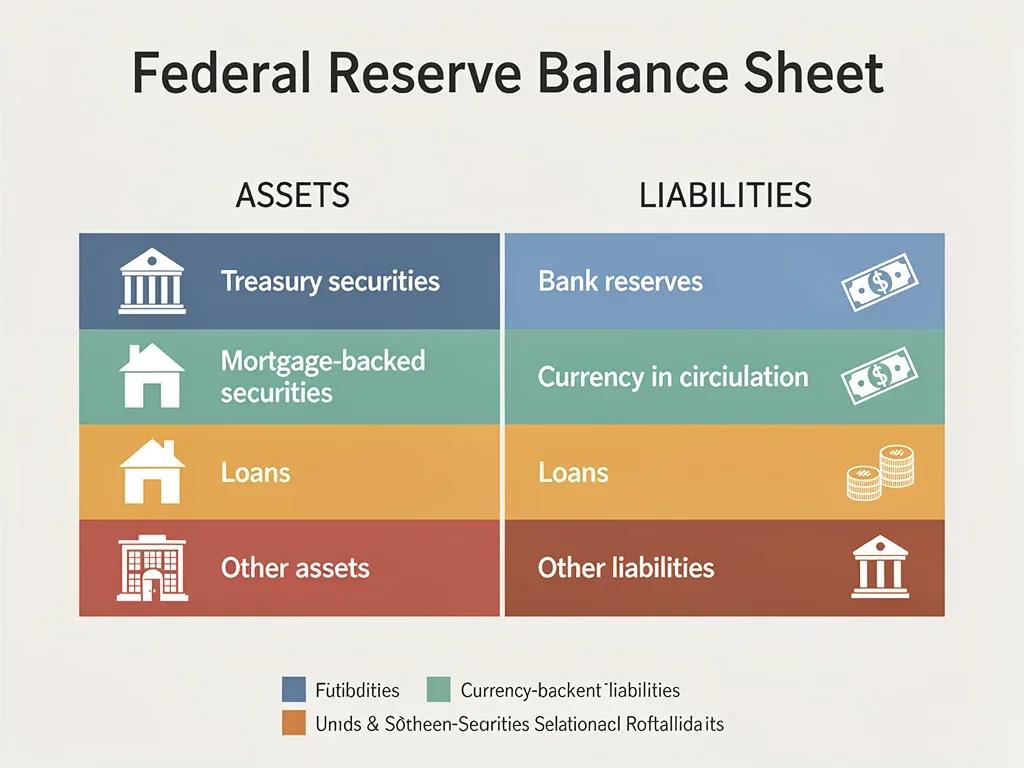
Understanding what constitutes the Fed's balance sheet is crucial to grasping its impact on liquidity. The primary assets held are:
- Treasury Securities: These are debt instruments issued by the U.S. government, used to finance its spending. The Fed's purchases of these securities directly influence long-term interest rates.
- Mortgage-Backed Securities (MBS): These are financial instruments that represent claims on the cash flows from pools of mortgage loans. The Fed buys MBS to support the housing market and broader economic activity.
- Other Assets: This category includes a variety of smaller holdings, such as foreign currency holdings, gold, and loans to financial institutions.
On the liabilities side, the most significant components are currency in circulation and reserves held by commercial banks at the Fed. An expanded balance sheet generally means higher bank reserves, which are fundamental to managing liquidity. The size and composition of the Fed's balance sheet are therefore direct indicators of its monetary policy stance and its efforts to stabilize markets.
In essence, the Federal Reserve's balance sheet acts as a barometer and a lever for the nation's financial health. Its expansion or contraction is not a trivial matter but a strategic decision with far-reaching consequences for interest rates, inflation, and the overall availability of credit in the economy.
The Genesis of Liquidity Pressures in the Banking Sector
Liquidity pressures in the banking sector arise when financial institutions face challenges in meeting their short-term obligations without incurring significant losses. These pressures can stem from a variety of sources, both internal and external, and can quickly escalate into broader systemic risks if left unaddressed. Understanding their origins is key to appreciating the Fed's actions.
One common trigger for liquidity stress is a sudden and unexpected withdrawal of deposits by customers, often referred to as a bank run. While rare in their most extreme form due to deposit insurance, even smaller-scale deposit outflows can strain a bank's ability to fund its operations and honor its commitments. Another significant source is market disruption, where the interbank lending markets, typically a smooth source of short-term funding for banks, seize up or become highly volatile. This can happen during periods of heightened economic uncertainty or financial crises.
Factors Contributing to Liquidity Squeeze
Several factors can contribute to a liquidity squeeze, making it difficult for banks to maintain adequate cash reserves:
- Economic downturns: Recessions often lead to increased loan defaults and reduced economic activity, impacting banks' profitability and asset quality.
- Sudden market shocks: Events like pandemics, geopolitical crises, or significant policy changes can trigger widespread investor panic and a flight to safety, disrupting funding markets.
- Regulatory changes: New regulations, while often aimed at enhancing stability, can sometimes inadvertently create unintended liquidity challenges for banks as they adapt to new compliance requirements.
Moreover, the interconnectedness of the global financial system means that liquidity issues in one region or within one type of institution can quickly spill over, creating a domino effect. Banks rely on a complex web of short-term funding, and a disruption in any part of this network can quickly propagate, leading to systemic concerns. The Fed's role is to act as a backstop, providing the necessary liquidity to prevent these localized issues from becoming full-blown crises.

Ultimately, liquidity pressures are a constant concern for financial institutions, requiring robust risk management and, at times, swift intervention from central banks. The Fed's maintenance of a large balance sheet is a direct response to these inherent vulnerabilities, aiming to provide a buffer against unforeseen shocks.
The Federal Reserve's Role in Managing Liquidity
The Federal Reserve, as the central bank of the United States, plays a pivotal role in maintaining financial stability, and managing liquidity is at the core of this mandate. Its actions are designed to ensure that banks have sufficient funds to meet their obligations, thereby preventing widespread financial panic and economic disruption. The tools at its disposal are varied and can be deployed strategically depending on the nature and severity of the liquidity pressures.
One of the primary ways the Fed manages liquidity is through its open market operations, which involve buying or selling government securities. When the Fed buys securities, it injects reserves into the banking system, increasing the amount of money available for lending. Conversely, selling securities removes reserves, tightening liquidity. This mechanism allows the Fed to fine-tune the availability of funds in the short-term money markets.
Key Tools for Liquidity Management
Beyond open market operations, the Fed employs several other critical tools:
- Discount Window Lending: This facility allows eligible financial institutions to borrow money directly from the Fed, typically on a short-term basis. It serves as a safety valve, providing a reliable source of liquidity during times of stress.
- Reserve Requirements: While less frequently adjusted today, the Fed can set the minimum amount of reserves that banks must hold against customer deposits. Lowering these requirements frees up more funds for banks to lend.
- Standing Repo Facility (SRF): The SRF allows eligible counterparties to temporarily exchange Treasury and agency mortgage-backed securities for cash with the Fed, providing another backstop against acute funding market pressures.

The decision to maintain a large balance sheet, such as the $7 trillion posture, reflects a deliberate and comprehensive approach to liquidity management. It signals the Fed's commitment to providing ample reserves to the banking system, ensuring that banks do not face a sudden shortage of funds that could impair their ability to lend or meet depositor demands. This proactive stance is particularly crucial in an environment where financial markets can be highly volatile and prone to rapid shifts in sentiment.
By effectively managing liquidity, the Federal Reserve underpins confidence in the financial system, allowing banks to operate smoothly and support economic growth. Its actions are not just about immediate crisis response but also about building resilience into the banking sector to withstand future shocks.
Why a $7 Trillion Balance Sheet Posture?
The decision by the Federal Reserve to maintain a $7 trillion balance sheet posture is not arbitrary; it is a strategic response to a confluence of economic factors and a proactive measure to safeguard financial stability. This elevated level reflects a commitment to providing substantial liquidity, especially in the wake of recent economic shocks and ongoing uncertainties.
One of the primary reasons for this large balance sheet is the need to ensure an ample supply of reserves in the banking system. Following periods of crisis, such as the 2008 financial crisis and the more recent economic disruptions, the Fed significantly expanded its balance sheet through quantitative easing (QE) programs. These programs involved large-scale asset purchases, which injected vast amounts of reserves into the banking system. Maintaining a high level of reserves helps to prevent a recurrence of the acute liquidity shortages that characterized past crises, ensuring banks have a robust buffer against unexpected withdrawals or market dislocations.
Addressing Market Functionality and Economic Recovery
The large balance sheet also plays a critical role in:
- Supporting market functionality: By purchasing government bonds and mortgage-backed securities, the Fed helps to maintain smooth functioning in these crucial markets, ensuring that credit flows freely and interest rates remain stable.
- Signaling policy commitment: A large balance sheet signals the Fed's commitment to accommodative monetary policy, which supports economic recovery by keeping borrowing costs low for businesses and consumers.
- Counteracting deflationary pressures: In environments where inflation is persistently low, a large balance sheet can help to stimulate economic activity and push inflation towards the Fed's target.
Furthermore, the Fed learned valuable lessons from previous crises regarding the importance of maintaining a sufficiently large and liquid financial system. A smaller balance sheet might risk creating conditions where minor shocks could quickly escalate into significant liquidity events, jeopardizing the stability of the entire financial sector. The $7 trillion posture, therefore, represents a calculated decision to err on the side of caution, providing a strong foundation for the banking system.
Ultimately, the Fed's maintenance of this substantial balance sheet is a multifaceted approach designed to manage risk, support economic recovery, and ensure that the U.S. financial system remains robust in the face of ongoing challenges. It is a testament to the complex interplay between monetary policy and financial stability.
Impact on the U.S. Banking Sector and Economy
The Federal Reserve's decision to maintain a $7 trillion balance sheet posture has far-reaching implications for both the U.S. banking sector and the broader economy. This sustained level of monetary accommodation influences everything from interest rates and credit availability to bank profitability and overall economic growth. Understanding these impacts is crucial for businesses, investors, and consumers alike.
For the banking sector, a large Fed balance sheet typically translates into ample reserves. This abundance of liquidity can reduce the need for banks to compete aggressively for short-term funding, potentially leading to lower interbank lending rates. It also provides banks with a significant buffer against unexpected deposit outflows or market disruptions, enhancing their resilience. However, persistent excess reserves can also compress net interest margins for banks, as the yield on these reserves may be lower than what they could earn on other assets.
Economic Consequences and Considerations
The broader economic consequences are equally significant:
- Lower interest rates: The Fed's large-scale asset purchases tend to suppress long-term interest rates, making it cheaper for businesses to borrow for investment and for consumers to finance homes and other purchases. This stimulates aggregate demand.
- Asset price inflation: Sustained low interest rates and abundant liquidity can contribute to higher asset valuations, including stocks and real estate. While this can create a wealth effect, it also raises concerns about potential asset bubbles.
- Inflationary pressures: A continuously large balance sheet, if not managed carefully, could eventually lead to inflationary pressures as the money supply expands. However, the Fed closely monitors inflation expectations and economic output to mitigate this risk.
Furthermore, the Fed's balance sheet operations can influence the dollar's exchange rate and international capital flows. A highly accommodative monetary policy might put downward pressure on the dollar, making U.S. exports more competitive but potentially increasing import costs. The sheer scale of the Fed's balance sheet also underscores its significant presence in financial markets, which can affect market dynamics and investor behavior.
In summary, the $7 trillion balance sheet posture represents a powerful tool in the Fed's arsenal, aimed at fostering economic stability and growth. While it provides critical support to the banking sector, its broader economic impacts require careful monitoring and calibration to ensure desired outcomes without creating unintended side effects.
Challenges and Criticisms of the Fed's Strategy
While the Federal Reserve's strategy of maintaining a large balance sheet is designed to enhance financial stability and support economic growth, it is not without its challenges and criticisms. Monetary policy on such a grand scale inevitably invites scrutiny from various economic and political perspectives, highlighting potential risks and unintended consequences that must be carefully considered by policymakers.
One of the primary concerns revolves around the potential for inflation. Critics argue that by injecting vast amounts of liquidity into the financial system, the Fed risks overstimulating the economy, leading to an unsustainable rise in prices. While the Fed maintains that inflationary pressures are transitory or manageable, the long-term effects of an expanded balance sheet on inflation remain a subject of intense debate among economists. Another significant challenge is the potential for moral hazard, where banks might take on excessive risks, assuming the Fed will always step in to provide liquidity during times of stress.
Potential Risks and Unintended Consequences
Other criticisms and risks include:
- Distortion of market signals: Large-scale asset purchases can distort the pricing of financial assets, potentially leading to misallocation of capital and an overreliance on Fed intervention rather than market fundamentals.
- Exit strategy complexities: Reducing the balance sheet (quantitative tightening) can be a delicate process. If done too quickly, it risks disrupting financial markets and potentially triggering a recession. If done too slowly, it could entrench inflationary expectations.
- Wealth inequality: Some argue that quantitative easing disproportionately benefits asset owners, exacerbating wealth inequality by driving up stock and real estate prices.
The political independence of the Federal Reserve also comes under fire when its balance sheet operations are perceived as blurring the lines between monetary and fiscal policy. Critics contend that large-scale purchases of government debt effectively monetize public spending, potentially undermining fiscal discipline. Furthermore, the sheer size of the balance sheet makes it a more prominent target for political pressure and public debate, potentially complicating the Fed's ability to act independently.
Navigating these challenges requires a delicate balance. The Fed must continuously assess the trade-offs between supporting economic recovery and managing potential risks, all while communicating its strategy clearly to maintain public and market confidence.
Future Outlook for the Fed's Balance Sheet and Liquidity Management
Looking ahead, the future trajectory of the Federal Reserve's balance sheet and its approach to liquidity management will be critical determinants of financial stability and economic performance. The transition from a period of substantial expansion to one of potential normalization presents a complex set of challenges and opportunities for policymakers. The decisions made regarding the balance sheet will directly influence how effectively the U.S. banking sector can navigate future economic cycles.
One key aspect of the future outlook is the eventual unwinding of the balance sheet. While the Fed has indicated a patient approach, the process of reducing its holdings of Treasury securities and mortgage-backed securities will need to be carefully calibrated to avoid market disruptions. This 'quantitative tightening' will gradually reduce the amount of reserves in the banking system, potentially influencing short-term interest rates and the availability of credit. The Fed aims to find a balance where reserves are ample enough to facilitate smooth market functioning but not so excessive as to create unintended distortions.
Key Considerations for Future Policy
Several factors will shape the Fed's future strategy:
- Economic conditions: The pace of economic growth, inflation rates, and employment levels will be paramount in determining the timing and speed of balance sheet adjustments.
- Financial market stability: The Fed will closely monitor market reactions to any changes in its balance sheet policy, ready to adjust its approach if financial stability is threatened.
- Evolution of banking regulations: Ongoing discussions around capital requirements, stress tests, and other regulations will also influence banks' liquidity needs and the Fed's operational framework.
Moreover, the Fed continues to refine its understanding of the 'ample reserves' framework, aiming to operate monetary policy effectively with a larger, but stable, level of reserves. This involves exploring new tools and mechanisms to manage short-term interest rates and ensure that its policy stance is transmitted efficiently throughout the financial system. The goal is to move towards a more predictable and transparent approach to balance sheet management, providing clarity to markets and reducing uncertainty.
In conclusion, the path forward for the Fed's balance sheet is one of careful navigation. It involves a strategic unwinding, a continuous assessment of economic and market conditions, and an ongoing refinement of its liquidity management framework. The ultimate objective remains the same: to foster a robust and resilient financial system that can support sustainable economic growth.
| Key Point | Brief Description |
|---|---|
| Fed's Balance Sheet Role | A primary tool for monetary policy, providing liquidity and stability to financial markets. |
| Liquidity Pressures | Challenges banks face in meeting short-term obligations, often due to deposit outflows or market disruptions. |
| $7 Trillion Posture Rationale | Ensures ample reserves, supports market functionality, and signals accommodative monetary policy for recovery. |
| Challenges & Future | Concerns over inflation and moral hazard; future requires careful unwinding and policy calibration. |
Frequently Asked Questions About the Fed's Balance Sheet
Why is the Federal Reserve's balance sheet so large?▼The Federal Reserve's balance sheet expanded significantly due to asset purchases aimed at stabilizing financial markets and supporting the economy during crises, such as the 2008 financial crisis and the COVID-19 pandemic. This ensures ample liquidity in the banking system.
What are liquidity pressures in the banking sector?▼Liquidity pressures refer to situations where banks struggle to meet their short-term financial obligations, such as deposit withdrawals or interbank lending, without incurring significant losses. These can arise from market disruptions or economic downturns.
How does the Fed manage banking liquidity?▼The Fed manages liquidity through tools like open market operations (buying/selling securities), discount window lending, and the Standing Repo Facility. These mechanisms inject or withdraw reserves from the banking system to ensure stable funding.
What are the risks of a large Federal Reserve balance sheet?▼Risks include potential inflation, distortion of market signals, challenges in normalizing the balance sheet, and concerns about moral hazard where banks might take on excessive risks, assuming Fed intervention.
Will the Fed's balance sheet remain at $7 trillion indefinitely?▼No, the Fed typically aims to normalize its balance sheet over time as economic conditions improve. However, the exact timing and pace of reduction (quantitative tightening) will depend on various economic indicators and market stability.
Conclusion
The Federal Reserve's decision to maintain a $7 trillion balance sheet posture is a testament to its unwavering commitment to stabilizing the U.S. financial system and mitigating banking liquidity pressures. This strategic move, born out of lessons from past economic crises, ensures that banks have ample reserves to navigate uncertainties, maintain market functionality, and support broader economic recovery. While the strategy presents inherent challenges and criticisms, particularly concerning inflation and market distortions, the Fed's continuous monitoring and adaptive policy framework aim to balance these risks against the imperative of financial stability. The future will undoubtedly involve careful recalibration of this colossal balance sheet, guiding the economy towards sustainable growth while preserving confidence in the banking sector.
