FTC's 1-Click Mandate: Simplifying AI Subscription Cancellations
Advertisements
The Federal Trade Commission's new 1-Click Mandate is a landmark final ruling simplifying AI subscription cancellations, ensuring consumers can effortlessly end recurring charges, combating manipulative dark patterns.
The digital landscape has dramatically transformed how we consume services, with subscription models powered by artificial intelligence becoming ubiquitous. However, the convenience of signing up often contrasts sharply with the difficulty of canceling. This pervasive issue has drawn the attention of regulatory bodies, culminating in the Federal Trade Commission's (FTC) pivotal final ruling on AI subscription cancellations. This significant development, particularly the introduction of the FTC 1-Click Subscription Mandate, promises to reshape consumer interactions with digital services, offering a much-needed layer of protection against arduous cancellation processes and predatory 'dark patterns.'
Understanding the FTC's New 1-Click Mandate
The FTC's recent final ruling marks a significant victory for consumer rights in the digital age. At its core, the 1-Click Mandate is designed to simplify the process of canceling recurring subscriptions, particularly those leveraging artificial intelligence for personalized content, services, or product recommendations. This initiative directly addresses a long-standing frustration among consumers: the often-convoluted and intentionally difficult methods companies employ to retain subscribers.
For years, consumers have navigated mazes of hidden menus, mandatory phone calls, and persuasive retention tactics just to end a subscription. The new mandate aims to dismantle these barriers, ensuring that canceling a service is as straightforward as signing up for it. This move is not merely about convenience; it is a fundamental shift towards empowering consumers and fostering greater transparency in the subscription economy.
The Problem of Dark Patterns in Subscriptions
Dark patterns are user interface designs that trick users into doing things they might not otherwise do, such as signing up for recurring subscriptions or making unwanted purchases. These deceptive practices often make it incredibly easy to subscribe but notoriously difficult to cancel. The FTC's ruling specifically targets these manipulative designs, recognizing their detrimental impact on consumer autonomy and financial well-being.
- Hidden Cancellation Options: Companies often bury cancellation links deep within their websites or apps, requiring multiple clicks and extensive searching.
- Mandatory Customer Service Calls: Some services force users to call a customer service representative, where they face high-pressure sales tactics to retain their subscription.
- Confusing Language and Forms: Vague terminology and complex forms can deter users from completing the cancellation process.
- Delayed Cancellation Effectiveness: Even after initiating a cancellation, some services delay its effect, leading to additional charges.
Key Provisions of the 1-Click Mandate
The 1-Click Mandate mandates that companies offering recurring subscriptions must provide a simple, straightforward mechanism for cancellation. This typically means a single click or clear, unambiguous action that allows a consumer to terminate their subscription without undue friction. The ruling emphasizes parity: if a service can be initiated with a click, it should be able to be canceled with a click. This provision extends to all platforms, including mobile apps, websites, and even voice-activated AI services. The goal is to eliminate any intentional obstacles that serve to frustrate or deter consumers from exercising their right to cancel.
The implications for businesses are substantial, requiring a re-evaluation of their user interfaces and cancellation workflows. Non-compliance could result in significant penalties, underscoring the seriousness with which the FTC views this issue. For consumers, this translates to a newfound sense of control over their digital expenditures.
Impact on AI-Powered Subscription Services
The rise of artificial intelligence has propelled the growth of highly personalized subscription services, from streaming platforms that recommend content to fitness apps that tailor workout plans. While these innovations offer immense value, they also introduce new complexities, particularly when it comes to managing recurring payments. The FTC's 1-Click Mandate is poised to have a profound impact on these AI-powered offerings, forcing a re-evaluation of their user experience design and ethical considerations.
AI's ability to analyze user behavior and predict preferences means that these services often become deeply integrated into users' daily routines. This integration can inadvertently create a sense of dependency, making the act of cancellation feel more significant than just ending a service. The new mandate ensures that even with this advanced personalization, the fundamental right to disengage remains simple and accessible.
Redesigning User Experience for Compliance
Companies utilizing AI in their subscription models will now need to prioritize user-friendly cancellation processes. This involves more than just adding a button; it requires a fundamental shift in design philosophy. The focus will be on transparency, clarity, and ease of access. Designers will need to ensure that the cancellation path is intuitive, clearly labeled, and free from any dark patterns that could confuse or deter users.
- Direct Cancellation Links: Providing direct links to cancellation pages in account settings and confirmation emails.
- Clear Language: Using straightforward language that avoids jargon or misleading terms during the cancellation process.
- Minimal Steps: Reducing the number of steps required to complete a cancellation to the absolute minimum.
- Confirmation and Proof: Offering immediate confirmation of cancellation and retaining records for consumer reference.
Ethical AI and Consumer Trust
Beyond compliance, the 1-Click Mandate encourages a more ethical approach to AI development and deployment in consumer services. Building consumer trust is paramount for long-term success, and a transparent cancellation process is a key component of this trust. When consumers feel respected and in control, they are more likely to engage positively with a brand, even if they choose to cancel a service temporarily. The mandate pushes AI-powered services towards a model where value retention is based on genuine user satisfaction rather than coercive design.
This ruling serves as a powerful reminder that technological advancement must be balanced with robust consumer protections. As AI becomes more sophisticated, so too must the regulatory frameworks that govern its interaction with individuals. The FTC's proactive stance ensures that innovation in AI subscriptions does not come at the expense of consumer autonomy.
Addressing Dark Patterns: A Broader Regulatory Push
The FTC's 1-Click Mandate on AI subscription cancellations is not an isolated event but rather part of a broader regulatory push to combat dark patterns across various digital interactions. Regulatory bodies worldwide are increasingly recognizing the detrimental impact of these deceptive design tactics on consumer welfare. This concerted effort signals a growing commitment to ensure that the digital marketplace remains fair, transparent, and respectful of user choices.
Dark patterns are insidious because they exploit cognitive biases and often operate subtly, making it difficult for consumers to identify when they are being manipulated. From tricking users into sharing more data than intended to making unwanted purchases, the scope of dark patterns is vast and continually evolving. The FTC's ruling specifically targeting subscription cancellations sets a precedent for how these issues will be addressed in other areas of digital commerce.
Previous FTC Actions Against Deceptive Practices
The FTC has a long history of protecting consumers from deceptive practices, and its recent actions against dark patterns are an extension of this mission. Over the years, the commission has brought numerous enforcement actions against companies employing misleading tactics. These actions have ranged from fining companies for automatically renewing subscriptions without clear consent to issuing warnings about deceptive advertising practices.
The current focus on the 1-Click Mandate builds upon this foundation, demonstrating an adaptive regulatory approach to the complexities of the modern digital economy. It highlights the FTC's understanding that as technology advances, so too must the strategies for safeguarding consumer interests. This proactive stance is crucial in an environment where AI and sophisticated algorithms can be used to create even more persuasive and hard-to-detect dark patterns.

Global Movement Towards Digital Fairness
The fight against dark patterns is a global phenomenon. Other jurisdictions, such as the European Union with its Digital Services Act (DSA) and various consumer protection agencies in other countries, are also implementing regulations to curb these deceptive practices. This international alignment underscores the universal recognition of the problem and the need for comprehensive solutions.
The FTC's 1-Click Mandate positions the United States at the forefront of this global movement, particularly concerning subscription services. This global trend suggests that businesses operating across borders will increasingly face consistent expectations regarding transparent and easy cancellation processes. For consumers, this means a more equitable digital experience, regardless of where they are located or which service they use.
Consumer Rights and Empowerment in the Digital Age
The FTC's 1-Click Mandate on AI subscription cancellations is more than just a regulatory update; it is a powerful affirmation of consumer rights in the digital age. In an increasingly complex online world, where personal data is currency and algorithmic decisions shape our experiences, empowering consumers to make informed choices and easily disengage from services is paramount. This ruling reinforces the idea that users should have ultimate control over their digital subscriptions, moving away from models that prioritize retention over user autonomy.
For too long, the ease of signing up for digital services has been contrasted by the arduous journey of canceling them. This imbalance has led to financial waste, frustration, and a sense of powerlessness among consumers. The new mandate seeks to rectify this by ensuring that the exit ramp is as accessible as the on-ramp, fostering a healthier and more trustworthy digital ecosystem.
Financial Implications for Consumers
One of the most immediate and tangible benefits of the 1-Click Mandate is its potential to save consumers money. Many individuals have inadvertently paid for services they no longer use simply because the cancellation process was too complicated or time-consuming. These forgotten subscriptions, often small individually, can accumulate into significant monthly expenses. The mandate provides a straightforward mechanism to prevent these unnecessary charges, allowing consumers to better manage their finances.
Furthermore, by reducing the friction associated with cancellation, consumers are more likely to review their subscriptions regularly and make conscious decisions about which services genuinely provide value. This encourages a more mindful approach to digital consumption, leading to greater financial literacy and control. It shifts the burden of proof from the consumer, who previously had to jump through hoops to cancel, to the service provider, who must now offer a transparent and simple exit.

Building Trust and Transparency
Beyond financial savings, the mandate plays a crucial role in building trust between consumers and digital service providers. When companies make it easy to cancel, it signals respect for the consumer's choice and a commitment to transparency. This can, paradoxically, lead to greater loyalty, as users are more likely to subscribe to services from companies they trust, knowing they can easily opt out if their needs change.
Conversely, companies that continue to employ dark patterns risk damaging their reputation and losing consumer confidence. In an age where information spreads rapidly, negative user experiences with cancellation processes can quickly erode a brand's standing. The FTC's ruling encourages a shift towards business models that prioritize long-term customer relationships built on trust, rather than short-term gains derived from deceptive retention tactics.
Challenges and Future Outlook for Businesses
While the FTC's 1-Click Mandate is a boon for consumers, it presents significant challenges and opportunities for businesses, particularly those heavily reliant on recurring AI subscriptions. Adapting to these new regulations will require more than just technical adjustments; it will necessitate a strategic re-evaluation of business models, customer retention strategies, and overall user experience design. Companies that embrace these changes proactively stand to gain a competitive advantage, while those that resist may face regulatory scrutiny and consumer backlash.
The primary challenge lies in overhauling existing cancellation workflows, which for many companies, were intentionally designed to be cumbersome. This involves not only redesigning interfaces but also potentially retraining customer service teams and updating internal policies. The goal is to move from a retention strategy based on friction to one based on genuine customer satisfaction and value proposition.
Operational and Technical Adjustments
Implementing the 1-Click Mandate will require substantial operational and technical adjustments for many businesses. This includes:
- Software Development: Engineering teams will need to develop and integrate simple, accessible cancellation mechanisms into their platforms.
- User Interface (UI) Redesign: UX/UI designers will need to ensure that cancellation options are prominently displayed and intuitive to use.
- Data Management: Companies must ensure that cancellation requests are processed efficiently and that user data is handled appropriately post-cancellation.
- Compliance Audits: Regular audits will be necessary to ensure ongoing adherence to the FTC's regulations and to identify any new dark patterns that might inadvertently emerge.
These changes are not trivial and will require significant investment of time and resources. However, the long-term benefits of enhanced customer trust and reduced regulatory risk often outweigh the initial costs.
Shifting Retention Strategies
The mandate forces a fundamental shift in how businesses approach customer retention. Instead of relying on difficult cancellation processes, companies will need to focus on delivering superior value, exceptional customer service, and innovative features to keep subscribers engaged. This could lead to a healthier competitive landscape where services are judged on their merit rather than their ability to trap users.
For AI-powered services, this means leveraging AI to enhance the user experience, personalize content, and anticipate needs in a way that genuinely adds value, rather than using it to create sticky, hard-to-leave subscriptions. The future of customer retention will increasingly depend on transparent communication, consistent quality, and a commitment to customer satisfaction.
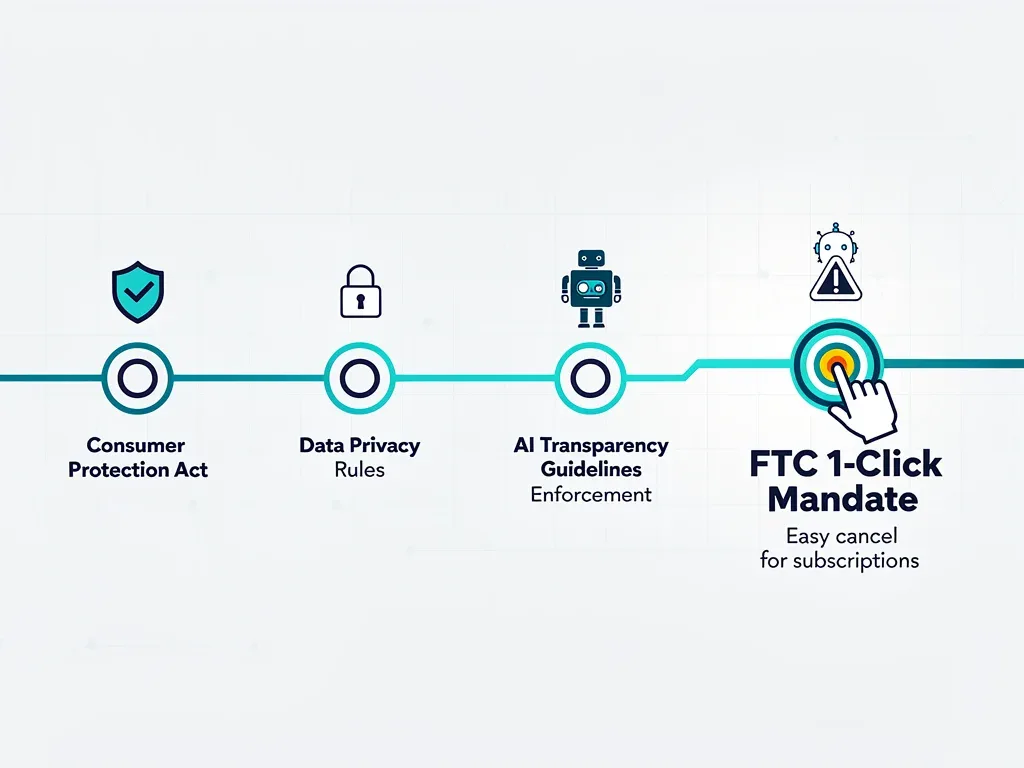
Enforcement and Compliance: What Companies Need to Know
The FTC's 1-Click Mandate is backed by robust enforcement mechanisms, ensuring that companies adhere to the new regulations. Non-compliance can lead to significant penalties, including hefty fines, injunctions, and mandatory changes to business practices. Understanding the scope of these enforcement actions and the requirements for compliance is critical for any business offering AI subscription services in the United States. The FTC is not merely issuing guidelines; it is setting clear legal obligations.
Companies must recognize that the FTC actively monitors the digital marketplace for deceptive practices. With this new ruling, the commission has a clear legal framework to pursue those who fail to provide easy cancellation options. The emphasis is on proactive compliance rather than reactive enforcement, urging businesses to review and revise their current practices before facing potential legal challenges.
FTC's Authority and Penalties for Non-Compliance
The Federal Trade Commission derives its authority from the Federal Trade Commission Act, which prohibits unfair methods of competition and unfair or deceptive acts or practices in commerce. The 1-Click Mandate falls squarely within this purview, as difficult cancellation processes are considered a deceptive practice that harms consumers.
Penalties for non-compliance can be severe. The FTC can seek civil penalties, which can amount to tens of thousands of dollars per violation, and these violations can be counted per consumer or per incident. Additionally, the commission can issue injunctions, forcing companies to cease their non-compliant practices and implement corrective measures. In some cases, the FTC may also require companies to provide refunds to affected consumers. These potential consequences underscore the importance of immediate and thorough compliance.
Best Practices for Ensuring Compliance
To ensure compliance with the 1-Click Mandate, businesses should adopt several best practices:
- Conduct a Comprehensive Audit: Review all existing subscription sign-up and cancellation processes to identify any dark patterns or non-compliant elements.
- Prioritize UX/UI for Cancellation: Design the cancellation flow to be as simple, direct, and prominent as the sign-up process. Ensure it is accessible from multiple points within the service.
- Clear and Unambiguous Language: Use plain language throughout the cancellation process, avoiding jargon or misleading terms.
- Train Customer Service: Ensure customer service representatives are knowledgeable about the new mandate and are equipped to assist customers with cancellations efficiently, without employing retention tactics that violate the spirit of the rule.
- Regular Monitoring and Testing: Continuously monitor and test the cancellation process to ensure it remains compliant and user-friendly.
By proactively implementing these measures, businesses can mitigate risks, avoid penalties, and ultimately build stronger, more trustworthy relationships with their customer base. Compliance is not just a legal obligation; it is an opportunity to demonstrate a commitment to ethical business practices.
The Future of Consumer Protection in a Digital World
The FTC's final ruling on AI subscription cancellations, particularly the 1-Click Mandate, represents a significant step forward in consumer protection within our increasingly digital world. This ruling acknowledges the unique challenges posed by advanced technologies like artificial intelligence and sets a precedent for how regulatory bodies will approach similar issues in the future. As AI becomes more integrated into every aspect of our lives, from personalized shopping experiences to automated financial advice, the need for robust consumer safeguards will only intensify.
This mandate is likely just one piece of a larger puzzle. We can anticipate further regulations aimed at ensuring fairness, transparency, and user control in areas where AI interacts with consumers. These future regulations might address issues such as algorithmic bias, data privacy in AI systems, and the ethical deployment of AI in marketing and sales. The underlying principle will remain the same: empowering consumers to navigate the digital landscape with confidence and control.
Anticipating Further Regulatory Developments
The success of the 1-Click Mandate could pave the way for similar regulations in other sectors. For instance, we might see mandates for easier data deletion from AI-powered platforms or clearer opt-out mechanisms for personalized advertising. The regulatory environment is dynamic, constantly evolving to keep pace with technological advancements. Businesses, especially those in the tech sector, must remain vigilant and adaptable to these forthcoming changes.
Furthermore, there is a growing global consensus on the need for stricter digital consumer protections. International cooperation among regulatory bodies could lead to harmonized standards, simplifying compliance for multinational corporations while offering consistent protection to consumers worldwide. This collaborative approach will be essential in addressing the borderless nature of digital services and AI technologies.
Empowering a New Generation of Digital Consumers
Ultimately, the 1-Click Mandate contributes to fostering a more empowered generation of digital consumers. By removing friction from cancellation processes, it educates users about their rights and encourages them to be more discerning about the services they subscribe to. This increased awareness and control are vital for building a sustainable and ethical digital economy where technological innovation serves humanity, rather than exploiting it.
The future of consumer protection will be characterized by a continuous effort to balance innovation with responsibility. Regulations like the 1-Click Mandate are crucial in striking this balance, ensuring that as technology advances, consumer rights are not left behind. It’s a clear message that convenience for providers should never come at the cost of consumer autonomy and choice.
| Key Point | Brief Description |
|---|---|
| 1-Click Mandate | Requires companies to provide a simple, single-click method for consumers to cancel recurring AI subscriptions. |
| Combating Dark Patterns | Directly targets deceptive user interface designs that complicate or obscure subscription cancellation. |
| Consumer Empowerment | Empowers consumers with greater control over their digital subscriptions and financial commitments. |
| Business Adaptations | Requires companies to redesign UX/UI, shift retention strategies, and ensure compliance to avoid penalties. |
Frequently Asked Questions About the FTC's New Mandate
What is the FTC's 1-Click Mandate?▼The 1-Click Mandate is a new FTC ruling requiring companies to offer a simple, single-action method for consumers to cancel recurring subscriptions, especially those involving AI-powered services. It aims to eliminate complex cancellation processes and deceptive 'dark patterns' that make it difficult for users to opt out.
Which types of subscriptions are affected by this ruling?▼This ruling primarily affects recurring subscription services, particularly those utilizing artificial intelligence for personalization, content delivery, or other features. This includes a wide range of digital services, from streaming platforms and software subscriptions to online memberships and app-based services with auto-renewal.
How does this mandate protect consumers from dark patterns?▼The mandate directly combats dark patterns by requiring cancellation processes to be as straightforward as signing up. It prevents companies from hiding cancellation options, demanding lengthy phone calls, or using confusing language, thus empowering consumers to easily terminate services without manipulation or unnecessary friction.
What are the consequences for companies that don't comply?▼Companies failing to comply with the 1-Click Mandate face significant penalties from the FTC. These can include substantial civil penalties, injunctions forcing changes to their business practices, and potentially requirements to issue refunds to affected consumers. The FTC is serious about enforcing these new consumer protections.
When does this new 1-Click Mandate take effect?▼While the FTC has issued its final ruling, the exact effective date for full compliance typically involves a grace period for businesses to adapt their systems. Companies should consult the official FTC publications for specific implementation timelines to ensure they meet all regulatory requirements in a timely manner.
Conclusion
The FTC's final ruling on AI subscription cancellations, encapsulated by the transformative 1-Click Mandate, represents a monumental stride in safeguarding consumer rights in the digital era. By mandating straightforward cancellation processes and actively combating deceptive dark patterns, the Commission has empowered consumers with unprecedented control over their digital expenditures and subscriptions. This pivotal regulation not only promises to alleviate widespread frustration and financial burden but also compels businesses to adopt more ethical, transparent, and user-centric practices. As the digital landscape continues to evolve, this mandate sets a critical precedent, underscoring that innovation must always be balanced with robust consumer protection, fostering a more trustworthy and equitable online environment for everyone.
