IRS Direct File System Expands: Free Tax Filing for 30 Million
Advertisements
The IRS Direct File system has significantly expanded, making free, zero-cost tax filing accessible to 30 million eligible Americans, streamlining the tax preparation process for a substantial portion of the population.
The recent announcement regarding the IRS Direct File system expansion marks a pivotal moment for millions of American taxpayers. This innovative program now allows an estimated 30 million eligible filers to submit their federal income taxes directly to the Internal Revenue Service at absolutely no cost, promising to simplify the often-daunting annual tax season.
Understanding the IRS Direct File System
The IRS Direct File system represents a significant leap forward in tax administration, offering a government-backed, free-of-charge option for federal tax filing. This initiative aims to provide a straightforward and secure alternative to commercial tax software, directly connecting taxpayers with the IRS and eliminating third-party fees.
What is Direct File?
Direct File is a pilot program launched by the IRS, designed to give eligible taxpayers a free and user-friendly way to prepare and file their federal income tax returns online. Unlike traditional methods that often involve commercial software or professional assistance, Direct File is a direct portal, ensuring that filers can complete their obligations without incurring any costs for the filing service itself. This system is part of a broader effort to modernize tax services and enhance accessibility for all Americans.
- Cost-Free Filing: Eliminates fees associated with commercial tax preparation software.
- Direct to IRS: Submits returns directly to the Internal Revenue Service.
- User-Friendly Interface: Designed for ease of use, even for those new to online filing.
- Secure Platform: Ensures the protection of sensitive taxpayer information.
The system's initial rollout was a limited pilot, but its success and the overwhelming demand from taxpayers have spurred this substantial expansion. The IRS has been meticulous in gathering feedback and refining the platform, ensuring that the expanded version is robust, intuitive, and capable of serving a much larger user base.
Eligibility Criteria for the Expanded Program
With the expansion of the IRS Direct File system, understanding who qualifies to use this free service is crucial. The IRS has carefully defined the eligibility criteria to ensure the program effectively serves its intended audience while managing the scope of its pilot phase. These criteria typically revolve around the types of income, credits, and deductions a taxpayer claims.
Key Eligibility Factors
The primary goal of Direct File is to simplify tax filing for those with less complex tax situations. Therefore, eligibility often depends on having certain types of income, such as W-2 wages, unemployment compensation, Social Security benefits, and limited interest income. Taxpayers who itemize deductions, have complex business income, or claim certain types of credits might not yet be eligible for Direct File. However, the IRS is continuously evaluating these parameters for future iterations.
- Income Types: Primarily W-2 wages, unemployment, Social Security, and limited interest.
- Deductions: Typically for standard deduction filers.
- Credits: Certain common credits, like the Earned Income Tax Credit (EITC) and Child Tax Credit (CTC).
- State Residency: Eligibility can also depend on living in one of the participating states, as the program integrates with state tax filing in some areas.
The IRS provides a clear eligibility checker on its website, allowing taxpayers to quickly determine if they qualify for the Direct File program. This tool is invaluable for potential users, preventing them from spending time on the platform if their tax situation falls outside the current scope. The expansion to 30 million eligible filers signifies a significant broadening of these criteria, making free tax filing a reality for a much larger segment of the population.
Benefits for 30 Million Eligible Filers
The expansion of the IRS Direct File system to encompass 30 million eligible filers brings a multitude of benefits, fundamentally altering the tax filing landscape for a significant portion of the American public. These advantages extend beyond mere cost savings, touching upon convenience, accuracy, and overall taxpayer empowerment.
Significant Cost Savings
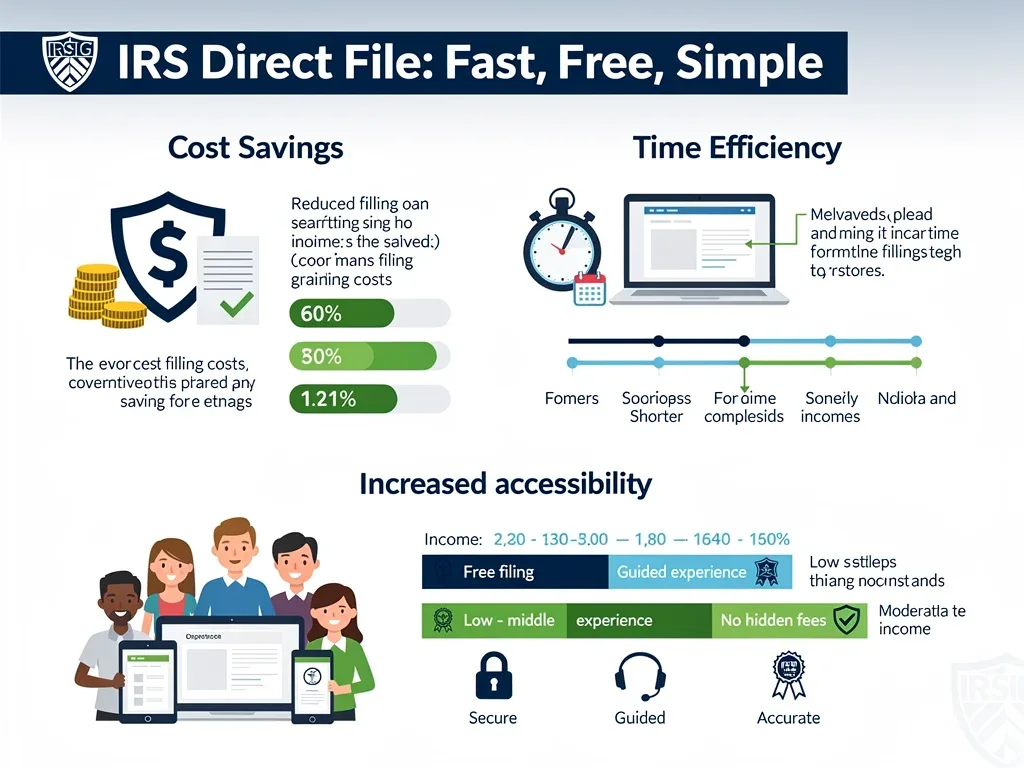
Perhaps the most immediate and tangible benefit is the elimination of tax preparation fees. Commercial tax software and professional tax preparers can cost anywhere from tens to hundreds of dollars, depending on the complexity of the return. For 30 million individuals and families, this expansion means those costs are now entirely avoidable, freeing up valuable financial resources that can be used for savings, investments, or daily expenses. This is particularly impactful for lower and middle-income households where every dollar saved makes a difference.

Enhanced Accessibility and Simplicity
The Direct File system is designed with user experience in mind, offering a streamlined and intuitive interface. This simplicity democratizes tax filing, making it accessible even to those who may not be tech-savvy or have limited experience with tax preparation. The step-by-step guidance helps users navigate the process with confidence, reducing the intimidation often associated with tax season. Furthermore, by being a direct government service, it eliminates the need to sift through various commercial options, each with its own pricing structure and features.
- Simplified Process: Clear, guided steps reduce confusion.
- Reduced Stress: Eliminates the burden of choosing and paying for software.
- Direct Support: Access to IRS resources for assistance.
Moreover, the program's expansion signifies a commitment from the IRS to provide modern, efficient services directly to taxpayers. This move is expected to foster greater trust and engagement between the public and the tax agency, demonstrating a proactive approach to taxpayer support. The convenience of filing directly from home, at any time, without external costs, represents a significant step towards a more equitable and efficient tax system.
How Direct File Integrates with State Taxes
One of the most frequently asked questions regarding the IRS Direct File system is its interaction with state income taxes. While federal tax filing is a universal requirement, state tax obligations vary widely, and integrating these two processes seamlessly is a complex but crucial aspect of providing a comprehensive free filing solution. The IRS has taken a phased approach to this integration, partnering with several states in the initial expansion.
Participating States and Integration Models
The current iteration of the Direct File system includes partnerships with a select number of states. In these participating states, taxpayers may be able to prepare and file their state income tax returns directly through the Direct File platform, or they might be directed to a state-specific free filing tool after completing their federal return. This integration is vital because it extends the cost-saving and simplicity benefits to both federal and state tax obligations, offering a truly free end-to-end solution for eligible residents.
- Seamless Federal and State Filing: In some states, a combined experience.
- Referral to State Tools: In others, direct links to free state filing options.
- Future Expansion: The IRS plans to expand state partnerships over time.
The models for integration vary. Some states have developed their own free direct filing portals that are linked directly from the IRS Direct File platform, allowing for a relatively smooth transition. Other states are exploring deeper integration where the federal data can pre-populate portions of the state return, further reducing the effort required from the taxpayer. This collaborative approach between the IRS and state tax agencies is essential for maximizing the utility and reach of the Direct File program.
Addressing Common Concerns and Misconceptions
As with any new government initiative, especially one involving taxes, the IRS Direct File system has generated its share of questions and, at times, misconceptions. Addressing these concerns is vital for building taxpayer confidence and ensuring the program's successful adoption. Transparency and clear communication are paramount to dispelling myths and providing accurate information.
Data Security and Privacy
A primary concern for many taxpayers is the security of their personal and financial data. The IRS emphasizes that the Direct File system is built with robust security measures to protect sensitive information. As a government-operated platform, it adheres to stringent federal cybersecurity standards, often exceeding those of commercial alternatives. The IRS is committed to maintaining the highest levels of data integrity and privacy, employing encryption, multi-factor authentication, and continuous monitoring to safeguard taxpayer data.

Impact on Commercial Tax Preparers
Another common point of discussion revolves around the potential impact of Direct File on commercial tax preparation companies. While the expansion offers a free alternative, it is currently limited to taxpayers with less complex returns. Commercial software and professional preparers will continue to serve a vast market, including individuals with itemized deductions, business income, complex investments, or those who prefer professional assistance. The Direct File system is positioned as a complementary option, not a wholesale replacement, aiming to fill a gap in the market for simple, free filing.
- Robust Security: Adherence to federal cybersecurity standards.
- Limited Scope: Primarily for less complex tax situations.
- Complementary Service: Coexists with commercial options.
The IRS also provides ample resources and customer support for Direct File users, addressing technical issues and tax-related questions. This direct line to the IRS helps alleviate concerns about getting assistance, ensuring that taxpayers are not left to navigate the system alone. By proactively addressing these concerns, the IRS aims to build a foundation of trust and reliability for its new filing system.
The Future Outlook for Direct File
The expansion of the IRS Direct File system to 30 million eligible filers is not merely an isolated event but a significant step in the ongoing modernization of tax administration in the United States. This pilot program has demonstrated considerable potential, and its future trajectory is a topic of keen interest for taxpayers, policymakers, and financial professionals alike. The IRS has indicated a clear commitment to evaluating and potentially broadening the program's scope in the years to come.
Potential for Further Expansion and Features
Based on the success and feedback from the current phase, there is a strong possibility that Direct File will continue to expand its eligibility criteria and incorporate additional tax situations. This could include accommodating more types of income, deductions, and credits, thereby making the free filing option available to an even larger percentage of the population. Furthermore, the IRS may explore adding more advanced features, such as direct deposit options for refunds, estimated tax payment capabilities, and enhanced integration with state tax systems across all states.
- Broader Eligibility: Inclusion of more complex tax scenarios.
- Advanced Features: Direct deposit, estimated payments, improved state integration.
- Continuous Improvement: Regular updates based on user feedback and technological advancements.
The long-term vision for Direct File is to establish it as a permanent, integral part of the nation's tax infrastructure, offering a reliable and cost-effective alternative for millions. This strategic move aligns with global trends where many developed nations provide government-run free tax filing services. The continuous evaluation of user experience, technological enhancements, and legislative support will be critical in shaping the future of this promising initiative. The IRS's commitment to modernization suggests a future where tax filing is less burdensome and more accessible for all.
| Key Point | Brief Description |
|---|---|
| Eligibility Expansion | 30 million eligible filers can now use the free Direct File system. |
| Zero Cost Filing | Eliminates fees for federal tax preparation, saving taxpayers money. |
| State Tax Integration | Partnerships with states offer combined or linked state tax filing options. |
| Enhanced Security | Robust federal cybersecurity measures protect taxpayer data. |
Frequently Asked Questions About IRS Direct File
Who is eligible for the expanded IRS Direct File system?▼Eligibility for the expanded IRS Direct File system primarily includes taxpayers with W-2 wages, unemployment income, Social Security benefits, and limited interest income. It is generally designed for those who take the standard deduction and claim common credits like the Child Tax Credit or Earned Income Tax Credit. The IRS provides an online tool to check specific eligibility.
What are the main benefits of using IRS Direct File?▼The primary benefits of using IRS Direct File include significant cost savings by eliminating tax preparation fees, enhanced accessibility through a user-friendly interface, and the security of filing directly with the government. It simplifies the tax process for millions, reducing stress and making tax compliance more straightforward for eligible individuals.
Does Direct File cover state income taxes?▼Yes, in certain participating states, the IRS Direct File system integrates with state tax filing. This means taxpayers in those states may be able to file both their federal and state income taxes for free, either directly through the platform or via linked state-specific free filing tools. The IRS is working to expand these state partnerships.
How secure is my data when using IRS Direct File?▼The IRS Direct File system is built with robust federal cybersecurity standards to protect taxpayer data. It employs strong encryption, multi-factor authentication, and continuous monitoring to ensure the highest levels of data integrity and privacy. As a government-operated platform, it prioritizes the security of sensitive personal and financial information.
Will IRS Direct File replace commercial tax software?▼No, IRS Direct File is not intended to replace commercial tax software entirely. It serves as a complementary option for taxpayers with less complex returns, providing a free alternative. Commercial software and professional preparers will continue to cater to individuals with more intricate tax situations, including itemized deductions, business income, and complex investments.
Conclusion
The expansion of the IRS Direct File system to include 30 million eligible filers represents a monumental shift in how Americans can approach their tax obligations. By providing a free, secure, and user-friendly platform, the IRS is not only saving taxpayers millions of dollars but also demystifying the tax filing process. This initiative underscores a commitment to modernization and accessibility, promising a future where tax compliance is less of a burden and more of an equitable, straightforward civic duty for a significant portion of the population. As the program continues to evolve, its impact on financial well-being and government-citizen trust is poised to grow.
