MicroLED Displays: Ready for Mass Adoption? 4,000-Nit Brightness & Power Efficiency
Advertisements
MicroLED displays, with their promise of 4,000-nit peak brightness and superior power efficiency, are still navigating significant manufacturing hurdles and high costs that currently prevent their widespread mass adoption.
Are MicroLED mass adoption displays truly ready for the mainstream market, or are they still a futuristic dream? This question resonates deeply within the consumer electronics industry as we explore the cutting-edge capabilities of MicroLED technology, particularly its impressive 4,000-nit peak brightness and remarkable power efficiency.
Understanding MicroLED Technology: Beyond OLED and LCD
MicroLED technology represents a significant leap forward in display innovation, moving beyond the limitations of traditional LCD and even advanced OLED panels. At its core, MicroLED utilizes microscopic LEDs, each acting as an individual pixel, capable of emitting its own light. This fundamental difference unlocks a host of advantages that could revolutionize how we interact with screens.
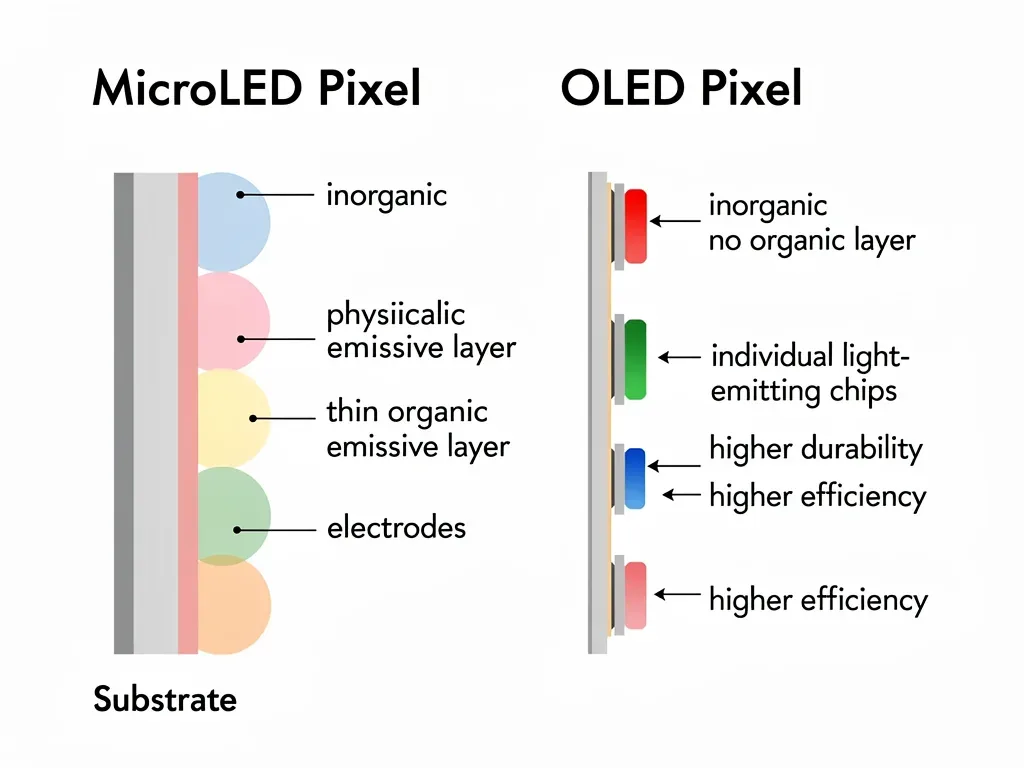
Unlike OLED, which uses organic compounds that degrade over time and are susceptible to burn-in, MicroLEDs are made from inorganic gallium nitride (GaN). This makes them inherently more durable and long-lasting. The self-emissive nature of each sub-pixel allows for perfect blacks and incredibly high contrast ratios, as individual pixels can be completely turned off. This precision also contributes to their superior color accuracy and volumetric brightness, rendering images with unparalleled realism.
The foundational principles of MicroLED displays
- Individual Pixel Illumination: Each microscopic LED acts as a self-emissive sub-pixel, providing precise light control.
- Inorganic Material Composition: Made from durable gallium nitride, MicroLEDs offer extended lifespan and resistance to burn-in.
- Modular Design Potential: MicroLED panels can be tiled together seamlessly to create displays of virtually any size or shape.
The ability to create modular displays is particularly exciting for large-format screens, allowing for custom installations that are not feasible with other technologies. This flexibility, combined with their robust performance characteristics, positions MicroLED as a formidable contender for the next generation of premium displays.
The Quest for 4,000-Nit Peak Brightness: A Visual Revolution
One of the most talked-about features of MicroLED displays is their astonishing ability to achieve peak brightness levels of up to 4,000 nits. This capability isn't just a number; it translates into a profoundly different visual experience, especially for High Dynamic Range (HDR) content. To put this into perspective, many premium OLED TVs typically max out around 1,000 nits, while conventional LCDs are often lower.
This extreme brightness allows MicroLED screens to render highlights with incredible intensity and realism, making sunlight appear genuinely dazzling and reflections sparkle with lifelike brilliance. This expanded dynamic range brings a new dimension to visual content, making scenes feel more immersive and true to life. For content creators, it means their artistic vision can be reproduced with greater fidelity than ever before.
Beyond cinematic experiences, high brightness is crucial for displays used in challenging lighting environments, such as outdoor signage or bright retail spaces. It also significantly improves visibility in augmented reality (AR) and virtual reality (VR) headsets, where ambient light can easily wash out less luminous displays. The capability to deliver such luminous output without sacrificing black levels is a game-changer.
Impact of extreme brightness on viewing experience
- Enhanced HDR Content: Delivers stunning highlights and greater detail in bright areas, replicating real-world light more accurately.
- Improved Outdoor Visibility: Makes displays legible even under direct sunlight, ideal for professional and public installations.
- Future of AR/VR: Provides the necessary luminance for immersive experiences that can compete with real-world brightness.
Achieving 4,000 nits requires precise engineering and efficient light emission from each minuscule LED. This level of brightness, coupled with the inherent contrast of self-emissive pixels, creates a visual depth and vibrancy that conventional display technologies struggle to match. The result is a picture that not only looks brighter but also more vibrant and true to reality.
Power Efficiency: A Sustainable Advantage of MicroLED
In an era where energy consumption is a critical concern, the power efficiency of display technologies is paramount. MicroLED displays hold a significant advantage in this regard, promising to deliver stunning visuals with lower energy demands compared to their counterparts. This efficiency stems from several key characteristics inherent to the technology.
Firstly, like OLED, MicroLEDs are self-emissive, meaning each pixel generates its own light. This eliminates the need for a backlight unit, which is a major power drain in LCD panels. By removing the backlight, MicroLEDs can achieve perfect blacks by simply turning off individual pixels, consuming no power for those dark areas. This is a stark contrast to LCDs, which constantly illuminate their entire panel, even for dark scenes, leading to significant energy waste.
Secondly, the inorganic nature of MicroLEDs contributes to their efficiency. They tend to be more efficient at converting electrical energy into light than organic LEDs. While OLEDs have made strides in efficiency, MicroLEDs often boast even better luminous efficacy, especially at higher brightness levels. This means they can produce more light per watt of power consumed.

Factors contributing to MicroLED power efficiency
- Absence of Backlight: Eliminates the significant power consumption associated with traditional LCD backlights.
- Individual Pixel Control: Pixels can be turned off completely for true blacks, saving energy in dark scenes.
- Inorganic Material Efficiency: More efficient conversion of electricity to light compared to organic materials in OLEDs.
The potential for reduced power consumption is not only beneficial for the environment but also for battery-powered devices. Imagine smartphones, smartwatches, or laptops with displays that offer incredible brightness and color accuracy while extending battery life. This could unlock new possibilities for portable electronics and contribute to more sustainable consumer technology. The long-term implications for energy savings across various applications are substantial, making MicroLED an attractive option for future innovation.
Manufacturing Hurdles: The Roadblock to Mass Adoption
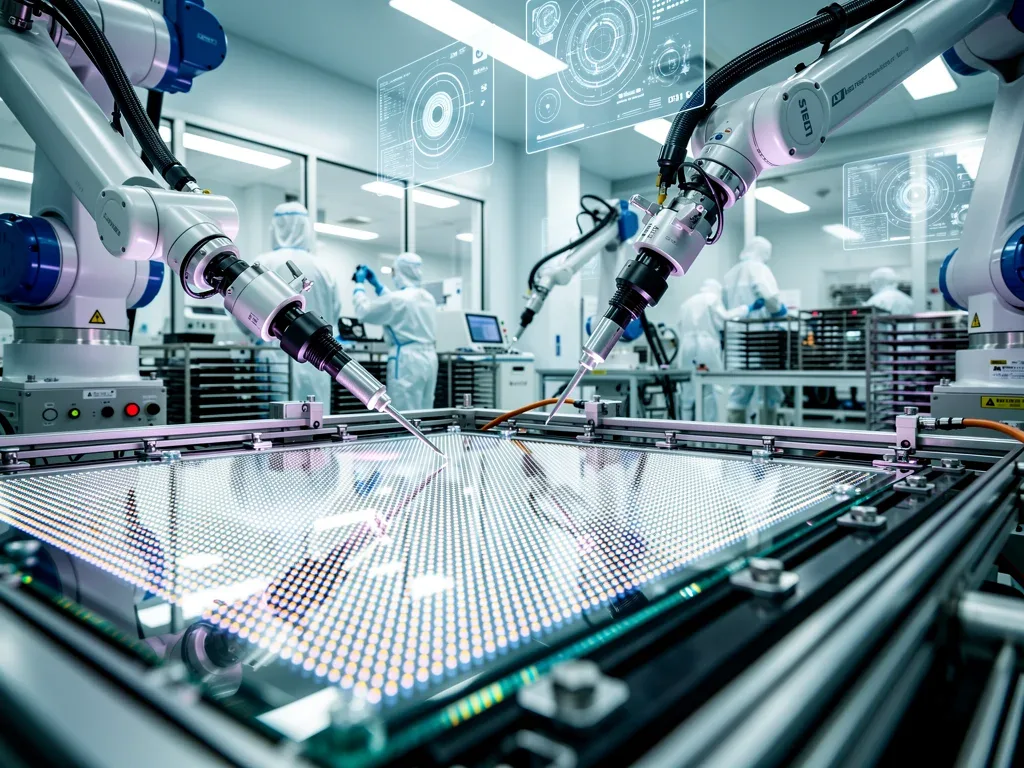
Despite their impressive technical specifications, the journey for MicroLED mass adoption has been slow, primarily due to significant manufacturing challenges. The core issue lies in the sheer scale and precision required to produce these displays. Each MicroLED pixel is incredibly small, often just a few micrometers in size, meaning a 4K display contains over 24 million such individual LEDs.
The process of transferring these microscopic LEDs from their growth substrate to the display backplane is known as 'mass transfer,' and it's extraordinarily complex. Current methods struggle with throughput, yield rates, and the precision needed to place millions of tiny LEDs without defects. A single faulty LED can render an entire sub-pixel or pixel unusable, leading to costly waste. This low yield significantly drives up manufacturing costs.
Another challenge is the uniformity of the LEDs. Ensuring that all millions of LEDs emit light with consistent brightness and color requires extremely tight tolerances during fabrication and calibration. Any variation can result in a visible non-uniformity across the screen, which is unacceptable for premium displays. These hurdles explain why MicroLED products currently on the market are typically very large, high-end commercial displays, or luxury consumer items with astronomical price tags.
Key manufacturing challenges for MicroLED
- Mass Transfer Complexity: Precisely placing millions of microscopic LEDs onto a substrate at high speeds without defects.
- Yield Rates: Low yield due to the difficulty of producing perfect, defect-free panels, leading to high waste.
- Uniformity and Calibration: Ensuring consistent brightness and color across millions of individual LEDs is a significant technical hurdle.
- Cost of Production: The intricate processes and low yields contribute to extremely high manufacturing costs.
Overcoming these manufacturing obstacles is crucial for MicroLED to transition from niche, high-cost applications to mainstream consumer products. Researchers and manufacturers are actively investing in new mass transfer techniques, self-repair mechanisms, and advanced inspection systems to improve efficiency and reduce costs. Until these processes become more streamlined and cost-effective, MicroLED will remain a premium technology.
Cost Implications and Market Positioning
The manufacturing complexities directly translate into exorbitant costs, which is perhaps the single biggest barrier to MicroLED mass adoption. Currently, MicroLED displays are priced far beyond the reach of the average consumer, positioning them exclusively in the ultra-luxury segment or for specialized commercial applications. For instance, early consumer MicroLED TVs have debuted with price tags well into the tens of thousands or even hundreds of thousands of dollars.
This high cost is a direct consequence of the low manufacturing yields, the expensive equipment required for precise mass transfer, and the meticulous quality control needed for such a high-fidelity display. Each defect means a significant portion of the production effort is wasted, driving up the cost of the functional units. Furthermore, the supply chain for MicroLED components is still maturing, lacking the economies of scale seen in more established display technologies like LCD and OLED.
For MicroLED to become competitive in the consumer market, its production costs need to drop dramatically. This will require breakthroughs in manufacturing efficiency, such as faster and more accurate mass transfer techniques, and potentially new ways to grow and process the LED chips themselves. Until these cost reductions materialize, MicroLED will remain a premium showcase technology rather than a mainstream option.
Cost-related factors impacting MicroLED adoption
- High Production Costs: Driven by complex manufacturing, low yields, and specialized equipment.
- Limited Economies of Scale: The nascent supply chain prevents significant cost reductions through mass production.
- Niche Market Positioning: Currently restricted to ultra-luxury consumer products and specialized commercial markets due to price.
The industry is hopeful that with continued research and development, particularly in areas like micro-transfer printing and self-assembly techniques, costs will eventually come down. However, this is likely a multi-year endeavor. In the interim, MicroLED will continue to serve as a benchmark for display performance, gradually making its way into smaller, more manageable form factors like smartwatches or AR glasses before tackling larger consumer screens.
The Future Outlook: Niche Dominance or Mainstream Success?
The future of MicroLED mass adoption is a topic of intense debate and speculation within the tech industry. While the technology's inherent advantages in brightness, contrast, color accuracy, and longevity are undeniable, the path to mainstream success is fraught with challenges. Many experts believe that MicroLED will first find its footing in niche markets where its premium performance justifies the high cost.
These early adoption areas include large-format commercial displays, such as digital signage and control room monitors, where durability and visual impact are paramount. Another promising avenue is in augmented reality (AR) and virtual reality (VR) headsets, where the small size, high brightness, and fast response times of MicroLEDs are highly beneficial for creating immersive experiences. Luxury consumer products, like high-end smartwatches or custom home theater setups, will also likely continue to feature MicroLED as a halo product.
For MicroLED to truly enter the mainstream, particularly in segments like smartphones, tablets, and televisions, significant breakthroughs in manufacturing efficiency and cost reduction are essential. The industry is actively pursuing solutions such as advanced mass transfer technologies, improved yield rates, and potentially hybrid display architectures that combine MicroLED with other technologies to balance performance and cost.
Potential pathways for MicroLED market penetration
- Niche Market Dominance: Initial success in high-value segments like commercial displays, AR/VR, and luxury consumer goods.
- Manufacturing Breakthroughs: Essential for reducing costs and improving scalability for mass-market appeal.
- Hybrid Approaches: Combining MicroLED with other display technologies to offer compelling performance at a more accessible price point.
- Smaller Device Integration: Smartwatches and other compact devices might be the first consumer products to see wider MicroLED adoption.
The journey from a groundbreaking laboratory concept to a ubiquitous consumer product is a long one, often spanning decades. While MicroLED displays are not yet ready for mass adoption in the same way OLED and LCD are, their trajectory suggests a gradual expansion from high-end applications to more accessible markets as technology matures and production costs decline. The question isn't if MicroLED will succeed, but rather when and at what scale it will transform our visual landscape.
| Key Aspect | Description |
|---|---|
| 4,000-Nit Brightness | MicroLEDs achieve exceptional peak brightness, enhancing HDR content and outdoor visibility significantly. |
| Power Efficiency | Self-emissive pixels and inorganic materials lead to lower energy consumption compared to LCDs and often OLEDs. |
| Manufacturing Hurdles | Complex mass transfer, low yields, and uniformity challenges hinder scalable and cost-effective production. |
| Cost Implications | High production costs currently restrict MicroLED to ultra-luxury and specialized commercial markets. |
Frequently Asked Questions about MicroLED Displays
What makes MicroLED displays different from OLED or LCD?▼MicroLEDs use microscopic, inorganic LEDs that emit their own light, unlike LCDs which use a backlight, or OLEDs which use organic materials. This results in superior brightness, contrast, longevity, and efficiency without burn-in risks.
Why is 4,000-nit peak brightness important?▼Achieving 4,000-nit peak brightness allows for incredibly realistic High Dynamic Range (HDR) content, making highlights appear dazzling and scenes more immersive. It also improves screen visibility in very bright environments, such as outdoors or in AR/VR applications.
Are MicroLED displays more power-efficient?▼Yes, MicroLEDs are highly power-efficient. Their self-emissive nature means no power is wasted on a backlight, and individual pixels can be turned off for true blacks. The inorganic materials also contribute to better luminous efficacy, especially at high brightness levels.
What are the main obstacles to MicroLED mass adoption?▼The primary obstacles are complex manufacturing processes, particularly the mass transfer of millions of tiny LEDs, resulting in low production yields and extremely high costs. Ensuring uniformity and defect-free panels at scale remains a significant technical challenge.
When can we expect MicroLED displays to become affordable for consumers?▼While MicroLEDs are currently very expensive, continuous research into more efficient manufacturing methods is ongoing. It will likely take several years for costs to decrease enough for widespread consumer affordability, with initial adoption in premium and niche markets.
Conclusion
MicroLED technology undoubtedly stands as a pinnacle of display innovation, promising unparalleled visual fidelity with its 4,000-nit peak brightness, perfect blacks, and superior power efficiency. These attributes position it as the ideal successor to current display technologies, capable of delivering breathtaking experiences across a multitude of applications. However, the road to MicroLED mass adoption is still long, primarily hampered by the formidable manufacturing challenges and the resulting exorbitant costs. While early implementations in ultra-premium and specialized commercial markets are demonstrating its potential, widespread consumer availability hinges on significant breakthroughs in production scalability and cost reduction. The industry is actively working towards these solutions, and while MicroLED may not be in every home tomorrow, its eventual impact on how we see and interact with digital content is virtually guaranteed, making it a technology to watch closely.
