Optimizing Container Orchestration: Slashing Kubernetes Idle Cluster Resource Overhead by 34%
Advertisements
Optimizing container orchestration is crucial for reducing Kubernetes idle cluster resource overhead, with effective strategies capable of slashing costs by 34% through efficient resource allocation and management.
In today's dynamic cloud-native landscape, achieving cost efficiency while maintaining performance is paramount. One of the most significant challenges organizations face is managing idle resources in their container orchestration platforms, especially within Kubernetes. This article delves into the critical strategies for optimizing container orchestration: slashing Kubernetes idle cluster resource overhead by 34%, transforming potential waste into substantial savings and improved operational agility.
Understanding Kubernetes Idle Resource Overhead
Kubernetes, while powerful, can be a significant source of cloud cost if not managed effectively. Idle resource overhead refers to the computing resources (CPU, memory, storage, network) that are provisioned within a Kubernetes cluster but remain unused or underutilized. This often stems from over-provisioning to handle peak loads, inefficient scheduling, or simply forgetting to de-provision resources after they are no longer needed.
The implications of this overhead extend beyond just financial costs. It can lead to increased complexity in management, slower deployment cycles, and a larger environmental footprint due to unnecessary energy consumption. Identifying and addressing these idle resources is the first step towards a more sustainable and cost-effective cloud infrastructure.
Common Causes of Resource Waste
Several factors contribute to idle resources in Kubernetes clusters. Understanding these root causes is essential for developing effective mitigation strategies.
- Over-provisioning: Often done out of caution, allocating more resources than applications actually need.
- Inefficient Pod Scheduling: Kubernetes scheduler might place pods on nodes that already have sufficient capacity, leaving other nodes underutilized.
- Unused Namespaces/Clusters: Development, testing, or abandoned projects can leave behind entire namespaces or clusters consuming resources.
- Lack of Resource Requests and Limits: Without properly defined resource requests and limits for pods, the scheduler cannot make informed decisions, leading to inefficient packing.
By pinpointing these common pitfalls, organizations can begin to implement targeted solutions that directly impact their resource utilization. This proactive approach not only saves money but also enhances the overall health and responsiveness of the Kubernetes environment.
Ultimately, a deep understanding of idle resource overhead is foundational. It allows teams to move beyond reactive cost-cutting measures to a strategic framework that ensures every dollar spent on cloud infrastructure delivers maximum value. This foundational knowledge empowers organizations to embark on a journey towards significant optimization.
Implementing Right-Sizing and Auto-Scaling
Right-sizing and auto-scaling are cornerstones of efficient Kubernetes resource management. Right-sizing involves adjusting resource requests and limits for pods to match their actual consumption, preventing over-allocation. Auto-scaling, on the other hand, dynamically adjusts the number of pods or nodes based on demand, ensuring resources are available when needed and scaled down during periods of low activity.
The combination of these two approaches provides a powerful mechanism to maintain performance while significantly reducing idle resources. It requires careful monitoring and analysis of application behavior over time to set appropriate thresholds and configurations.
Dynamic Resource Adjustment with Horizontal Pod Autoscalers (HPAs)
Horizontal Pod Autoscalers (HPAs) automatically scale the number of pods in a deployment or replica set based on observed CPU utilization or custom metrics. This ensures that applications can handle varying loads without manual intervention or constant over-provisioning.
- Define Metrics: Identify the key performance indicators (KPIs) that accurately reflect your application's load, such as CPU, memory, or custom metrics like queue length.
- Set Thresholds: Establish appropriate target utilization percentages that trigger scaling actions.
- Monitor Performance: Continuously observe HPA behavior and adjust configurations as application needs evolve.
Vertical Pod Autoscalers (VPAs) complement HPAs by automatically adjusting the CPU and memory requests and limits for individual containers, further refining resource allocation. VPAs learn from historical usage and recommend optimal settings, which can then be automatically applied.
The strategic deployment of right-sizing and auto-scaling tools dramatically transforms how resources are consumed. Instead of guessing future needs, these mechanisms allow for a responsive, demand-driven infrastructure. This adaptability is key to achieving significant reductions in idle overhead and fostering a truly elastic environment.
Leveraging Cluster Auto-Scaling for Node Optimization
While Horizontal Pod Autoscalers manage pod counts, Cluster Auto-scalers (CAS) handle the provisioning and de-provisioning of nodes in a Kubernetes cluster. This is critical for optimizing infrastructure costs, as idle nodes contribute significantly to overhead. CAS monitors pending pods and node utilization, adding or removing nodes as required.
Implementing CAS effectively requires careful consideration of cloud provider integrations and understanding the nuances of node pool configurations. It ensures that you only pay for the compute capacity you truly need, scaling down during off-peak hours and scaling up to meet demand spikes.

Optimizing Node Provisioning and De-provisioning
Efficient node management is a delicate balance. Too aggressive de-provisioning can lead to performance issues, while too conservative an approach maintains idle resources. Best practices include:
- Node Group Configuration: Define different node groups for specific workloads (e.g., CPU-intensive, memory-intensive) to ensure optimal resource matching.
- Graceful Shutdowns: Configure nodes to drain pods gracefully before de-provisioning, preventing service interruptions.
- Cost-Aware Scheduling: Utilize features that prioritize scheduling pods on cheaper or spot instances where appropriate.
The impact of well-configured cluster auto-scaling is profound, directly translating into tangible cost reductions. By aligning node capacity with actual workload demands, organizations can avoid the common pitfall of having expensive, underutilized infrastructure. This dynamic infrastructure management is a cornerstone of advanced Kubernetes optimization strategies.
Strategic Workload Placement and Scheduling
Effective workload placement and scheduling are vital for maximizing resource utilization within a Kubernetes cluster. Kubernetes offers a rich set of features, such as node selectors, taints, tolerations, and affinity/anti-affinity rules, that allow administrators to guide where pods are scheduled. Strategic use of these features can lead to better packing of pods onto nodes, reducing fragmentation and idle capacity.
For instance, placing resource-intensive applications on dedicated nodes or preventing critical services from sharing nodes with noisy neighbors can significantly improve performance and resource efficiency. This fine-grained control allows for a more intelligent distribution of workloads across the available infrastructure.
Advanced Scheduling Techniques
Beyond basic scheduling, advanced techniques can further enhance resource utilization:
- Pod Topology Spread Constraints: Distribute pods evenly across failure domains (e.g., zones, regions, nodes) to improve high availability and resource distribution.
- Descheduler: A Kubernetes controller that evicts pods to allow the scheduler to reschedule them to more optimal nodes, especially after node scaling events or resource reconfigurations.
- Resource Quotas and Limit Ranges: Enforce resource consumption policies at the namespace level, preventing any single team or application from monopolizing cluster resources.
By carefully orchestrating where and how workloads are placed, organizations can significantly reduce wasted resources. This methodical approach to scheduling ensures that the cluster operates at its peak efficiency, making every allocated resource count. It's a continuous process of refinement and adaptation to evolving application needs.
Continuous Monitoring and Cost Management Tools
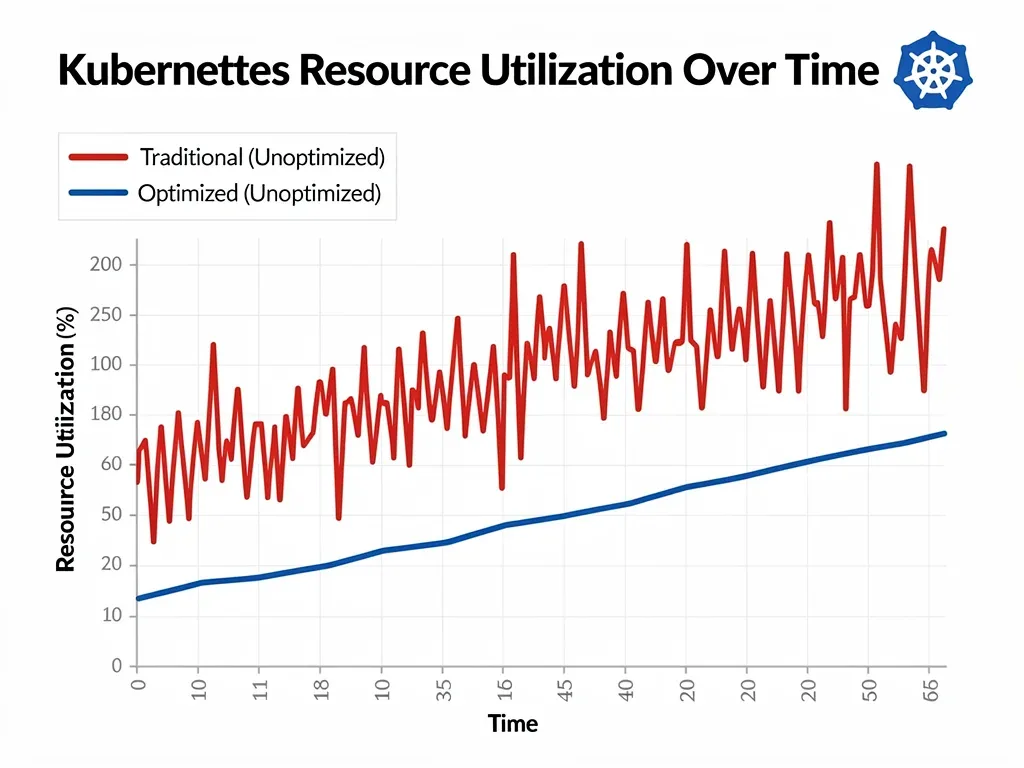
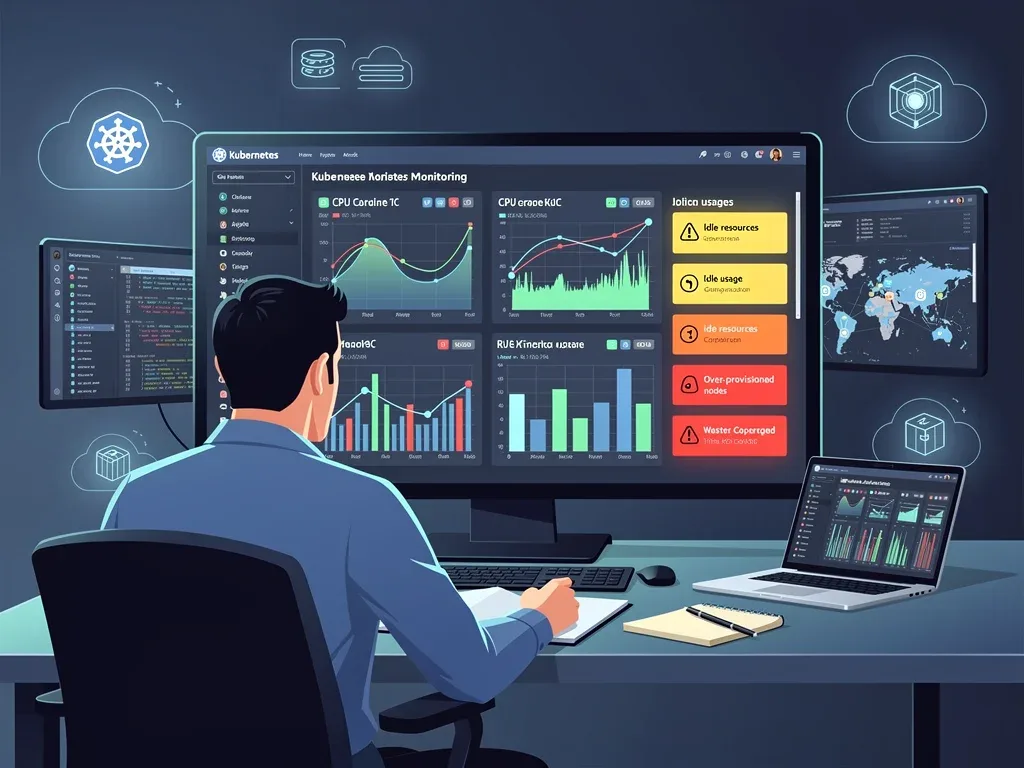
You cannot optimize what you cannot measure. Continuous monitoring is indispensable for identifying idle resources, understanding consumption patterns, and validating the effectiveness of optimization efforts. A robust monitoring stack provides visibility into CPU, memory, network, and storage utilization across pods, nodes, and namespaces.
Integrating cost management tools with monitoring data provides a clear financial perspective on resource usage. These tools can attribute costs to specific teams, applications, or services, enabling chargebacks or showbacks and fostering a culture of cost-awareness among development teams.
Essential Monitoring and Cost Tools
A comprehensive strategy involves a combination of native Kubernetes tools and third-party solutions:
- Prometheus and Grafana: Widely used for collecting and visualizing metrics, offering deep insights into cluster health and resource consumption.
- Kubecost/CloudHealth: Dedicated Kubernetes cost management platforms that provide detailed cost allocation, optimization recommendations, and anomaly detection.
- Cloud Provider Billing Tools: Leverage native cloud provider tools (e.g., AWS Cost Explorer, Azure Cost Management) to track overall spending and identify trends.
The synergy between continuous monitoring and intelligent cost management tools creates a powerful feedback loop. This loop allows teams to quickly identify inefficiencies, implement adjustments, and quantify the impact of their optimization efforts in real financial terms. This data-driven approach is critical for sustaining long-term cost reductions.
Adopting FinOps Principles for Cloud Cost Control
FinOps is an evolving operational framework that brings financial accountability to the variable spend model of cloud. It empowers teams to make data-driven spending decisions, emphasizing collaboration between finance, operations, and development. Adopting FinOps principles is crucial for sustaining the 34% reduction in Kubernetes idle cluster resource overhead and achieving ongoing cost optimization.
This cultural shift encourages engineers to consider the financial implications of their architectural and operational choices, moving beyond simply provisioning resources to actively managing their lifecycle and cost-effectiveness. It's about instilling a mindset where cost is a shared responsibility.
Key FinOps Practices in Kubernetes
Integrating FinOps into Kubernetes operations involves several key practices:
- Visibility and Allocation: Ensure clear visibility into Kubernetes costs, allocating them to specific teams or projects using labels and annotations.
- Optimization: Continuously identify and implement opportunities to reduce waste, such as rightsizing, auto-scaling, and leveraging spot instances.
- Forecasting and Budgeting: Develop accurate forecasts for Kubernetes spend and set budgets to track against, enabling proactive financial management.
- Collaboration: Foster strong communication channels between engineering, finance, and product teams to align on cost goals and strategies.
By embedding FinOps principles, organizations can transform their approach to cloud costs from a reactive problem to a proactive strategic advantage. This framework not only helps to maintain the achieved savings but also creates a continuous improvement cycle for financial efficiency across the entire cloud-native landscape.
Future Trends and Advanced Optimization Techniques
The landscape of container orchestration and Kubernetes is constantly evolving, bringing new tools and techniques for optimization. Staying abreast of these advancements is key to maintaining a competitive edge and further reducing idle resource overhead. Future trends focus on even smarter automation, predictive analytics, and serverless Kubernetes options.
Embracing these emerging technologies can unlock new levels of efficiency and cost savings, pushing the boundaries of what is possible in cloud-native infrastructure. It requires a willingness to experiment and integrate new solutions into existing workflows.
Emerging Optimization Strategies
- Kube-green: A Kubernetes operator that automatically scales down idle namespaces, deployments, or even entire clusters during off-hours or weekends, perfect for development and staging environments.
- Bursting to Serverless Kubernetes: Utilizing serverless Kubernetes offerings (like AWS Fargate for EKS or Azure Container Instances for AKS) for burstable workloads can eliminate node management overhead and pay-per-use model.
- AI/ML-Driven Optimization: Advanced platforms are beginning to use machine learning to predict workload patterns and automatically adjust resource allocations and scaling policies, achieving higher precision than rule-based systems.
Exploring these future trends and advanced techniques offers a path to even greater efficiency gains. Organizations that proactively adopt these innovations will be better positioned to manage their cloud costs effectively, ensuring their Kubernetes environments remain lean, agile, and performant in the long run. The journey to optimal resource utilization is continuous.
| Key Optimization Strategy | Brief Description |
|---|---|
| Right-Sizing & Auto-Scaling | Adjusting pod resources and dynamically scaling based on actual demand to prevent over-provisioning. |
| Cluster Auto-Scaling | Automatically adding or removing nodes to match workload needs, reducing idle node costs. |
| Continuous Monitoring & FinOps | Tracking resource usage and applying financial accountability for sustained cost efficiency. |
| Strategic Workload Placement | Using Kubernetes features to intelligently schedule pods for better resource packing and performance. |
Frequently Asked Questions About Kubernetes Optimization
What is Kubernetes idle cluster resource overhead?▼It refers to the computing resources (CPU, memory, etc.) provisioned within a Kubernetes cluster that are unused or underutilized. This waste often results from over-provisioning or inefficient scheduling, leading to unnecessary cloud expenditure.
How can auto-scaling help reduce overhead?▼Auto-scaling dynamically adjusts the number of pods (HPA) or nodes (Cluster Autoscaler) based on real-time demand. This ensures resources are scaled up during peak loads and scaled down during low activity, preventing costly idle capacity.
What role does FinOps play in Kubernetes cost optimization?▼FinOps integrates financial accountability with cloud operations. It promotes collaboration between finance and engineering teams to make data-driven decisions, ensuring cost awareness and continuous optimization of Kubernetes spend.
Are there tools to monitor Kubernetes resource usage?▼Yes, tools like Prometheus and Grafana provide comprehensive monitoring of CPU, memory, and other metrics. Dedicated platforms like Kubecost also offer detailed cost allocation and optimization recommendations for Kubernetes environments.
Can strategic workload placement improve efficiency?▼Absolutely. Using features like node selectors and affinity rules, administrators can guide pod scheduling to achieve better packing of workloads onto nodes, reducing fragmentation and maximizing resource utilization across the cluster.
Conclusion
Achieving a significant reduction in Kubernetes idle cluster resource overhead, such as the impressive 34% discussed, is not merely a goal but a strategic imperative for modern organizations. By systematically implementing right-sizing, advanced auto-scaling, strategic workload placement, and robust monitoring, coupled with a FinOps mindset, businesses can transform their cloud infrastructure into a lean, cost-efficient, and highly performant asset. The journey towards optimal container orchestration is continuous, demanding ongoing vigilance and adaptation to new technologies and practices, but the benefits in terms of cost savings and operational agility are undeniably worth the effort.
