Software Supply Chain Security: Auditing SBOMs to Prevent Injections
Advertisements
Auditing Software Bill of Materials (SBOMs) is crucial for robust software supply chain security, significantly mitigating risks from open-source dependency injections by providing transparency and enabling proactive vulnerability management.
In today's interconnected digital landscape, the integrity of our software relies heavily on the security of its constituent parts. The rising tide of cyber threats has cast a spotlight on the critical need for robust Software Supply Chain Security: Auditing SBOMs to Prevent 80% of Open-Source Dependency Injections. This article delves into how a proactive approach to auditing Software Bill of Materials (SBOMs) can be your strongest defense against the pervasive risks of open-source vulnerabilities and malicious injections.
The Escalating Threat of Open-Source Dependency Injections
The modern software ecosystem thrives on open-source components, offering unparalleled speed and innovation. However, this reliance introduces a significant attack surface, making open-source dependency injections a top concern for cybersecurity professionals. These injections can range from subtle backdoors to outright malicious code, often exploiting vulnerabilities in third-party libraries that developers unknowingly incorporate.
Understanding the vectors of these attacks is the first step toward effective mitigation. Attackers often target popular open-source projects, injecting malicious code that then propagates to thousands of downstream applications. This supply chain compromise can lead to widespread data breaches, system outages, and significant reputational damage. The sheer volume and complexity of open-source dependencies make manual tracking and vulnerability identification virtually impossible, underscoring the need for automated and systematic approaches.
Common Attack Vectors and Their Impact
Open-source dependency injections manifest through various sophisticated methods. One prevalent vector is typo-squatting, where attackers register package names similar to popular libraries, hoping developers will mistype and inadvertently download malicious versions. Another is the compromise of legitimate maintainer accounts, allowing attackers to push malicious updates directly to trusted repositories. The impact of such injections can be devastating, leading to:
- Data exfiltration and unauthorized access to sensitive information.
- Ransomware attacks that cripple operations and demand hefty payments.
- Establishment of persistent backdoors for future exploitation.
- Loss of intellectual property and competitive advantage.
The insidious nature of these attacks lies in their ability to bypass traditional perimeter defenses. Since the malicious code is integrated into legitimate software components, it often appears as part of normal application behavior, making detection challenging. Organizations must shift their focus from reactive incident response to proactive prevention, building security into every stage of the software development lifecycle.
In conclusion, the ubiquity of open-source software, while beneficial for innovation, presents a double-edged sword regarding security. The escalating threat of dependency injections necessitates a strategic and comprehensive approach to software supply chain security, with a strong emphasis on transparency and continuous monitoring of all incorporated components.
What is a Software Bill of Materials (SBOM)?
A Software Bill of Materials (SBOM) is essentially a comprehensive, machine-readable inventory of all components, libraries, and modules used in a software product. Think of it as a nutritional label for your software, detailing every ingredient, including open-source and proprietary elements. This transparency is paramount in an era where software is increasingly assembled from diverse sources rather than built from scratch.
SBOMs provide critical visibility into the software supply chain, allowing organizations to understand exactly what they are running and where each component originated. This detailed breakdown includes not only direct dependencies but also transitive dependencies—components that your direct dependencies rely on. Without an SBOM, identifying all these nested layers is a monumental, if not impossible, task.
The concept of an SBOM gained significant traction following executive orders and industry initiatives aimed at bolstering cybersecurity. Its primary purpose is to enable better risk management by providing a clear understanding of potential vulnerabilities lurking within software components. This understanding is the cornerstone of preventing open-source dependency injections and enhancing overall software security.
Key Data Points in an SBOM
A well-structured SBOM typically contains several key pieces of information for each component. These data points are crucial for effective auditing and vulnerability management. Some of the essential elements include:
- Component Name: The official name of the software component or library.
- Version: The specific version number of the component.
- Supplier Name: The entity or organization that supplied the component.
- Hash/Checksum: A unique identifier that verifies the integrity of the component.
- License Information: Details about the open-source or proprietary license under which the component is distributed.
- External References: Links to project repositories, vulnerability databases, or other relevant resources.
These data points empower security teams to quickly identify components with known vulnerabilities, track their usage across different applications, and prioritize remediation efforts. Furthermore, license information helps ensure compliance and avoid legal pitfalls associated with open-source usage. The standardization of SBOM formats, such as SPDX and CycloneDX, facilitates interoperability and automated processing, making them practical tools for large-scale software development.
In essence, an SBOM transforms the opaque nature of software composition into a transparent, auditable record. It moves organizations from a reactive stance, where vulnerabilities are discovered after an attack, to a proactive one, where potential risks are identified and addressed before they can be exploited. This fundamental shift is critical for building resilient software systems in today's threat landscape.
Auditing SBOMs: The Proactive Defense Strategy
Auditing SBOMs is not merely about generating a list of components; it's about actively leveraging that information to identify, assess, and mitigate risks. This proactive defense strategy moves beyond traditional perimeter security, focusing on the internal integrity of your software. By systematically reviewing SBOMs, organizations can uncover hidden vulnerabilities and potential injection points that might otherwise go unnoticed until it's too late.
The audit process involves comparing the components listed in an SBOM against known vulnerability databases, such as the National Vulnerability Database (NVD) and various open-source intelligence feeds. This continuous matching helps identify any components that have reported security flaws. Moreover, auditing extends to checking for outdated components, unauthorized licenses, and even suspicious origins, providing a holistic view of potential risks.
Steps for Effective SBOM Auditing
To establish an effective SBOM auditing process, organizations should consider implementing the following steps:
- Automated Generation: Ensure SBOMs are generated automatically at various stages of the development pipeline to maintain accuracy and completeness.
- Centralized Repository: Store all SBOMs in a centralized, searchable repository for easy access and analysis.
- Vulnerability Scanning Integration: Integrate SBOMs with vulnerability scanning tools that automatically compare components against threat intelligence feeds.
- License Compliance Checks: Automate checks for license compliance to avoid legal issues and ensure adherence to open-source policies.
- Regular Review and Remediation: Establish a routine for reviewing audit findings and a clear process for prioritizing and remediating identified vulnerabilities.
The goal of SBOM auditing is to create a continuous feedback loop where new vulnerabilities are quickly identified, assessed for impact, and patched or replaced. This iterative process significantly reduces the window of opportunity for attackers to exploit known flaws. By making SBOM auditing a core part of your security operations, you transform a static inventory into a dynamic defense mechanism.
Ultimately, auditing SBOMs empowers development and security teams with actionable intelligence. It allows them to make informed decisions about component selection, understand the security posture of their applications, and respond rapidly to emerging threats. This shift from reactive patching to proactive prevention is what makes SBOM auditing a cornerstone of modern software supply chain security.
Preventing 80% of Open-Source Dependency Injections with SBOMs
The claim that auditing SBOMs can prevent up to 80% of open-source dependency injections is not an exaggeration but a reflection of the profound transparency they offer. Most dependency injection attacks exploit known vulnerabilities or introduce malicious code into components that are either unknown to the development team or not properly monitored. SBOMs directly address these blind spots, turning unknown risks into manageable ones.
By having a detailed inventory of every component, organizations can swiftly identify and address vulnerabilities before they are exploited. This includes patching outdated libraries, replacing components with critical flaws, and even detecting suspicious variations that might indicate a malicious injection. The ability to see deep into the software's composition is the primary driver behind this significant reduction in risk.

The 80% prevention figure stems from the fact that a vast majority of open-source related breaches leverage publicly known vulnerabilities or simple dependency confusion attacks. SBOMs, when properly audited, are incredibly effective at exposing these issues. They provide the foundational data necessary for automated security tools to work efficiently, reducing the attack surface by systematically eliminating known weaknesses. This proactive stance transforms security from a reactive scramble into a predictable, manageable process.

Real-World Impact and Case Studies
Consider the impact of major supply chain attacks like SolarWinds, where a malicious update was injected into a widely used software product, affecting thousands of organizations. While SolarWinds involved proprietary software, the principle of supply chain compromise is identical for open-source dependencies. Had comprehensive SBOMs been readily available and regularly audited across the affected supply chain, the malicious components could have been isolated and remediated much faster, if not entirely prevented.
In the open-source realm, vulnerabilities like Log4Shell demonstrated the cascading effect of a single flaw in a pervasive library. Organizations with well-maintained SBOMs were able to quickly identify where Log4j was used across their entire software portfolio, enabling rapid patching and minimizing exposure. Those without SBOMs faced a far more arduous and time-consuming task of manually searching for the vulnerable component, often with significant delays.
Ultimately, the power of SBOMs in preventing open-source dependency injections lies in their ability to provide unprecedented visibility and enable automated, continuous security monitoring. This systematic approach allows organizations to stay ahead of attackers, significantly reducing their chances of success.
Integrating SBOM Auditing into Your DevSecOps Pipeline
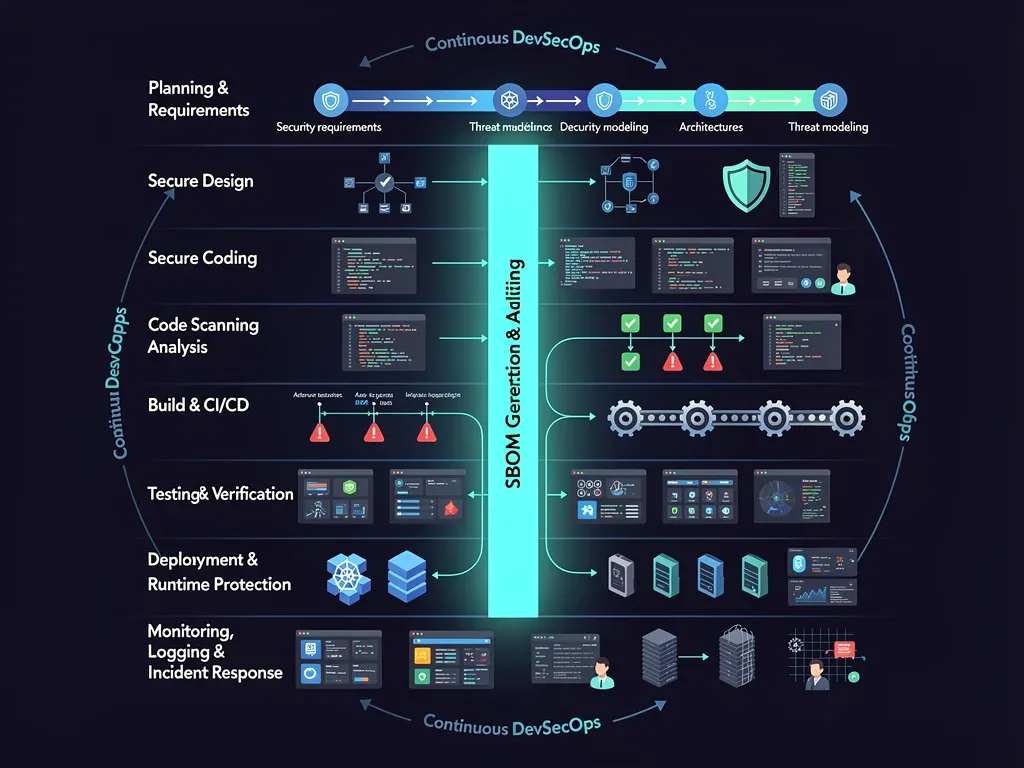
For SBOM auditing to be truly effective, it cannot be an afterthought. It must be seamlessly integrated into the entire DevSecOps pipeline, becoming an intrinsic part of every stage, from development to deployment and beyond. This "shift left" approach ensures that security considerations are addressed early and continuously, rather than being bolted on at the end of the development cycle.
Integrating SBOM generation and auditing into the CI/CD pipeline allows for automated checks with every code commit and build. This means that as new dependencies are introduced or updated, their security posture is immediately assessed. Any identified vulnerabilities or policy violations can trigger automated alerts, fail builds, or initiate remediation workflows, preventing insecure components from ever reaching production environments.
Practical Integration Strategies
Successful integration of SBOM auditing into a DevSecOps pipeline involves several practical strategies:
- Automated SBOM Generation Tools: Utilize tools that automatically generate SBOMs in standard formats (SPDX, CycloneDX) during the build process.
- Dependency Scanning Tools: Integrate open-source dependency scanning tools that consume SBOMs and identify known vulnerabilities.
- Policy Enforcement: Implement policies that define acceptable risk levels for components and automatically block builds that violate these policies.
- Artifact Repository Integration: Store SBOMs alongside their respective software artifacts in your artifact repository, ensuring they are always available.
- Continuous Monitoring: Extend auditing beyond deployment, continuously monitoring SBOMs against newly disclosed vulnerabilities and alerting relevant teams.
By embedding SBOM auditing into the DevSecOps pipeline, organizations foster a culture of shared security responsibility. Developers receive immediate feedback on the security implications of their chosen dependencies, enabling them to make more secure choices from the outset. Security teams gain real-time visibility into the software composition, allowing them to focus on higher-level strategic risks rather than manual component tracking.
This continuous integration ensures that security becomes an enabler of speed, not a bottleneck. It allows organizations to leverage the benefits of open-source software while maintaining a strong security posture, effectively preventing open-source dependency injections at scale.
Best Practices for Effective SBOM Management and Auditing
While the concept of SBOMs is straightforward, their effective management and auditing require adherence to specific best practices. Simply generating an SBOM is not enough; it's the continuous, intelligent use of that information that yields significant security benefits. Establishing robust processes around SBOMs ensures they remain accurate, actionable, and a powerful defense mechanism against supply chain attacks.
One critical best practice is to ensure the completeness and accuracy of your SBOMs. Incomplete SBOMs create blind spots, undermining the entire auditing effort. This means using reliable tools that can recursively identify all transitive dependencies and ensuring that the SBOM accurately reflects the software as it is built and deployed. Regular validation of SBOM content against the actual deployed software is also essential.
Key Best Practices for Success
To maximize the efficacy of your SBOM management and auditing, consider these key practices:
- Standardized Formats: Always use industry-standard SBOM formats (SPDX, CycloneDX) to ensure interoperability and tool compatibility.
- Automated Tooling: Rely on automated tools for SBOM generation, vulnerability scanning, and license compliance to reduce human error and improve efficiency.
- Version Control for SBOMs: Treat SBOMs as code, versioning them alongside your software releases to track changes and maintain historical records.
- Clear Ownership and Responsibility: Define clear roles and responsibilities for SBOM generation, auditing, and remediation within your teams.
- Supplier Collaboration: Encourage or require your third-party software suppliers to provide SBOMs for their products, extending security visibility upstream.
Furthermore, it's vital to develop a robust vulnerability response plan. When an audit uncovers a critical vulnerability, having a predefined process for assessment, prioritization, and remediation is crucial. This includes clear communication channels between development, security, and operations teams, as well as a strategy for rapid patching or component replacement.
Effective SBOM management is an ongoing commitment, not a one-time task. It requires continuous refinement of processes, adoption of new tools, and a cultural shift towards security-first development. By embedding these best practices, organizations can transform SBOMs from mere documentation into a dynamic and indispensable component of their software supply chain security strategy.
The Future of Software Supply Chain Security with SBOMs
The landscape of software supply chain security is rapidly evolving, and SBOMs are poised to play an even more central role in its future. As regulatory pressures increase and the sophistication of attacks grows, the demand for transparency and auditable software components will only intensify. SBOMs are not just a current best practice; they are becoming a fundamental requirement for software trustworthiness and compliance.
We can anticipate advancements in SBOM tooling, making generation and analysis even more automated and intelligent. Integration with AI and machine learning could enable predictive analysis of potential vulnerabilities, identifying risks before they are publicly disclosed. Furthermore, the concept of "attestations" – cryptographically signed proofs about the integrity and origin of software components – will likely become more commonplace, enhancing the trust associated with SBOMs.
Emerging Trends and Innovations
Several emerging trends are shaping the future of software supply chain security and the role of SBOMs:
- Digital Signatures and Attestations: Cryptographic verification of SBOMs and components to ensure their authenticity and integrity.
- Enhanced Automation: Further automation in SBOM generation, vulnerability correlation, and policy enforcement, minimizing manual intervention.
- Interoperability and Data Exchange: Improved standards and platforms for seamless exchange of SBOM data across organizations and toolchains.
- Behavioral Analysis: Integration of behavioral analysis with SBOM data to detect anomalous component behavior that might indicate a supply chain attack.
- Policy-as-Code for SBOMs: Defining and enforcing security and compliance policies directly through code, applied to SBOMs throughout the SDLC.
The move towards a more secure software supply chain will also involve greater collaboration across the industry. Sharing threat intelligence, best practices, and even anonymized SBOM data (where appropriate) can create a collective defense mechanism against sophisticated adversaries. Governments and industry consortia will continue to drive standardization and mandate SBOM usage, making them a non-negotiable aspect of software development.
In conclusion, SBOMs are more than just a passing trend; they are a foundational element of future software security. By embracing and continuously evolving their approach to SBOM management and auditing, organizations can build more resilient software, foster greater trust in their digital products, and significantly reduce their exposure to open-source dependency injection attacks.
| Key Aspect | Description |
|---|---|
| SBOM Definition | A comprehensive inventory of all software components, including open-source and proprietary, used in a software product. |
| Preventing Injections | Auditing SBOMs can prevent up to 80% of open-source dependency injections by exposing vulnerabilities and malicious components. |
| DevSecOps Integration | Seamless integration of SBOM generation and auditing into CI/CD pipelines ensures continuous security and early risk detection. |
| Best Practices | Utilize standardized formats, automated tooling, version control, and supplier collaboration for effective SBOM management. |
Frequently Asked Questions About SBOMs and Security
What is an open-source dependency injection?▼An open-source dependency injection occurs when malicious code is secretly introduced into a legitimate open-source component or library. This compromised component is then incorporated into software, allowing attackers to exploit vulnerabilities, exfiltrate data, or gain unauthorized access to systems that use the affected software.
How does an SBOM help prevent dependency injections?▼An SBOM provides a detailed inventory of all software components, including their versions and origins. By auditing this list against vulnerability databases, organizations can identify compromised or vulnerable components before they are exploited, enabling proactive remediation and significantly reducing the attack surface for injections.
Are SBOMs mandatory for all software?▼While not universally mandated for all software yet, government regulations and industry standards are increasingly requiring SBOMs, especially for critical infrastructure and federal procurement in the US. Their adoption is growing rapidly as a best practice for enhancing software supply chain security and transparency.
What are the main challenges in SBOM adoption?▼Key challenges include the complexity of generating accurate and complete SBOMs for large projects, integrating SBOM tools into existing development workflows, and managing the vast amount of data generated. Additionally, ensuring consistent SBOM quality from third-party suppliers remains a significant hurdle for many organizations.
What role does automation play in SBOM auditing?▼Automation is crucial for effective SBOM auditing, enabling continuous generation, vulnerability scanning, and policy enforcement within DevSecOps pipelines. Automated tools reduce manual effort, improve accuracy, and provide real-time insights into the security posture of software components, allowing for rapid response to emerging threats.
Conclusion
The imperative for robust software supply chain security has never been greater, and the proactive auditing of Software Bill of Materials (SBOMs) stands out as a singularly effective strategy. By transforming opaque software compositions into transparent, auditable records, organizations can significantly mitigate the pervasive threat of open-source dependency injections. Embracing SBOMs is not just about compliance; it's about embedding a culture of security throughout the software development lifecycle, empowering teams to identify and neutralize risks before they can compromise systems. As the digital landscape continues to evolve, the strategic deployment and continuous auditing of SBOMs will be indispensable for building resilient, trustworthy software in an increasingly interconnected world.
