Somatic Movement at Home: 15-Minute Daily Tension Release
Advertisements
Integrating somatic movement at home for just 15 minutes daily can be a transformative practice, effectively releasing deeply stored physical tension and fostering a profound sense of calm and body awareness.
Are you carrying the weight of the world on your shoulders, literally? Many of us accumulate stress and tension in our bodies without even realizing it until it manifests as pain, stiffness, or chronic discomfort. This article explores how a consistent practice of somatic movement at home can become your daily antidote, offering a powerful yet gentle way to release deeply stored physical tension in just 15 minutes.
understanding somatic movement: more than just stretching
Somatic movement isn't just another form of exercise; it's a profound practice of self-awareness and conscious movement designed to re-educate the nervous system. Unlike traditional stretching or intense workouts, somatic practices focus on internal sensation and gentle, deliberate movements to release chronic muscle contraction, often a result of stress, injury, or habitual postures.
The core principle lies in the idea that many of our physical discomforts stem from sensory-motor amnesia, a condition where the brain forgets how to relax certain muscles. Somatic exercises help us regain voluntary control over these chronically contracted muscles, leading to lasting relief and improved functional movement.
the science behind somatic release
Our bodies are constantly responding to our environment, and over time, these responses can lead to ingrained patterns of tension. When we experience stress, trauma, or even repetitive daily tasks, our muscles can get stuck in a contracted state. Somatic movement works by engaging the brain's sensory-motor cortex, helping it to "remember" how to lengthen and release these muscles. This process is often referred to as pandiculation, a natural full-body stretch and yawn response seen in animals, which helps reset muscle length and tone.
- neuromuscular re-education: Somatic movements directly address the communication between the brain and muscles.
- sensory awareness: Focus is placed on how movements feel internally, not just how they look externally.
- stress reduction: By releasing physical tension, somatic practices also calm the nervous system, reducing mental stress.
- improved posture: Releasing chronic contractions allows the body to naturally return to a more aligned and effortless posture.
By understanding the underlying mechanisms, it becomes clear that somatic movement offers a unique pathway to holistic well-being. It's not about forcing the body into a certain position, but rather about inviting it to release and reorganize itself from within, creating a more harmonious relationship between mind and body.
the benefits of a 15-minute daily practice
Committing just 15 minutes a day to somatic movement at home can yield remarkable benefits for both your physical and mental health. This short, dedicated time allows for consistent engagement with your body's innate wisdom, fostering a habit that actively counteracts the accumulation of daily tension.
The beauty of somatic movement lies in its accessibility and gentleness. You don't need special equipment or extensive training. The focus is on listening to your body's signals and moving within your comfort zone, making it a sustainable practice for anyone, regardless of age or fitness level.
transformative physical and mental shifts
Regular somatic practice helps to unravel years of stored tension, leading to a profound sense of physical freedom. Many individuals report a significant reduction in chronic pain, particularly in the back, neck, and shoulders. Beyond pain relief, it enhances flexibility, coordination, and overall ease of movement, allowing you to navigate daily activities with greater comfort.
- chronic pain relief: Addresses the root causes of muscular tension that contribute to ongoing discomfort.
- enhanced flexibility: Restores natural muscle length and elasticity, improving range of motion.
- stress and anxiety reduction: Calms the nervous system, promoting a state of deep relaxation.
- better sleep quality: Releasing tension before bed can facilitate deeper, more restorative sleep.
- increased body awareness: Develops a stronger connection to internal sensations and bodily needs.
Mentally, a daily somatic practice cultivates mindfulness and reduces stress. By shifting your attention inward, you create a space for mental clarity and emotional regulation. This consistent self-care ritual can become a powerful tool for managing the demands of modern life, leaving you feeling more centered and resilient.
setting up your home somatic sanctuary
Creating an inviting and distraction-free space for your somatic movement at home practice is crucial for consistency and effectiveness. You don't need a large area or expensive equipment; rather, focus on cultivating an environment that promotes relaxation and introspection.
Even a small corner of a room can be transformed into your personal sanctuary. The key is to minimize external stimuli and maximize internal focus, allowing you to fully immerse yourself in the subtle sensations of your body.
essentials for your somatic space
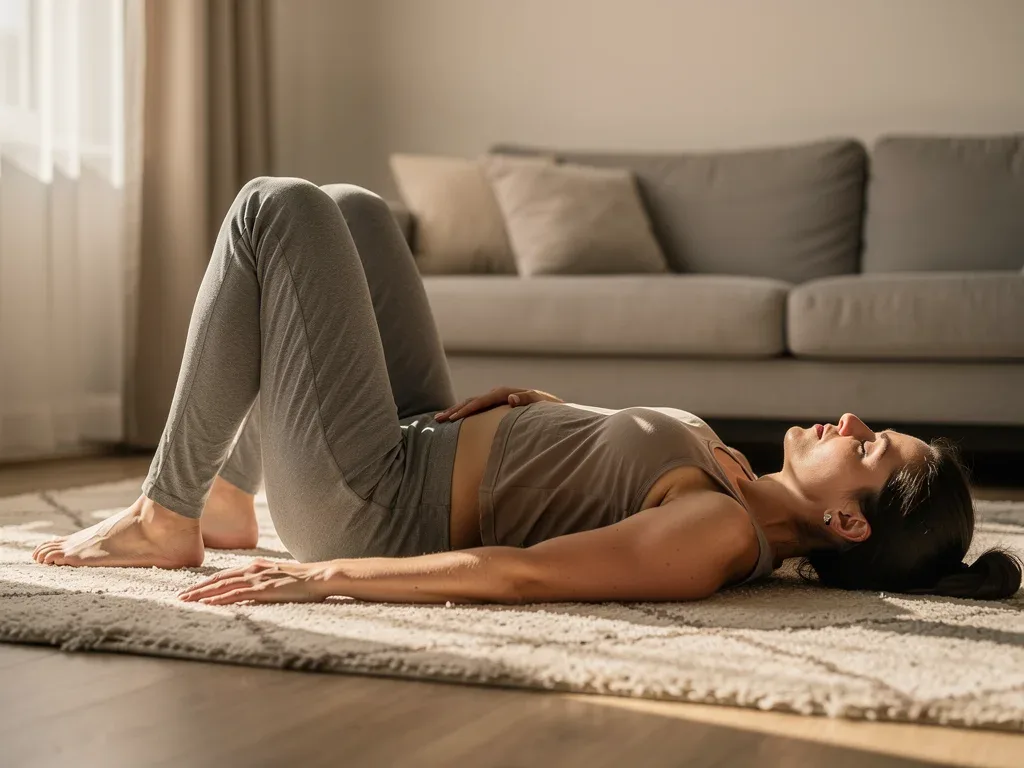
Start by finding a quiet time when you won't be interrupted. This might be first thing in the morning, during a lunch break, or before bed. Lay down a yoga mat or a soft blanket on the floor to provide comfort and support. Wear comfortable, loose-fitting clothing that doesn't restrict your movement. Natural light can enhance the calming atmosphere, but if practicing in the evening, soft, dim lighting is preferable.
- quiet environment: Minimize noise and distractions to enhance focus.
- comfortable surface: A yoga mat, rug, or soft blanket for floor exercises.
- loose clothing: Ensures unrestricted movement and comfort.
- optional props: A small pillow or rolled towel for head support during certain movements.
- consistent time: Establishing a regular time helps build the habit.
Consider adding elements like a gentle diffused essential oil (lavender or frankincense are excellent for relaxation) or soft, instrumental music if it helps you relax without distracting you. The goal is to create a personal haven where you can comfortably connect with your body and release tension without external pressures.
foundational somatic movements for daily release
To begin your 15-minute daily practice of somatic movement at home, focus on a few foundational movements that address common areas of tension. These exercises are designed to be performed slowly and mindfully, emphasizing the internal experience rather than the external outcome. Remember, less is often more in somatic work.
The key is to move with intention, noticing how each tiny adjustment impacts your body. Pause, breathe, and allow your nervous system to register the new sensations of release and lengthening. This mindful approach is what makes somatic movement so effective.
gentle exercises to start your journey
One excellent starting point is the "arch and flatten" movement, often called the Cat-Cow in yoga. Lying on your back, gently arch your lower back, lifting your tailbone slightly, and then slowly flatten it against the floor, drawing your navel towards your spine. Repeat this subtle movement several times, coordinating it with your breath. This helps to release tension in the lower back and pelvis.

Another crucial movement is the "head lift and release" for neck and shoulder tension. Lying on your back, gently lift your head an inch or two off the floor, then slowly lower it back down, feeling the muscles in your neck lengthen and relax. This can be combined with gentle head turns side to side, always moving within a comfortable range. These simple, repetitive actions send clear signals to your brain to release habitual contractions.
- arch and flatten: Releases lower back and pelvic tension.
- head lift and release: Alleviates neck and upper back stiffness.
- shoulder shrug and release: Targets tension in the shoulders and upper trapezius.
- hip circles (supine): Gently mobilizes the hip joints and releases hip flexor tension.
Remember to always move slowly, paying close attention to your body's feedback. If you feel any pain, reduce the range of motion or stop the movement. The goal is comfort and release, not pushing through discomfort. These foundational movements, practiced daily, will build a solid base for deeper somatic exploration.
integrating somatic movement into your daily routine
Making somatic movement at home a consistent part of your day is about creating a habit that feels natural and beneficial. The 15-minute timeframe is intentionally short to make it achievable even on busy days, ensuring you can consistently prioritize your well-being.
Consistency is more important than intensity when it comes to somatic practice. Even a few minutes of mindful movement can have a cumulative effect, gradually unwinding years of stored tension and improving your overall sense of ease.
tips for building a sustainable habit
Choose a specific time each day that you can realistically dedicate to your practice. For some, this might be immediately after waking up, before the demands of the day set in. For others, it could be a mid-day reset or a calming ritual before bed. Treat this time as non-negotiable, just like brushing your teeth.

Start small, perhaps with just 5-10 minutes, and gradually increase to 15 minutes as it becomes more comfortable. Don't strive for perfection; simply show up and be present with your body. Over time, you'll notice how your body begins to anticipate and even crave these moments of mindful release.
- schedule it: Block out 15 minutes in your calendar daily.
- start small: Begin with shorter sessions and gradually extend.
- listen to your body: Adjust movements based on how you feel each day.
- track progress: Notice subtle changes in pain levels, flexibility, and mood.
- be patient: Lasting change takes time and consistent effort.
Consider using a timer to keep track of your 15 minutes without constantly checking the clock. This allows you to stay fully immersed in the experience. Remember that this is your time for self-care and connection, a valuable investment in your long-term health and vitality.
advanced somatic techniques for deeper release
Once you've established a consistent daily practice of foundational somatic movement at home, you might be ready to explore more advanced techniques to address specific areas of chronic tension or to deepen your body awareness. These techniques build upon the principles of slow, mindful movement and sensory feedback.
As you become more attuned to your body's subtle signals, you can begin to identify and target areas that hold persistent tension, allowing for more profound and lasting release. The journey of somatic exploration is continuous, always offering new layers of understanding and freedom.
exploring specific tension patterns
One advanced technique involves focusing on the "red light reflex," a common pattern of muscle contraction associated with fear or withdrawal, where the front of the body shortens and the shoulders round forward. Specific somatic exercises can help to consciously lengthen these muscles and reverse this habitual posture. Similarly, the "green light reflex" (associated with action and extension) can also lead to chronic tension in the back muscles, which can be addressed through targeted movements.
Another approach is to integrate small, isolated movements with global movements. For instance, after releasing tension in the neck, try to feel how that release impacts the shoulders or even the lower back. This interconnectedness is a hallmark of somatic awareness, recognizing that the body functions as an integrated whole, where tension in one area often affects others.
- pandiculation variations: Deeper explorations of the natural stretch reflex to reset muscle length.
- focused breathing: Using breath to deepen muscle release and calm the nervous system during movements.
- pelvic clock: A nuanced movement that frees the pelvis and lower spine from habitual holding patterns.
- jaw and eye movements: Releasing tension in these often-overlooked areas can have profound effects on overall relaxation.
Consider seeking guidance from certified somatic educators if you wish to delve into more complex techniques or address specific chronic conditions. While much can be learned through self-practice, expert guidance can provide personalized insights and ensure safe, effective exploration of advanced somatic movements.
sustaining your somatic journey for long-term well-being
The true power of somatic movement at home lies not just in immediate tension release, but in its potential to foster long-term changes in how you inhabit your body. Sustaining this daily habit transforms it from a temporary fix into a fundamental aspect of your overall well-being, promoting lasting physical comfort and mental clarity.
Embracing somatic practice as a lifestyle choice means committing to a continuous dialogue with your body, responding to its needs with gentle awareness and proactive self-care. This ongoing journey cultivates resilience and a deeper connection to your inner self.
making somatic movement a lifestyle
As you continue your daily practice, you'll likely notice a heightened awareness of your body throughout the day. This might mean catching yourself slumping at your desk and gently correcting your posture, or recognizing early signs of tension before they escalate into pain. This continuous feedback loop is a core benefit of somatic education.
Don't be discouraged by days when you feel less motivated or when tension seems to reappear. The body's journey to release is not linear. View these moments as opportunities to reconnect and apply the principles of gentle, mindful movement. Celebrate small victories and acknowledge your commitment to self-care.
- mindful daily living: Apply somatic awareness to everyday activities.
- adaptability: Modify your practice as your body's needs change.
- community and resources: Explore online communities, books, or workshops for continued learning.
- patience and self-compassion: Understand that lasting change is a gradual process.
Ultimately, somatic movement empowers you to become an active participant in your own healing and well-being. It's about cultivating a relationship with your body built on trust, respect, and gentle attention, leading to a life lived with greater ease, freedom, and joy.
| Key Aspect | Brief Description |
|---|---|
| What is Somatic Movement? | Mindful, gentle movements to re-educate the nervous system and release chronic muscle tension. |
| Daily Practice Benefits | Reduces chronic pain, improves flexibility, lowers stress, and enhances body awareness in 15 minutes. |
| Home Sanctuary Setup | A quiet, comfortable space with a mat and loose clothing, free from distractions, for optimal focus. |
| Key Movements | Foundational exercises like arch and flatten, head lifts, and shoulder releases for tension relief. |
frequently asked questions about somatic movement at home
What is the main difference between somatic movement and yoga?▼Somatic movement primarily focuses on internal sensation and neuromuscular re-education to release chronic tension patterns, often using very small, slow movements. Yoga, while also mindful, often emphasizes stretching, holding poses, and building strength, with a broader spiritual component. Somatics is about unlearning tension, while yoga often aims to cultivate new physical capabilities.
How quickly can I expect to feel results from a 15-minute daily practice?▼Many individuals report feeling a sense of relaxation and reduced tension after just one session. Consistent daily practice, however, yields cumulative and lasting results, often leading to significant improvements in chronic pain and body awareness within a few weeks or months. Patience and consistency are key to experiencing the full benefits.
Do I need any special equipment to practice somatic movement at home?▼No, one of the great advantages of somatic movement is its accessibility. You typically only need a comfortable surface, like a yoga mat or soft rug, and loose clothing that allows for unrestricted movement. Some people find a small pillow or rolled towel helpful for head support during certain supine exercises, but it is not essential.
Can somatic movement help with anxiety and stress?▼Absolutely. By releasing physical tension, somatic movement directly impacts the nervous system, shifting it from a state of fight-or-flight to rest-and-digest. This profound physical relaxation often translates into reduced mental anxiety and stress, promoting a greater sense of calm, emotional regulation, and overall mental well-being.
Is somatic movement suitable for people with chronic pain or limited mobility?▼Yes, somatic movement is often highly beneficial for individuals with chronic pain or limited mobility because it emphasizes gentle, self-directed movements within your comfort zone. The focus is on re-educating the nervous system rather than forcing stretches. It's always advisable to consult with a healthcare professional before starting any new exercise regimen, especially with pre-existing conditions.
conclusion
Embracing a 15-minute daily practice of somatic movement at home offers a powerful and accessible pathway to releasing deeply stored physical tension and enhancing overall well-being. By fostering a deeper connection between mind and body, this gentle yet profound discipline empowers you to regain control over chronic muscular contractions, alleviate pain, and cultivate a sense of ease and freedom in your daily life. Make this simple habit a cornerstone of your self-care routine, and discover the transformative impact it can have on your physical comfort and mental serenity.
