US Trade Representative Revised Solar Tariffs: Costs Shift 6%
Advertisements
The US Trade Representative's recent announcement of revised solar tariffs is projected to shift domestic supply costs by an estimated 6%, influencing the renewable energy sector's immediate future.
The recent announcement by the US Trade Representative Announces Revised Solar Tariffs: Domestic Supply Costs Projected to Shift 6%, marking a pivotal moment for the nation's renewable energy landscape. This policy adjustment is more than just a regulatory change; it signifies a strategic re-evaluation of how the United States sources and manufactures its solar energy components. For consumers, businesses, and the broader energy sector, understanding the nuances of these tariffs is crucial to navigating the evolving market. How will this 6% shift truly reshape the economics of solar adoption across the country?
Understanding the Revised Solar Tariffs Framework
The US Trade Representative (USTR) has unveiled a revised framework for solar tariffs, a move designed to protect domestic manufacturing capabilities while attempting to balance the nation's ambitious renewable energy goals. These tariffs, applied to imported solar cells and modules, are not new, but their adjustments reflect a changing global economic and political environment. The projected 6% increase in domestic supply costs is a direct consequence of these revisions, influencing everything from large-scale utility projects to residential rooftop installations.
This policy shift comes amidst growing concerns over supply chain resilience and the desire to foster a robust American manufacturing base for critical energy technologies. The USTR's decision underscores a broader governmental strategy to reduce reliance on foreign suppliers, particularly from countries identified as engaging in unfair trade practices. While the intent is clear—to stimulate domestic production—the immediate impact on cost structures is a primary consideration for stakeholders across the solar industry.
Historical Context of US Solar Tariffs
To fully grasp the implications of the latest revisions, it's essential to look back at the history of US solar tariffs. These duties were initially implemented under Section 201 of the Trade Act of 1974, aiming to safeguard domestic industries from import surges. Over the years, these tariffs have seen various iterations, with each adjustment sparking debates about their effectiveness and unintended consequences.
Initial imposition in 2018 to protect domestic manufacturers.
Subsequent extensions and modifications based on market conditions.
Exemptions granted for certain types of solar products or countries.
Ongoing evaluations of their impact on domestic manufacturing and solar deployment rates.
The current revisions represent the latest chapter in this ongoing policy saga, signaling a continued commitment to nurturing US-based solar production. However, the delicate balance between protectionism and market competitiveness remains a central challenge for policymakers.
The revised tariff structure is complex, often differentiating between types of solar cells and modules, as well as their country of origin. This complexity means that the 6% cost shift is an average projection, and the actual impact could vary significantly depending on the specific components and projects involved. Industry analysts are now meticulously examining the fine print to understand the full scope of these changes.
Projected 6% Shift in Domestic Supply Costs: What It Means
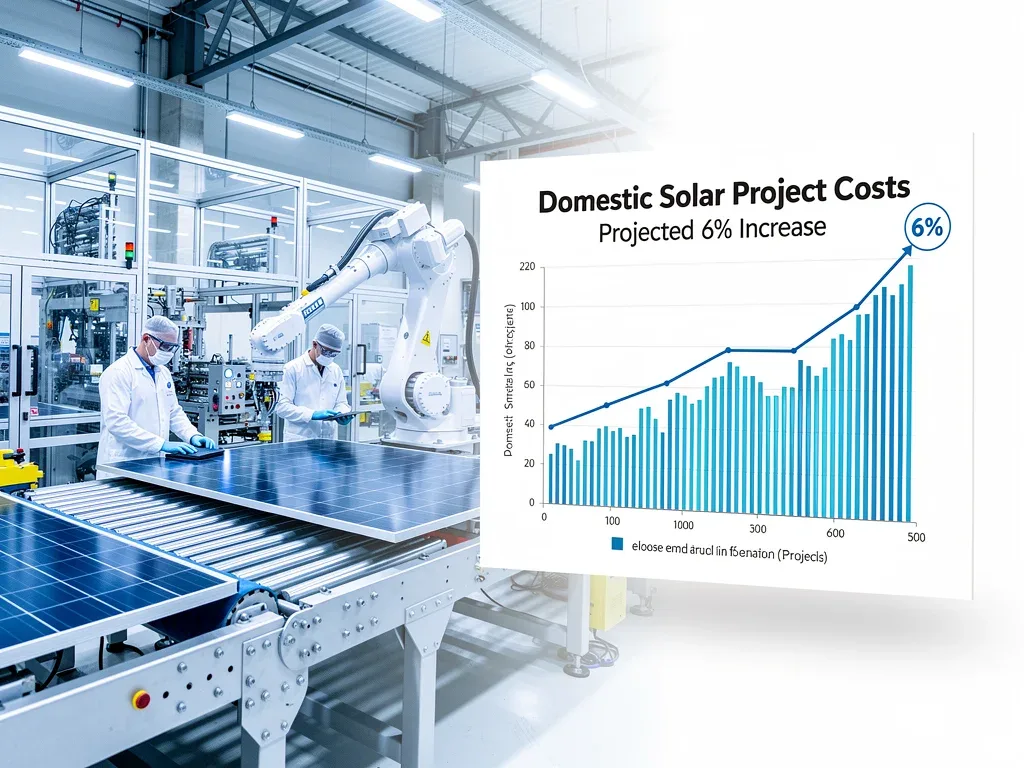
The headline figure—a 6% projected shift in domestic supply costs—is a critical metric for the US solar industry. This percentage represents an estimated increase in the overall cost of solar projects within the United States, driven by higher prices for imported components subject to the revised tariffs. This shift has multifaceted implications, affecting everything from project financing to consumer adoption rates.
For developers, a 6% cost increase can significantly alter project economics, potentially delaying or even canceling some planned installations. The solar industry operates on tight margins, and even a seemingly modest percentage increase can have a substantial ripple effect. This necessitates a re-evaluation of existing contracts and future procurement strategies.
Impact on Project Development and Investment
The additional cost burden will inevitably influence investment decisions in the solar sector. Investors may become more cautious, seeking higher returns to offset the increased risks associated with elevated material costs. This could lead to a slowdown in the pace of solar deployment, particularly for projects that were already marginal in terms of profitability.
Increased capital expenditure for new solar installations.
Potential delays in project timelines as developers reassess financial models.
Shift in investment focus towards projects with stronger domestic component sourcing.
Higher financing costs due to perceived increased risk.
Furthermore, the 6% cost shift could incentivize developers to explore alternative sourcing strategies, including a greater emphasis on domestically produced components, if available and competitive. However, the current capacity of US manufacturing may not be sufficient to meet demand, leading to potential supply shortages or further price escalations.
The long-term impact on investment will depend on how quickly domestic manufacturing can scale up and whether the tariffs achieve their intended goal of creating a more self-sufficient US solar supply chain. In the interim, the industry will likely experience a period of adjustment and recalibration.
Implications for the US Solar Manufacturing Sector
The primary objective behind the revised solar tariffs is to bolster the US solar manufacturing sector. By making imported solar components more expensive, the USTR aims to create a more level playing field for domestic producers, encouraging investment in new factories, job creation, and technological innovation within the United States. The 6% cost shift, while a challenge for some, is intended as a protective measure for nascent and growing American solar industries.
The hope is that this tariff structure will stimulate a virtuous cycle: higher demand for US-made products, leading to increased production capacity, which in turn could drive down domestic manufacturing costs over time. This would ideally reduce the nation's dependence on foreign supply chains, enhancing energy security and economic resilience.
Challenges and Opportunities for Domestic Producers
While the tariffs present a clear opportunity, domestic manufacturers still face significant challenges. Scaling up production to meet national demand requires substantial capital investment, access to skilled labor, and competitive manufacturing processes. The global solar market is highly competitive, and even with tariff protection, US producers must innovate to remain viable.
Opportunity for increased market share and production capacity.
Incentives for investment in new manufacturing technologies.
Potential for job creation in the solar manufacturing sector.
Challenges in competing with established global giants even with tariffs.
Moreover, the success of these tariffs hinges on the ability of US manufacturers to produce components at a quality and scale that can satisfy market needs. If domestic supply cannot keep pace with demand, the 6% cost shift could exacerbate supply shortages and further drive up prices, potentially undermining the overall growth of solar energy.
The tariffs also create an opportunity for the development of new, innovative solar technologies within the US, fostering a competitive edge beyond just price. This could lead to advancements in panel efficiency, durability, and integration, positioning the US as a leader in next-generation solar solutions.
Effects on Solar Energy Adoption and Consumer Costs
The projected 6% shift in domestic supply costs directly impacts the affordability of solar energy for end-users, from homeowners considering rooftop solar to businesses looking to invest in cleaner power. While the percentage might seem small, it can influence the payback period of solar installations and the overall economic attractiveness of switching to solar.
For consumers, higher upfront costs can be a significant barrier to adoption, even with long-term savings on electricity bills. Government incentives, such as tax credits and rebates, will become even more crucial in mitigating these increased costs and maintaining momentum for solar energy deployment.
Balancing Affordability and Domestic Production Goals
Policymakers face the delicate task of balancing the goal of fostering domestic manufacturing with the broader objective of accelerating renewable energy adoption. If the tariffs make solar energy significantly less affordable, it could slow down the transition away from fossil fuels, counteracting other climate goals.
Potential increase in the upfront cost of residential and commercial solar systems.
Longer payback periods for solar investments.
Increased reliance on government incentives to offset higher costs.
Risk of slowing down the overall pace of renewable energy transition.
The USTR's decision reflects a trade-off, prioritizing industrial policy over immediate cost advantages for consumers. The hope is that in the long run, a robust domestic supply chain will lead to greater stability and potentially lower costs as economies of scale are achieved within the US.
Furthermore, the tariffs could encourage innovation in financing models for solar projects, making it easier for consumers to access solar despite higher initial costs. This could include more attractive loan options, power purchase agreements (PPAs), or community solar programs designed to spread the cost burden.
Global Trade Dynamics and International Relations
The US Trade Representative's decision to revise solar tariffs is not an isolated event; it's a significant move within a complex web of global trade dynamics and international relations. Such actions often trigger reactions from other countries, potentially leading to retaliatory tariffs or disputes within international trade bodies like the World Trade Organization (WTO). The 6% cost shift is an internal projection, but its causes and effects reverberate globally.
Nations that are primary exporters of solar components to the US may view these tariffs as protectionist measures, potentially impacting diplomatic and economic relationships. The global solar market is deeply interconnected, and changes in one major market can send ripples through the entire system.
Geopolitical Ramifications and Supply Chain Diversification
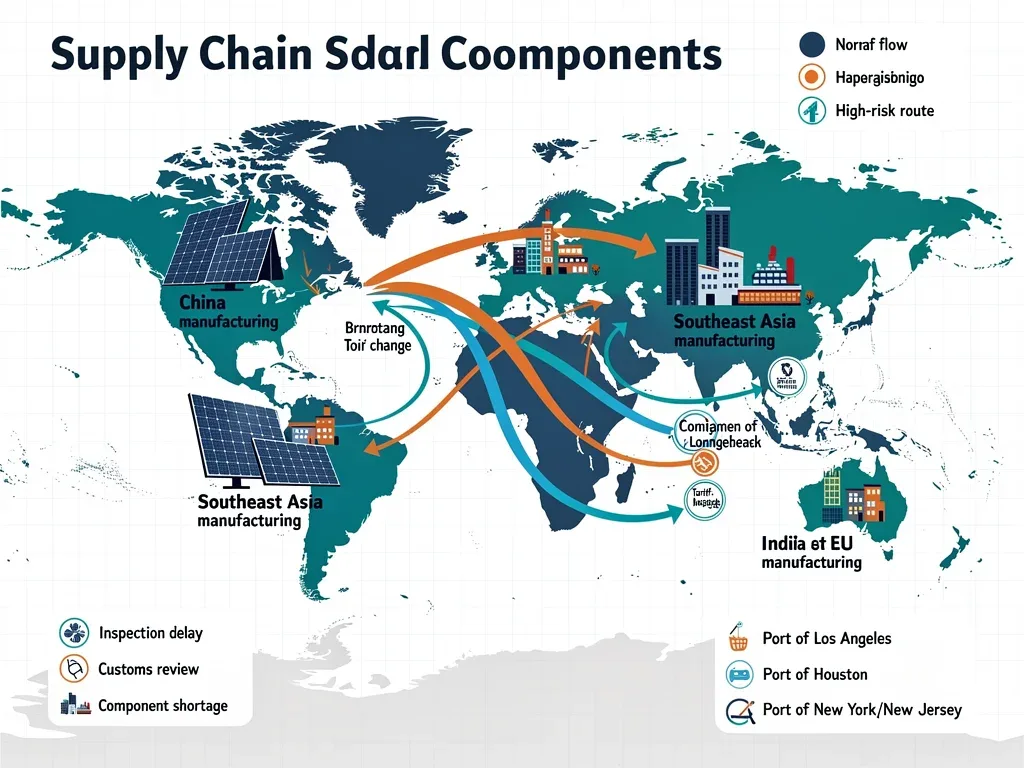
Beyond immediate economic impacts, the tariffs have geopolitical ramifications. They underscore a broader trend among nations to secure critical supply chains, particularly in strategic sectors like renewable energy. This often involves reducing reliance on single-country suppliers and fostering diversification.
Potential for retaliatory tariffs from affected trading partners.
Increased scrutiny from international trade organizations.
Accelerated global efforts by other nations to develop their own domestic solar manufacturing.
Shift in global solar trade flows and market dynamics.
The revised tariffs could prompt US allies to re-evaluate their own solar supply chain strategies, potentially leading to a more fragmented global market. While the US aims for greater self-sufficiency, this approach might inadvertently contribute to a broader de-globalization of certain manufacturing sectors.
Moreover, the USTR's stance sends a clear signal about the US commitment to using trade policy as a tool for industrial development and national security. This approach could set precedents for other emerging technologies and critical industries, influencing future trade negotiations and international cooperation.
Future Outlook: Navigating the New Tariff Landscape
Navigating the new tariff landscape will require strategic planning and adaptability from all stakeholders in the US solar industry. The projected 6% shift in domestic supply costs is a new variable that must be integrated into business models, policy advocacy, and technological development. The future outlook for US solar will depend heavily on how effectively the industry can absorb these costs while continuing to innovate and expand.
While the immediate focus is on cost adjustments, the long-term vision remains clear: a sustainable and secure energy future powered by renewables. The tariffs are a tool to achieve a specific industrial policy goal, but their ultimate success will be measured by their ability to foster a robust and competitive domestic solar industry without unduly hindering the pace of energy transition.
Adaptation Strategies for the Solar Industry
To mitigate the effects of the increased costs, companies in the solar sector are exploring various adaptation strategies. These include diversifying their supply chains, investing in automation to reduce domestic manufacturing costs, and advocating for complementary policies that support solar deployment.
Diversifying sourcing to include more domestic or tariff-exempt components.
Investing in research and development to improve efficiency and reduce material costs.
Advocating for government incentives and supportive policies to offset tariff impacts.
Exploring new market segments or business models less affected by component costs.
Furthermore, the industry will likely see an increased emphasis on energy storage solutions and grid modernization, as these technologies can enhance the value proposition of solar even with higher panel costs. The integration of solar with other renewable sources and smart grid technologies will become increasingly important.
The revised tariffs present both challenges and opportunities. While the 6% cost shift demands attention, it also serves as a catalyst for innovation and strategic realignment within the US solar industry, pushing it towards greater self-reliance and technological advancement in the long run.
Key Point | Brief Description |
|---|---|
Tariff Revision | US Trade Representative announced changes to solar panel import tariffs. |
Cost Shift | Domestic solar supply costs are projected to increase by 6%. |
Domestic Impact | Aims to boost US solar manufacturing but may raise consumer prices. |
Market Adaptation | Industry players are re-evaluating supply chains and investment strategies. |
Frequently Asked Questions About Solar Tariffs
What exactly are the revised solar tariffs?▼
The revised solar tariffs are updated duties imposed by the US Trade Representative on imported solar cells and modules. These adjustments aim to protect and promote domestic solar manufacturing, influencing the cost structure for solar projects across the United States and encouraging local production.
How will the 6% cost shift affect my solar installation?▼
The 6% cost shift is a projected average increase in domestic supply costs for solar components. For individual installations, this could translate to slightly higher upfront costs. However, the exact impact will depend on specific components used, prevailing market conditions, and available incentives in your area.
Are there any exemptions to these new tariffs?▼
Historically, solar tariffs have included certain exemptions for specific types of solar products or from particular countries, based on various trade agreements and domestic supply needs. Details of current exemptions are typically outlined in the USTR's official announcement and subsequent guidance documents.
How will these tariffs impact the US's renewable energy goals?▼
While the tariffs aim to strengthen domestic manufacturing, there is a concern that increased costs could slow the pace of solar energy adoption in the short term. The long-term impact hinges on whether domestic production can scale up efficiently to offset import costs and meet growing demand for renewable energy.
What can consumers do to mitigate higher solar costs?▼
Consumers can explore various strategies to mitigate potential cost increases. This includes leveraging federal tax credits, state and local incentives, and considering different financing options like solar loans or power purchase agreements (PPAs). Consulting with multiple solar providers can also help find the most competitive offers.
Conclusion
The US Trade Representative's decision to revise solar tariffs, resulting in a projected 6% shift in domestic supply costs, marks a significant moment for the nation's energy future. This policy is a clear indicator of the government's commitment to fostering a robust domestic solar manufacturing industry, aiming to enhance energy security and create American jobs. While the immediate impact may involve higher upfront costs for solar projects and a period of market adjustment, the long-term vision is one of a more self-reliant and resilient solar supply chain. The industry, from manufacturers to consumers, will need to adapt strategically, leveraging innovation and supportive policies to continue the vital transition towards a sustainable, renewable energy landscape. The delicate balance between protectionism and progress will undoubtedly shape the trajectory of solar power in the United States for years to come.
