White House Unveils $12 Billion Broadband Grant for Rural, Suburban Connectivity
Advertisements
The White House unveiled a substantial $12 billion national broadband expansion grant to significantly enhance high-speed internet access for rural and suburban communities, directly addressing the critical digital divide across the nation.
The recent announcement from the White House regarding a $12 billion National Broadband Expansion Grant for Rural and Suburban Connectivity marks a pivotal moment in the nation’s ongoing effort to bridge the digital divide. This unprecedented investment is poised to bring high-speed internet access to millions of Americans who have long been underserved, unlocking new opportunities for economic growth, education, and healthcare across the country.
Understanding the $12 Billion Broadband Expansion Initiative
The White House's ambitious $12 billion national broadband expansion grant is a cornerstone of its broader infrastructure agenda, designed to ensure that every American has access to reliable, affordable high-speed internet. This initiative recognizes that in the 21st century, internet access is not a luxury but a fundamental necessity for participation in modern society. The funding targets both rural and suburban areas, acknowledging that connectivity gaps exist beyond just the most remote regions.
The program's design emphasizes several key objectives, including promoting competition among internet service providers, lowering costs for consumers, and ensuring equitable access for historically disadvantaged communities. By focusing on these pillars, the grant aims to create a sustainable and inclusive broadband ecosystem that will serve the nation for decades to come.
Addressing the Digital Divide
The digital divide has long been a pressing issue, exacerbated by geographical barriers and economic disparities. This grant seeks to directly confront these challenges.
- Geographical Barriers: Funding will support infrastructure development in areas where traditional providers have found it uneconomical to build.
- Economic Disparities: Provisions ensure that affordability is a key consideration, with incentives for providers to offer low-cost options.
- Equitable Access: Special attention is given to tribal lands and low-income communities, ensuring they are not left behind.
This comprehensive approach moves beyond simply laying cables; it's about fostering a future where internet access is a universal right, not a privilege. The initiative underscores a commitment to national unity through technological advancement, recognizing that a connected America is a stronger America.
The Impact on Rural Communities: Bridging the Last Mile
Rural communities stand to gain immensely from the broadband expansion grant. For years, residents in these areas have struggled with slow, unreliable, or non-existent internet services, hindering everything from remote work and online education to agricultural innovation and access to telemedicine. This $12 billion investment is specifically designed to tackle the "last mile" problem, extending fiber optic and other advanced broadband technologies to homes and businesses previously deemed too costly to connect.
The lack of robust internet infrastructure in rural areas has created significant disadvantages, often forcing residents to travel long distances for basic online tasks or to forgo opportunities available to their urban counterparts. With this new funding, the federal government aims to level the playing field, ensuring that geographical location no longer dictates access to essential digital resources. This means more opportunities for small businesses to thrive, farmers to utilize precision agriculture, and families to stay connected.
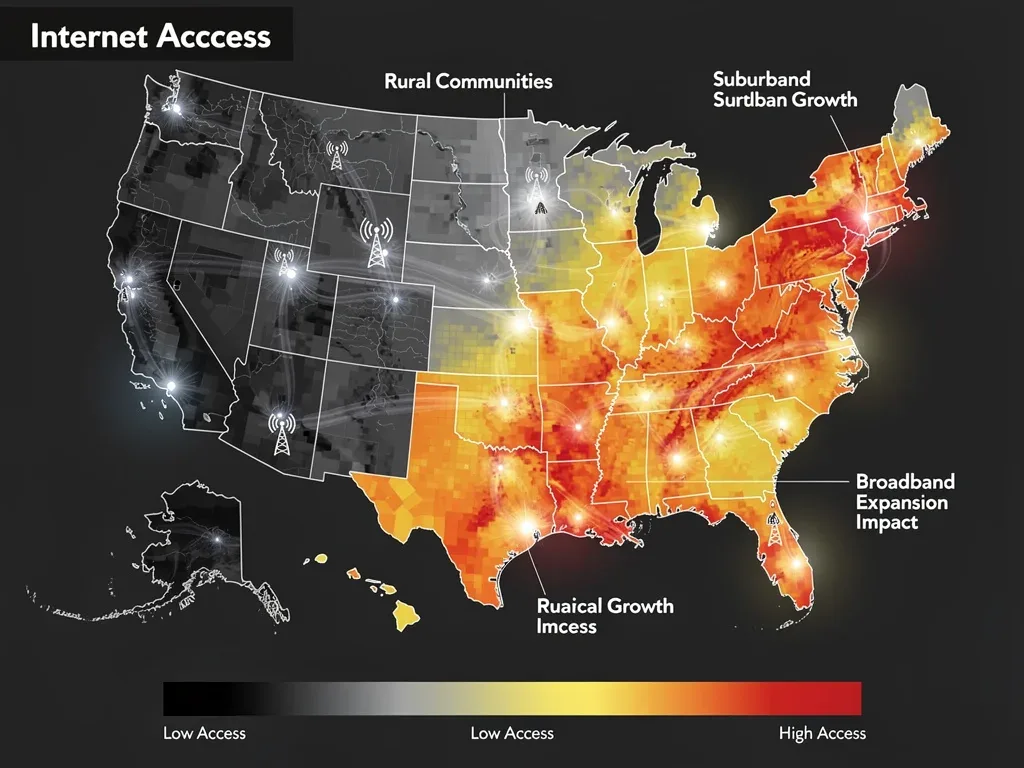
The grant structure encourages innovative solutions and partnerships between government, local communities, and private sector providers. It is not a one-size-fits-all approach but rather a flexible framework designed to address the diverse needs of different rural landscapes. This flexibility is crucial for successful implementation, allowing for tailored strategies that consider unique local challenges and opportunities.

Economic Revitalization and Job Creation
Beyond direct internet access, the rural broadband expansion is expected to be a significant economic driver. The construction and maintenance of new infrastructure will create numerous jobs, from engineers and technicians to construction workers. Furthermore, improved connectivity will empower local businesses to expand their reach, attract new industries, and foster innovation within their communities.
- Direct Job Creation: Thousands of jobs in infrastructure deployment and maintenance.
- Business Growth: Enhanced digital capabilities for small and medium-sized enterprises.
- Attraction of New Industries: High-speed internet makes rural areas more attractive for businesses seeking lower operational costs and a better quality of life for employees.
The long-term economic benefits extend to increased property values, improved access to global markets for local products, and a stronger tax base for rural municipalities. This investment is not just about internet; it's about revitalizing entire communities.
Boosting Suburban Connectivity: Addressing Overlooked Gaps
While rural areas often receive the most attention regarding internet access disparities, many suburban communities also suffer from inadequate broadband infrastructure. The White House's broadband expansion grant recognizes these often-overlooked gaps, allocating significant resources to improve connectivity in suburban regions. These areas, though seemingly well-connected, can experience issues such as insufficient bandwidth, high prices due to lack of competition, and pockets of underserved residents.
The challenges in suburban areas might differ from those in rural settings, but their impact on residents and local economies is equally significant. Many suburban families rely heavily on internet for remote work, online schooling, and entertainment, and substandard service can lead to frustration and hinder productivity. This grant aims to address these issues by promoting infrastructure upgrades and fostering a more competitive market among internet service providers.
Enhancing Competition and Affordability
A primary goal of the grant in suburban areas is to stimulate competition, which historically leads to lower prices and better service for consumers. By supporting new entrants or expanding existing networks, the initiative seeks to break up regional monopolies and provide residents with more choices.
- Increased Provider Options: New infrastructure encourages more internet service providers to enter the market.
- Competitive Pricing: Greater competition drives down costs for consumers and improves service quality.
- Service Upgrades: Funding for upgrading aging infrastructure to support higher speeds and reliability.
Ultimately, enhancing suburban connectivity is about ensuring that these vibrant communities have the digital backbone necessary to support their growing populations and evolving needs. It's about empowering families and businesses with the tools they need to succeed in a digital-first world, without the hidden costs of subpar internet.
Key Components of the Grant Program: What to Expect
The $12 billion National Broadband Expansion Grant for Rural and Suburban Connectivity is structured with several key components designed to maximize its effectiveness and ensure equitable distribution of funds. Understanding these components is crucial for stakeholders, from local governments to internet service providers, who wish to participate in or benefit from the initiative. The program emphasizes transparency, accountability, and measurable outcomes to ensure that public funds are used efficiently and effectively.
A significant portion of the funding will be allocated through state and tribal governments, empowering local authorities to identify and prioritize their specific broadband needs. This decentralized approach allows for greater flexibility and responsiveness to community-specific challenges, moving away from a one-size-fits-all federal mandate. It also encourages local innovation and tailored solutions.
Eligibility and Application Process
The grant program will outline clear eligibility criteria for projects and applicants, focusing on those that demonstrate a clear need and a viable plan for deploying high-speed internet. The application process is expected to be rigorous, requiring detailed proposals that address technical specifications, financial sustainability, and community impact.
- Eligible Applicants: State and local governments, tribal entities, non-profits, and qualified internet service providers.
- Project Requirements: Focus on unserved and underserved areas, commitment to affordability, and future-proof technology.
- Evaluation Criteria: Emphasis on speed, reliability, affordability, and community engagement.
The goal is to fund projects that not only connect communities but also build robust, resilient networks capable of meeting future demands. This forward-looking perspective is critical for ensuring the longevity and impact of the investment.
The Role of Public-Private Partnerships in Broadband Deployment
The success of the broadband expansion grant hinges significantly on the formation of strong public-private partnerships. The scale and complexity of deploying high-speed internet infrastructure across diverse landscapes necessitate collaboration between government entities and private sector expertise. While federal funding provides the necessary capital, private companies bring the technological know-how, operational efficiency, and experience in large-scale infrastructure projects.
These partnerships are crucial for leveraging resources, mitigating risks, and accelerating deployment timelines. Governments can provide regulatory support, access to rights-of-way, and initial funding, while private companies contribute specialized equipment, skilled labor, and ongoing maintenance capabilities. This synergy ensures that projects are not only initiated but also sustained and expanded over time, creating a robust and reliable network for communities.

Moreover, public-private partnerships can foster greater innovation, as private companies are often at the forefront of developing new technologies and more efficient deployment methods. The grant program is expected to incentivize these collaborations, ensuring that the best available solutions are brought to bear on the challenge of universal broadband access. This collaborative model is a testament to the idea that complex national challenges require collective action.
Ensuring Sustainability and Future-Proofing
A critical aspect of these partnerships will be ensuring the long-term sustainability and future-proofing of the deployed infrastructure. This includes considerations for scalability, maintenance, and adaptability to future technological advancements. The goal is to build networks that can evolve with changing demands, avoiding the need for costly re-investments in the near future.
- Long-Term Planning: Projects must demonstrate a plan for ongoing operation and maintenance.
- Scalable Solutions: Infrastructure designed to accommodate increasing data demands.
- Technological Adaptability: Encouragement of technologies that can be easily upgraded or expanded.
By prioritizing sustainability, the grant aims to create lasting digital infrastructure that will benefit generations, not just address immediate needs. This foresight is essential for an investment of this magnitude.
The Broader Vision: Connectivity as a National Priority
The White House's commitment to a $12 billion National Broadband Expansion Grant for Rural and Suburban Connectivity underscores a broader national vision: that universal, high-speed internet access is essential for America's future prosperity and global competitiveness. This initiative is not merely about providing internet access; it's about recognizing connectivity as a fundamental utility, akin to electricity or clean water, that empowers individuals and strengthens the nation as a whole. The digital age demands a fully connected populace to participate in the economy, access vital services, and engage in civic life.
This vision extends beyond immediate economic benefits to encompass social equity, educational opportunities, and national security. A connected nation is a more resilient nation, better prepared to face future challenges and seize new opportunities. The investment reflects a strategic understanding that infrastructure development, particularly in the digital realm, is a prerequisite for sustained growth and innovation in the 21st century.
Empowering Education and Healthcare
The implications for education and healthcare are particularly profound. High-speed internet enables remote learning for students in underserved areas, bridging educational disparities. In healthcare, it facilitates telehealth services, allowing patients in remote locations to access specialists and receive critical care without extensive travel.
- Educational Equity: Equal access to online learning resources and virtual classrooms.
- Telehealth Expansion: Improved access to medical consultations and specialized care.
- Digital Literacy: Programs to ensure all citizens can effectively use new internet resources.
The grant represents a significant step towards realizing a future where every American, regardless of their location or socioeconomic status, has the tools they need to thrive. It's an investment in people, in communities, and in the very fabric of the nation, solidifying connectivity as a core national priority for years to come.
| Key Point | Brief Description |
|---|---|
| $12 Billion Investment | White House grant targets national broadband expansion for rural and suburban areas. |
| Digital Divide Focus | Aims to close connectivity gaps, ensuring equitable access for all Americans. |
| Economic & Social Impact | Expected to boost local economies, education, and telehealth services. |
| Public-Private Partnerships | Crucial for efficient deployment and long-term sustainability of new infrastructure. |
Frequently Asked Questions About Broadband Expansion
What is the primary goal of the $12 billion broadband expansion grant?▼The primary goal is to significantly improve access to affordable, high-speed internet for millions of Americans in underserved rural and suburban communities. This initiative aims to bridge the digital divide and foster economic growth, educational opportunities, and better healthcare access nationwide.
Which areas will benefit most from this grant?▼Both rural and suburban areas are targeted, with a particular focus on communities that currently lack reliable and affordable high-speed internet. This includes remote agricultural regions, tribal lands, and suburban pockets where competition is low or infrastructure is outdated.
How will this grant address internet affordability?▼The grant includes provisions and incentives for internet service providers to offer low-cost internet options. By promoting competition and investing in new infrastructure, the initiative aims to drive down overall costs for consumers, making broadband more accessible.
What role do public-private partnerships play in this initiative?▼Public-private partnerships are crucial. The government provides funding and regulatory support, while private companies contribute technological expertise, deployment capabilities, and ongoing maintenance, ensuring efficient and sustainable infrastructure development across the nation.
What are the long-term impacts expected from this broadband expansion?▼Long-term impacts include enhanced economic growth, increased job creation, improved educational equity through remote learning, expanded access to telehealth services, and a more resilient and connected national infrastructure, fostering overall societal advancement.
Conclusion
The White House's unveiling of the $12 billion National Broadband Expansion Grant for Rural and Suburban Connectivity represents a monumental stride towards achieving universal high-speed internet access across the United States. This significant investment is more than just an infrastructure project; it is a foundational commitment to equitable opportunity, economic vitality, and social inclusion for all Americans. By strategically targeting underserved areas and fostering collaborative public-private partnerships, the initiative promises to bridge the digital divide, empowering communities to thrive in an increasingly connected world. The long-term benefits in education, healthcare, and local economies will undoubtedly reshape the landscape of rural and suburban America, solidifying internet access as an essential utility for the 21st century.
