Deploying Local LLMs: Cut Cloud API Costs by 78% & Boost Data Privacy
Advertisements
Deploying local Large Language Models (LLMs) offers a strategic advantage by reducing cloud API expenses by up to 78% and eliminating data leakage risks, providing both cost efficiency and enhanced security for enterprises.
The digital landscape is rapidly evolving, with Large Language Models (LLMs) becoming indispensable tools for various business operations. However, reliance on cloud-based LLM APIs often comes with significant costs and inherent data privacy concerns. This Step-by-Step Guide: Deploying Local LLMs to Reduce Cloud API Expenses by 78% Without Data Leakage offers a comprehensive blueprint for organizations looking to reclaim control over their AI infrastructure, secure sensitive data, and achieve substantial financial savings.
Understanding the Shift to Local LLM Deployment
The move towards local LLM deployment represents a pivotal shift in how businesses leverage artificial intelligence. While cloud-based solutions offer convenience and scalability, the associated costs, particularly for high-volume usage, can become prohibitive. More critically, sending proprietary or sensitive data to external cloud providers introduces significant data leakage risks, a concern that compliance regulations and corporate governance increasingly scrutinize. Deploying LLMs locally addresses these challenges head-on, offering a compelling alternative for organizations prioritizing cost-efficiency and robust data security.
This strategic decision allows companies to maintain complete oversight of their data, ensuring it never leaves their controlled environment. Beyond security, local deployment can also lead to performance improvements, as latency is reduced by processing requests closer to the source. The initial investment in hardware and expertise is often quickly offset by the long-term savings on API calls and the avoidance of potential data breach penalties. It's about building a sustainable and secure AI infrastructure that aligns with an organization's specific needs and regulatory obligations.
The Economic Imperative: Cloud Costs vs. Local Savings
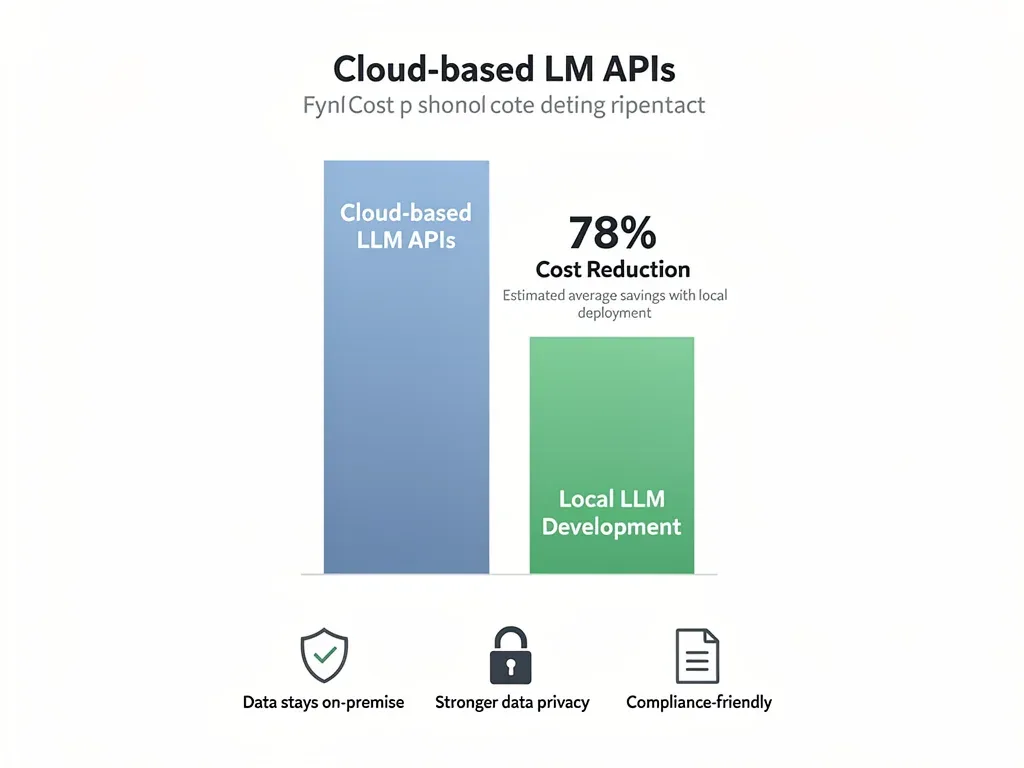
Cloud API expenses for LLMs can escalate rapidly, often catching organizations off guard. These costs are typically usage-based, meaning that as adoption grows, so do the bills. Local deployment, conversely, involves a one-time capital expenditure for hardware and software, followed by operational costs that are generally predictable and much lower per inference. The reported 78% reduction in expenses is not an exaggeration but a realistic outcome achievable through careful planning and execution, turning AI from a variable cost center into a more fixed and manageable investment.
- Predictable Expenditures: Move from variable cloud bills to more stable, fixed infrastructure costs.
- Reduced Per-Inference Cost: After initial setup, the cost per LLM inference drops dramatically.
- Long-Term ROI: Initial hardware investment yields significant returns over time by eliminating recurring API fees.
- Scalability Control: Scale your LLM infrastructure based on internal needs, not external provider pricing.
In conclusion, understanding the economic drivers behind local LLM deployment is crucial. It's not merely a technical choice but a strategic financial decision that can profoundly impact an organization's bottom line. The ability to control costs while expanding AI capabilities offers a competitive edge in today's data-driven world, making the transition to local LLMs an increasingly attractive proposition for forward-thinking enterprises.

Assessing Your Needs and Selecting the Right LLM
Before embarking on the journey of local LLM deployment, a thorough assessment of your specific needs is paramount. This involves understanding the nature of your data, the required performance characteristics, and the specific tasks the LLM will perform. Not all LLMs are created equal, and selecting the right model is a critical step that dictates subsequent hardware and software choices. Factors such as model size, computational requirements, and licensing terms must be carefully evaluated to ensure compatibility with your infrastructure and budget.
Consider the trade-offs between model accuracy, speed, and resource consumption. A smaller, more efficient model might suffice for certain tasks, while others may demand larger, more powerful models. This initial assessment helps in narrowing down the vast array of available LLMs, ensuring that the chosen model aligns perfectly with your operational objectives and resource constraints. It's about finding the optimal balance that delivers both performance and cost-efficiency.
Key Considerations for LLM Selection
Choosing an LLM for local deployment goes beyond just its conversational abilities. The model's architecture, its ability to be quantized (reduced in size without significant performance loss), and its compatibility with various inference frameworks are all vital. Open-source models often provide greater flexibility and community support, but commercial models might offer specialized features or better out-of-the-box performance for certain use cases. A careful review of benchmarks and community feedback can provide valuable insights.
- Model Size and Quantization: Evaluate if the model can be effectively quantized to run on available hardware.
- Performance Requirements: Determine the acceptable latency and throughput for your applications.
- Licensing and Usage Terms: Understand the legal implications of deploying and using the chosen LLM locally.
- Community Support and Documentation: Access to resources and support can be crucial for troubleshooting and optimization.
In summary, the success of your local LLM deployment hinges significantly on this initial assessment and model selection phase. A well-informed decision here will streamline the entire deployment process, minimize potential roadblocks, and ensure that the chosen LLM effectively meets your business requirements while staying within budgetary and technical limitations. It's an investment in understanding your own operational ecosystem.
Hardware and Software Requirements for Local Deployment
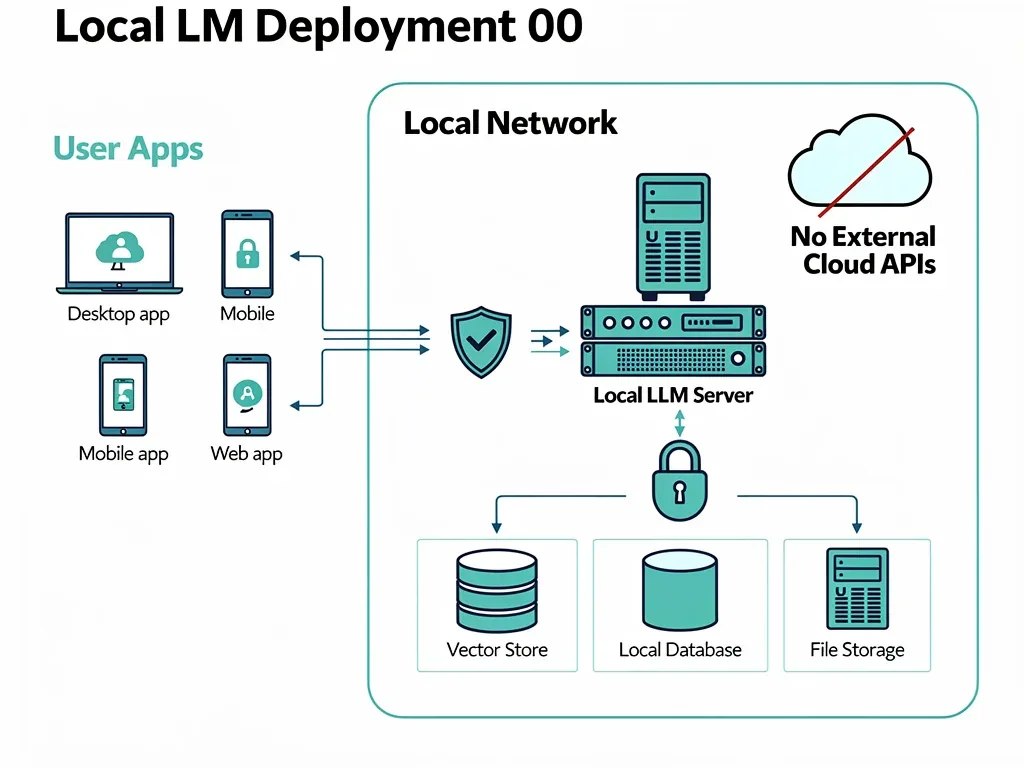
Once you have assessed your needs and selected an appropriate LLM, the next crucial step is to define the necessary hardware and software infrastructure. Local LLM deployment is resource-intensive, primarily demanding significant computational power, memory, and storage. The exact specifications will vary depending on the size and complexity of your chosen LLM and the expected workload. Investing in the right hardware upfront is essential to ensure smooth operation, optimal performance, and to fully realize the cost-saving potential of local deployment.
Beyond physical hardware, the software stack plays an equally vital role. This includes the operating system, necessary drivers, inference frameworks, and any orchestration tools. A well-configured software environment can significantly enhance the efficiency and manageability of your local LLM setup. Careful planning in this phase prevents bottlenecks and ensures that your deployed LLM can handle the demands of your applications effectively and securely.
Essential Hardware Components
The backbone of any local LLM deployment is its hardware. Graphics Processing Units (GPUs) are often the most critical component, providing the parallel processing capabilities required for LLM inference. The number and type of GPUs will depend on the model size and performance targets. High-speed RAM and ample SSD storage are also crucial for loading models and managing intermediate data. Network connectivity should be robust to handle internal requests efficiently.
- High-Performance GPUs: Essential for accelerating LLM inference, often multiple units are required.
- Sufficient RAM: To load the LLM model weights and handle prompt/response processing.
- Fast SSD Storage: For quick model loading and efficient data handling.
- Robust Power Supply and Cooling: To support continuous operation of high-power components.
Critical Software Stack
On the software side, a stable Linux distribution is typically preferred for its flexibility and performance. NVIDIA drivers are indispensable for GPU acceleration. Inference frameworks like Hugging Face's Transformers, ONNX Runtime, or specific vendor-optimized runtimes are necessary to execute the LLM efficiently. Containerization technologies such as Docker or Kubernetes can simplify deployment, scaling, and management of the LLM service.
- Operating System: Linux distributions (e.g., Ubuntu, CentOS) are commonly used.
- GPU Drivers: Up-to-date drivers (e.g., NVIDIA CUDA) are critical for performance.
- Inference Frameworks: Libraries like PyTorch, TensorFlow, or specialized inference engines.
- Containerization: Docker/Kubernetes for streamlined deployment and orchestration.
To summarize, a meticulous approach to selecting and configuring both hardware and software is fundamental for a successful local LLM deployment. Underestimating these requirements can lead to performance issues, instability, and ultimately undermine the benefits of moving away from cloud APIs. Proper investment and configuration ensure a robust, efficient, and cost-effective AI infrastructure.
Step-by-Step Deployment Process
With your hardware and software foundations in place, the next phase involves the actual step-by-step deployment of your chosen LLM. This process can be broken down into several manageable stages, each critical for ensuring a stable and performant local inference environment. A systematic approach minimizes errors and helps in quickly identifying and resolving any issues that may arise during installation and configuration. This guide aims to demystify the process, making it accessible even for those new to local AI deployments.
The deployment process typically begins with setting up the base operating system and installing all necessary drivers and dependencies. Following this, the LLM itself needs to be downloaded, potentially quantized, and then integrated with an inference framework. Finally, the LLM is exposed as a service, ready to be consumed by internal applications. Each step requires careful attention to detail to ensure optimal performance and security.
Installation and Configuration
The initial setup involves installing your chosen Linux distribution and ensuring all system updates are applied. Next, install the appropriate GPU drivers (e.g., NVIDIA CUDA Toolkit and cuDNN) to enable hardware acceleration. This is often the most critical and potentially challenging step, as driver compatibility issues can arise. Once drivers are stable, proceed with installing Python and essential libraries, followed by your preferred inference framework. Many open-source LLMs come with clear instructions for these steps, making the process more straightforward.
- OS Installation: Install a stable Linux distribution and perform system updates.
- Driver Setup: Install GPU drivers and associated libraries (e.g., CUDA, cuDNN).
- Python Environment: Set up a virtual environment and install necessary Python packages.
- Inference Framework: Install your chosen framework (e.g., Hugging Face Transformers, ONNX).
Model Download, Quantization, and Serving
After setting up the environment, download your selected LLM. For larger models, consider quantization techniques to reduce their memory footprint and improve inference speed on your hardware. Tools like AWQ or GPTQ can achieve significant size reductions with minimal impact on performance. Once the model is prepared, it needs to be loaded into your inference framework and exposed as an API endpoint. This allows your internal applications to send prompts and receive responses seamlessly, effectively replacing external cloud API calls.
- Model Acquisition: Download the pre-trained LLM from reputable sources.
- Model Quantization: Apply techniques to optimize model size and speed.
- API Exposure: Use frameworks like FastAPI or Flask to create a local API for the LLM.
- Testing and Validation: Thoroughly test the local LLM API for functionality and performance.
In essence, the deployment process is a methodical sequence of installations, configurations, and optimizations. By following each step diligently, organizations can successfully establish a robust and efficient local LLM infrastructure. This hands-on approach provides unparalleled control and security, laying the groundwork for significant cost reductions and enhanced data privacy, which are the core objectives of this guide.
Ensuring Data Privacy and Security Post-Deployment
One of the most compelling reasons to deploy LLMs locally is the enhanced data privacy and security it offers. By keeping all sensitive data within your organizational boundaries, you mitigate the risks associated with transmitting information to third-party cloud providers. However, local deployment does not automatically guarantee impregnable security. A proactive and comprehensive approach to safeguarding your local LLM environment is essential to fully realize the benefits of data protection and prevent any inadvertent data leakage. This involves implementing robust access controls, network segmentation, and regular security audits.
Securing your local LLM infrastructure is an ongoing process that requires continuous monitoring and adaptation to new threats. It's about creating a layered defense strategy that protects against both external intrusions and internal vulnerabilities. The goal is to establish an environment where sensitive data remains confidential and integrity is maintained, ensuring compliance with privacy regulations and building trust with users and stakeholders. This commitment to security underpins the entire value proposition of local LLM deployment.
Implementing Robust Security Measures
Effective data privacy and security begin with stringent access controls. Ensure that only authorized personnel and applications can interact with the local LLM. This includes implementing strong authentication mechanisms and role-based access control (RBAC). Network segmentation is also crucial, isolating the LLM server from less secure parts of your network to limit potential attack vectors. Regular security patching and updates for the operating system, drivers, and inference frameworks are non-negotiable to protect against known vulnerabilities.
- Access Control: Implement strong authentication and role-based access to the LLM.
- Network Segmentation: Isolate the LLM server from public networks or less secure internal segments.
- Regular Patching: Keep all software components updated to address security vulnerabilities.
- Encryption: Encrypt data at rest and in transit within your local network.
Monitoring and Compliance
Beyond initial setup, continuous monitoring of your LLM environment is vital. Implement logging and auditing mechanisms to track access patterns, inference requests, and any unusual activity. This allows for rapid detection and response to potential security incidents. Furthermore, ensure that your local LLM deployment adheres to all relevant data privacy regulations, such as GDPR, HIPAA, or CCPA, depending on your industry and geographical location. Regular compliance audits can help verify adherence and identify areas for improvement.
- Activity Logging: Maintain detailed logs of all interactions with the LLM.
- Anomaly Detection: Implement tools to identify suspicious activity or unauthorized access attempts.
- Compliance Audits: Regularly review your setup against relevant data privacy regulations.
- Incident Response Plan: Develop and test a plan for responding to security breaches.
In conclusion, while local LLM deployment inherently offers improved data privacy, it is the implementation of robust security measures and continuous monitoring that truly safeguards your sensitive information. By treating security as an ongoing priority, organizations can confidently leverage the power of LLMs without compromising their data or incurring the severe penalties associated with data breaches. This holistic approach is key to maximizing the benefits of a self-hosted AI solution.
Optimizing Performance and Cost-Efficiency
Deploying a local LLM is only the first step; optimizing its performance and ensuring long-term cost-efficiency are equally important for maximizing your investment. Optimization involves fine-tuning both the hardware and software layers to extract the most value from your setup. This continuous process helps maintain the promised 78% reduction in cloud API expenses by ensuring that your local infrastructure runs as efficiently as possible, handling increased workloads without necessitating costly upgrades or a revert to cloud services. It's about getting the most bang for your buck.
Performance optimization can translate into faster inference times, higher throughput, and a better user experience for applications relying on the LLM. Cost-efficiency, on the other hand, means minimizing operational expenditures, such as power consumption and maintenance, while still meeting performance targets. These two aspects are often intertwined, as a more efficient system typically consumes less power and requires less intervention. A strategic approach to optimization ensures that your local LLM remains a valuable and sustainable asset.
Hardware and Software Fine-tuning
Hardware optimization can involve upgrading specific components, such as GPUs or RAM, as your needs evolve. However, often more significant gains can be made through software fine-tuning. This includes using the latest versions of inference frameworks, experimenting with different quantization levels, and optimizing batch processing for inference requests. Techniques like speculative decoding or model pruning can further enhance speed and reduce resource usage. Regular benchmarking is essential to measure the impact of these optimizations.
- Model Quantization: Experiment with different quantization schemes for optimal balance between size and accuracy.
- Batch Processing: Optimize batch sizes for inference requests to maximize GPU utilization.
- Framework Updates: Keep inference frameworks and libraries updated for performance improvements.
- Profiling and Benchmarking: Use tools to identify bottlenecks and measure performance gains.
Monitoring and Resource Management
Effective resource management is crucial for cost-efficiency. Monitor GPU utilization, memory consumption, and CPU load to ensure your hardware is being used optimally. Over-provisioning can lead to unnecessary power consumption, while under-provisioning can lead to performance bottlenecks. Implement intelligent scheduling for LLM requests to balance workload and avoid peak congestion. Consider dynamic scaling solutions if your workload fluctuates significantly, though the goal of local deployment is often to manage predictable internal usage.
- Resource Monitoring: Track GPU, CPU, and memory usage to identify inefficiencies.
- Workload Balancing: Distribute inference requests efficiently across available hardware.
- Power Management: Implement strategies to reduce power consumption during idle periods.
- Maintenance Schedule: Plan regular maintenance to ensure hardware longevity and software stability.
In summary, continuous optimization of your local LLM deployment is not an optional extra but a fundamental practice for long-term success. By diligently fine-tuning both hardware and software and actively managing resources, organizations can ensure their LLM infrastructure remains highly performant, cost-efficient, and capable of meeting evolving demands. This ongoing commitment solidifies the financial and operational benefits of choosing a local AI strategy.
Future-Proofing Your Local LLM Strategy
As the field of artificial intelligence continues its rapid evolution, future-proofing your local LLM deployment strategy becomes increasingly vital. What works today may not be optimal tomorrow, given the pace of innovation in model architectures, hardware capabilities, and inference techniques. A forward-thinking approach ensures that your initial investment remains relevant and adaptable, allowing you to seamlessly integrate new advancements without requiring a complete overhaul. This strategic foresight protects your organization from technological obsolescence and maintains the competitive advantage gained from local deployment.
Future-proofing involves not just anticipating technological changes but also building a flexible and modular infrastructure. This means choosing open standards, avoiding vendor lock-in where possible, and continuously educating your team on emerging trends. The goal is to create an LLM environment that is robust enough for current needs yet agile enough to embrace future innovations, ensuring sustained cost savings and data privacy benefits over the long term. It's about designing for longevity in a fast-changing domain.
Adopting Modular and Open Architectures
One of the most effective ways to future-proof your LLM strategy is by adopting modular and open architectures. This means using open-source LLMs, open-standard inference frameworks, and containerization technologies that allow for easy swapping of components. For instance, if a new, more efficient model becomes available, a modular setup allows you to integrate it without disrupting your entire system. Similarly, if new hardware offers significant performance gains, an open architecture facilitates easier upgrades.
- Open-Source LLMs: Leverage community-driven models that offer flexibility and continuous improvement.
- Standardized Frameworks: Use widely adopted inference frameworks for broader compatibility.
- Containerization: Utilize Docker/Kubernetes for portable and easily upgradeable deployments.
- API Abstraction: Design your internal APIs to be model-agnostic, reducing coupling.
Continuous Learning and Adaptation
The AI landscape is dynamic, with new research, models, and optimization techniques emerging constantly. Future-proofing requires a commitment to continuous learning and adaptation within your organization. This includes staying informed about the latest advancements in LLM technology, evaluating new hardware options, and regularly assessing whether your current deployment strategy still meets your evolving needs. Investing in training your technical team to handle new tools and methodologies is also crucial for maintaining expertise.
- Stay Informed: Regularly follow AI research, industry news, and new model releases.
- Evaluate New Technologies: Periodically assess new hardware and software tools for potential integration.
- Team Training: Invest in upskilling your technical staff on emerging LLM trends and deployment practices.
- Pilot Programs: Conduct small-scale tests of new models or techniques before full integration.
In conclusion, future-proofing your local LLM strategy is about building resilience and adaptability into your AI infrastructure. By embracing modularity, open standards, and a culture of continuous learning, organizations can ensure that their local deployments remain at the cutting edge. This proactive stance not only preserves the significant cost savings and data privacy benefits but also positions the organization to capitalize on future AI innovations, reinforcing its leadership in a competitive market.
The Strategic Advantage of Local LLMs
Beyond the immediate benefits of reduced cloud API expenses and enhanced data privacy, deploying local LLMs offers a profound strategic advantage for businesses. This approach transforms AI from a utility service into a core, proprietary asset, deeply integrated into an organization's operational fabric. It's about gaining greater control, fostering innovation, and building a sustainable competitive edge in an increasingly AI-driven world. The strategic implications extend far beyond mere cost savings, touching upon intellectual property, operational agility, and market differentiation.
By owning and managing their LLM infrastructure, companies can customize models to an unparalleled degree, fine-tuning them with proprietary data without fear of exposure. This leads to more accurate, context-aware, and specialized AI applications that are uniquely tailored to their business processes and customer needs. Furthermore, the ability to iterate rapidly on models and deployment strategies locally accelerates innovation cycles, allowing organizations to respond faster to market demands and develop novel AI-powered products and services. This internal capability becomes a powerful differentiator.
Fostering Internal Innovation and Customization
Local LLM deployment empowers internal teams to experiment and innovate without the constraints or costs associated with external APIs. Developers can fine-tune models with specific datasets, integrate them deeply with internal systems, and create highly specialized AI agents that are impossible to achieve with generic cloud services. This fosters a culture of innovation, allowing businesses to explore new applications of AI that directly address their unique challenges and opportunities. The intellectual property developed remains firmly within the organization.
- Proprietary Model Training: Fine-tune LLMs with sensitive, internal datasets securely.
- Deep Integration: Seamlessly integrate LLMs with existing internal software and workflows.
- Rapid Prototyping: Accelerate the development and testing of new AI features and applications.
- Unique AI Capabilities: Develop specialized LLM-powered solutions that differentiate your business.
Long-Term Resilience and Self-Sufficiency
Reliance on external cloud providers for critical AI capabilities introduces dependencies and potential vulnerabilities. Local LLM deployment builds long-term resilience and self-sufficiency, insulating an organization from service outages, price increases, or policy changes by third-party vendors. It ensures business continuity for AI-dependent operations and provides a stable foundation for future growth. This independence is not just about cost but about strategic autonomy in a rapidly evolving technological landscape.
- Reduced Vendor Lock-in: Avoid dependence on specific cloud providers for core AI services.
- Business Continuity: Maintain AI operations even during external service disruptions.
- Cost Stability: Shield against unpredictable future pricing models of cloud APIs.
- Strategic Autonomy: Control your AI roadmap and development without external influence.
In conclusion, while the immediate financial and security benefits of deploying local LLMs are compelling, the long-term strategic advantages are perhaps even more impactful. By fostering internal innovation, enabling deep customization, and building operational resilience, organizations can transform their AI capabilities into a formidable competitive asset. This comprehensive approach to local LLM deployment is not just a technical upgrade but a strategic imperative for businesses aiming for sustained success and leadership in the digital era.
| Key Aspect | Benefit of Local LLM Deployment |
|---|---|
| Cost Reduction | Achieve up to 78% savings on cloud API expenses by eliminating usage-based fees. |
| Data Privacy | Prevent data leakage by keeping sensitive information within your controlled infrastructure. |
| Performance Control | Gain direct control over inference speed and latency by optimizing local hardware. |
| Innovation & Customization | Enable deep model customization and rapid internal AI development. |
Frequently Asked Questions About Local LLM Deployment
What are the primary benefits of deploying LLMs locally?▼The main benefits include significant cost reduction by avoiding cloud API fees, enhanced data privacy by keeping sensitive information on-premises, and greater control over model performance and customization. This also fosters internal innovation and reduces external dependencies.
What hardware is essential for a local LLM deployment?▼High-performance GPUs are crucial for accelerating LLM inference. Additionally, sufficient RAM (to load model weights), fast SSD storage, and a robust power supply with adequate cooling are vital for stable and efficient operation of your local LLM infrastructure.
How can data privacy be ensured with local LLMs?▼Data privacy is ensured by implementing strict access controls, network segmentation for the LLM server, regular security patching, and continuous monitoring. Encrypting data at rest and in transit within your network also adds layers of protection against leakage.
Is it possible to achieve a 78% cost reduction by deploying locally?▼Yes, a 78% cost reduction is a realistic target. This is achieved by transitioning from variable, usage-based cloud API costs to more predictable, fixed capital expenditures for hardware, coupled with lower operational costs per inference after the initial setup phase.
What role does model quantization play in local LLM deployment?▼Model quantization is vital for optimizing local LLM deployment. It reduces the model's size and memory footprint, allowing it to run more efficiently on available hardware while maintaining acceptable performance levels. This is especially beneficial for resource-constrained environments.
Conclusion
The strategic decision to deploy local LLMs represents a significant leap forward for organizations seeking to harness the power of artificial intelligence while maintaining stringent control over their data and expenditures. This comprehensive step-by-step guide has illuminated the path to achieving remarkable cost reductions, potentially up to 78%, and fortifying data privacy by eliminating reliance on external cloud APIs. By meticulously assessing needs, selecting appropriate models, building robust infrastructure, and committing to continuous optimization and security, businesses can transform their AI strategy into a sustainable, secure, and highly competitive advantage. The future of AI is not just in its intelligence, but in its intelligent deployment, empowering enterprises to innovate freely and securely within their own ecosystem.
