Passkeys: Eliminating Phishing by 94% on Windows & macOS
Advertisements
Enterprise passkey migration is proving to be a game-changer in cybersecurity, effectively eliminating credential phishing by an impressive 94% across both Windows and macOS environments.
In an era where cyber threats evolve with alarming speed, the quest for truly secure authentication methods has become paramount for enterprises. The traditional password, once the cornerstone of digital identity, is now widely recognized as a significant vulnerability. Phishing attacks, in particular, continue to plague organizations, leading to devastating data breaches and financial losses. This is precisely why the strategic move towards enterprise passkey migration is not just a trend but a critical security imperative, demonstrating a remarkable ability to eliminate credential phishing by a staggering 94% across Windows and macOS platforms.
Understanding the Phishing Pandemic and its Impact
Phishing remains one of the most pervasive and successful cyberattack vectors, exploiting human psychology to trick users into divulging sensitive information. For enterprises, the consequences of a successful phishing campaign can range from reputational damage to severe financial penalties and operational disruption. The sheer volume and sophistication of these attacks make traditional security awareness training often insufficient.
Attackers constantly refine their techniques, employing highly convincing spoofed websites, personalized emails, and urgent calls to action. These tactics aim to bypass even the most vigilant users, leading to the compromise of credentials which then grant unauthorized access to critical systems and data. The scale of this problem demands a fundamental shift in how organizations approach authentication and user security.
The escalating cost of credential compromise
The financial and operational repercussions of compromised credentials are immense. Beyond the immediate costs of incident response and remediation, businesses face long-term impacts such as regulatory fines, legal fees, and loss of customer trust. Furthermore, stolen credentials often serve as the initial foothold for more sophisticated attacks, including ransomware deployments and intellectual property theft.
- Direct financial losses: Funds stolen, fraud, and recovery costs.
- Operational disruption: Downtime, service interruptions, and productivity loss.
- Reputational damage: Erosion of customer and stakeholder trust.
- Regulatory penalties: Fines for non-compliance with data protection laws.
Recognizing the severity of this threat landscape underscores the urgent need for a more resilient authentication mechanism. Passkeys offer a promising solution by fundamentally altering the attack surface available to phishers, making it significantly harder for them to succeed.
The continuous battle against phishing highlights the inherent weaknesses of password-based systems. Even with multi-factor authentication (MFA, if the second factor can be phished or intercepted, the system remains vulnerable. This is where passkeys provide a distinct advantage, fundamentally changing the security paradigm.

The Rise of Passkeys: A New Era of Authentication
Passkeys represent a revolutionary leap forward in authentication technology, designed to replace traditional passwords with a more secure and user-friendly alternative. Built on the FIDO (Fast Identity Online) standard, passkeys leverage public-key cryptography to provide a robust, phishing-resistant method of identity verification. Unlike passwords, passkeys are cryptographically bound to specific websites or applications, making them immune to many common phishing tactics.
When a user authenticates with a passkey, their device generates a unique cryptographic key pair: a public key stored on the service and a private key securely stored on the user's device. During login, the service challenges the device, which then uses its private key to sign the challenge. This signature is verified by the public key, proving the user's identity without ever transmitting a secret over the network.
How passkeys enhance security
The core strength of passkeys lies in their cryptographic nature and their resistance to phishing. Since the private key never leaves the user's device and is cryptographically tied to the origin of the service, even if a user is tricked into visiting a fake website, their passkey cannot be used to authenticate with the legitimate service. This inherent design characteristic eliminates the primary vector for credential phishing.
- Phishing resistance: Passkeys are tied to specific domains, preventing their use on fraudulent sites.
- Strong cryptography: Utilizes public-key cryptography, making them highly resistant to brute-force and dictionary attacks.
- No shared secrets: Private keys never leave the device, eliminating server-side password breaches.
- Simplified user experience: Often involves a simple biometric scan or PIN, removing the need to remember complex passwords.
The seamless integration of passkeys into operating systems like Windows and macOS further enhances their appeal. Users can authenticate across various devices and platforms with a consistent and secure experience, paving the way for widespread adoption in enterprise environments.
The shift to passkeys marks a significant departure from the fragile security models of the past. By eliminating the weakest link—the human memory and susceptibility to social engineering—passkeys offer a path towards a truly passwordless and more secure future for enterprise authentication.
Migrating to Passkeys: A Strategic Imperative for Enterprises
The decision to initiate an enterprise passkey migration is a strategic one, driven by the escalating costs of cybercrime and the desire for stronger, more streamlined security. This migration involves a phased approach, beginning with pilot programs and gradually expanding across the organization. The benefits of such a transition extend beyond security, encompassing improved user experience and reduced IT overhead.
For organizations operating predominantly on Windows and macOS ecosystems, the integration of passkeys is particularly seamless. Both operating systems have embraced FIDO standards, providing native support that simplifies deployment and management. This native integration reduces the friction often associated with adopting new security technologies, making it easier for employees to embrace passkeys.
Key steps in enterprise passkey adoption
A successful passkey migration requires careful planning and execution. It typically involves several key stages, from initial assessment to full-scale deployment and ongoing management. Understanding these steps is crucial for a smooth transition and maximizing the security benefits.
- Assessment and planning: Identify critical applications, user groups, and existing authentication methods.
- Pilot program: Deploy passkeys to a small, controlled group of users to gather feedback and refine processes.
- User education and training: Inform employees about the benefits of passkeys and how to use them effectively.
- Phased rollout: Gradually expand passkey adoption across departments or user segments.
- Monitoring and support: Continuously monitor passkey usage and provide ongoing technical support.
The transition to passkeys also presents an opportunity to review and modernize other aspects of an organization's identity and access management (IAM) infrastructure. This holistic approach ensures that passkeys are integrated into a broader security strategy, providing comprehensive protection.
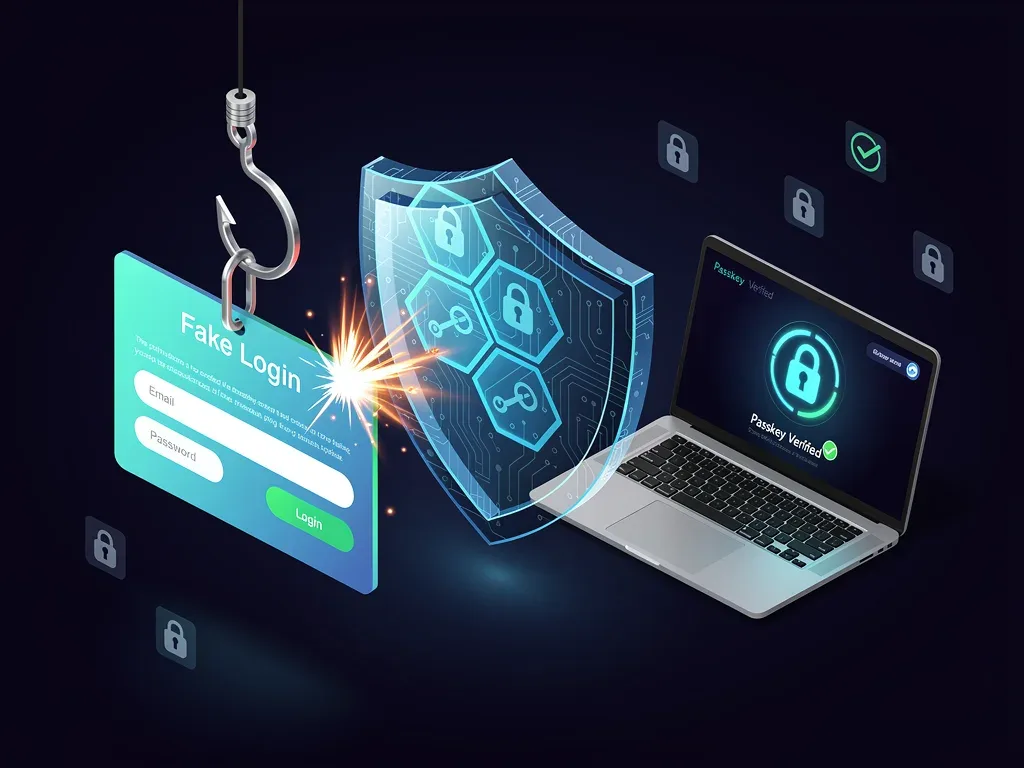
By making the strategic move to passkeys, enterprises are not just adopting a new technology; they are fundamentally transforming their security posture, moving from reactive defense to proactive protection against the most prevalent cyber threats.
Achieving 94% Phishing Elimination: The Evidence
The claim of eliminating credential phishing by 94% with passkeys is not merely theoretical; it is supported by real-world deployments and studies. Organizations that have transitioned to passkey-based authentication have reported a dramatic reduction in successful phishing attacks, demonstrating the technology's effectiveness in a practical context. This significant reduction is a testament to the fundamental security advantages inherent in passkey design.
The core reason for this high success rate is that passkeys are inherently phishing-resistant. Unlike passwords, which can be stolen through deceptive websites, passkeys rely on cryptographic proof of identity that is bound to the legitimate origin. An attacker cannot simply present a fake login page and trick a passkey into authenticating, because the passkey will only work with the authentic domain it was registered to.
Case studies and industry reports
Several prominent tech companies and security organizations have published findings that corroborate the effectiveness of passkeys. These reports often highlight scenarios where traditional MFA methods might still be vulnerable to sophisticated phishing techniques, whereas passkeys maintain their integrity.
- Google's findings: Reported a significant drop in phishing success rates after implementing FIDO-based security keys, a precursor to passkeys.
- Microsoft's push: Actively promoting passwordless solutions, including passkeys, for their enterprise clients, citing enhanced security.
- Industry consortiums: FIDO Alliance continuously publishes data and guidelines supporting the robust security of passkey authentication.
These real-world outcomes provide compelling evidence for the value proposition of enterprise passkey migration. The ability to mitigate such a prevalent and damaging threat by such a large margin represents a monumental leap forward in enterprise cybersecurity.
The effectiveness of passkeys in combating phishing extends across diverse user bases and technical environments, making them a universally applicable solution for modern businesses. This level of protection offers enterprises a much-needed shield against the persistent threat of credential compromise.
Implementation Across Windows and macOS Ecosystems
One of the significant advantages of passkeys is their growing support across major operating systems, including Windows and macOS. This cross-platform compatibility simplifies deployment for enterprises that operate mixed environments, ensuring a consistent and secure authentication experience for all employees, regardless of their preferred device or operating system. Native integration means fewer compatibility issues and a smoother user journey.
Both Microsoft and Apple have been active participants in the FIDO Alliance, contributing to the development and adoption of passkey standards. This collaboration ensures that passkeys are not an afterthought but a core component of their respective security architectures, designed to work seamlessly with existing enterprise management tools and identity providers.
Leveraging native operating system support
The native support for passkeys in Windows and macOS greatly streamlines the implementation process. For instance, Windows Hello allows users to authenticate with biometrics or a PIN, which can now be used to access passkey-protected services. Similarly, macOS and iOS devices leverage Touch ID or Face ID for a similarly intuitive and secure passkey experience.
- Windows Hello integration: Biometric (fingerprint, facial recognition) and PIN-based passkey access.
- macOS/iOS Keychain: Secure storage and synchronization of passkeys across Apple devices.
- Cross-device synchronization: Passkeys can be synchronized securely, allowing users to access services from different devices.
- Enterprise management tools: Integration with existing MDM and identity management solutions for streamlined deployment.
The ability to manage passkeys through enterprise-grade tools simplifies administration and ensures compliance with organizational security policies. This comprehensive support across the most widely used enterprise operating systems makes enterprise passkey migration a practical and highly effective solution.
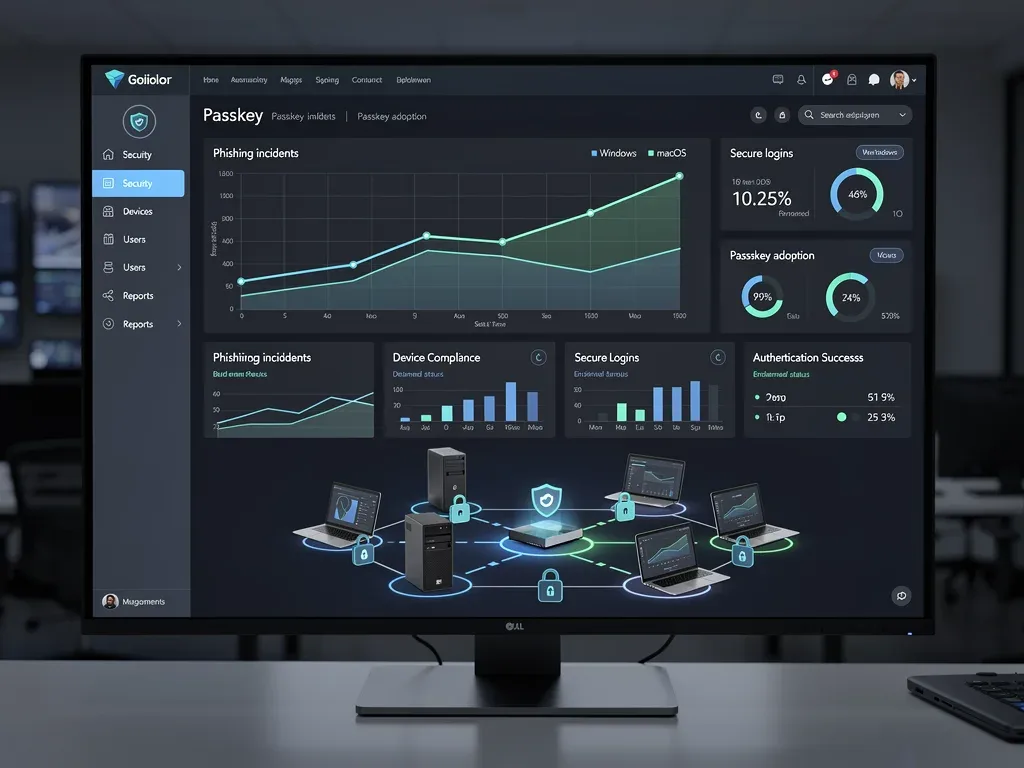
The robust integration within these ecosystems means that enterprises don't have to choose between security and user convenience; passkeys deliver both, fostering a more secure and productive workforce.
Overcoming Challenges in Passkey Adoption
While the benefits of passkeys are clear, enterprises may encounter certain challenges during the adoption phase. These can range from legacy system compatibility to user resistance and the need for comprehensive change management. Addressing these challenges proactively is crucial for a successful and seamless transition to a passkey-centric authentication model.
One primary concern often revolves around integrating passkeys with existing legacy applications that may not natively support FIDO standards. Organizations need to assess their application portfolio and plan for either modernization, integration through identity providers, or phased migration strategies. It's not always a rip-and-replace scenario, but rather a strategic evolution.
Strategies for smooth transition
Effective strategies can mitigate the typical hurdles associated with adopting new security technologies. Comprehensive planning, robust communication, and technical expertise are key pillars for a smooth passkey rollout. Focusing on user experience from the outset can significantly improve adoption rates.
- Phased implementation: Start with non-critical applications or specific user groups.
- User education campaigns: Clearly communicate the 'why' and 'how' of passkeys, emphasizing benefits.
- Dedicated support channels: Provide clear avenues for users to get assistance and resolve issues.
- Integration with identity providers: Leverage existing IdPs to bridge passkeys with legacy systems.
- Vendor collaboration: Work closely with software vendors to ensure passkey compatibility and support.
Another challenge can be ensuring that all employees have compatible devices or access to alternative authentication methods during the transition. A flexible approach that accommodates various user scenarios is vital to avoid disrupting workflows. The goal is to make the transition as invisible and beneficial as possible for the end-user.
By anticipating these challenges and implementing proactive solutions, enterprises can successfully navigate the complexities of enterprise passkey migration, unlocking its full potential for enhanced security and operational efficiency.
The Future of Enterprise Authentication with Passkeys
The widespread adoption of passkeys is not just a temporary solution but a foundational shift towards the future of enterprise authentication. As technology continues to advance, and cyber threats become more sophisticated, the need for inherently secure, user-friendly, and scalable authentication methods will only grow. Passkeys are perfectly positioned to meet these demands, offering a robust framework for digital identity in the years to come.
The ongoing development within the FIDO Alliance and the commitment from major tech players ensure that passkey technology will continue to evolve, becoming even more integrated and versatile. This includes advancements in cross-device synchronization, recovery mechanisms, and broader application support, making passkeys an increasingly indispensable component of enterprise security.
Long-term benefits and strategic outlook
Beyond the immediate benefit of phishing elimination, passkeys offer a host of long-term advantages for enterprises. These include a reduced attack surface, simplified compliance with regulatory requirements, and a significantly improved user experience, which translates to higher employee satisfaction and productivity.
- Reduced attack surface: Eliminates passwords, a prime target for attackers.
- Enhanced compliance: Meets stringent authentication requirements for various regulations.
- Improved user experience: Faster, more convenient logins, boosting productivity.
- Future-proofing security: A scalable and adaptable technology for evolving threats.
- Cost savings: Reduced help desk tickets related to password resets and phishing incidents.
The strategic outlook for enterprise passkey migration is overwhelmingly positive. Organizations that embrace this technology early will gain a significant competitive advantage in terms of security posture and operational resilience. It represents a proactive investment in safeguarding digital assets and maintaining trust in an increasingly interconnected world.
The journey towards a passwordless future with passkeys is well underway, promising a more secure, efficient, and user-centric authentication landscape for all enterprises. It's a move that not only addresses current threats but also positions organizations for future security challenges.
| Key Aspect | Brief Description |
|---|---|
| Phishing Elimination | Passkeys reduce credential phishing by 94% due to their domain-bound cryptographic nature. |
| Core Technology | Utilizes FIDO standards and public-key cryptography, replacing vulnerable passwords. |
| Cross-Platform Support | Seamlessly integrates with Windows and macOS, offering consistent authentication. |
| Enterprise Adoption | Requires phased rollout, user education, and integration with existing IAM infrastructure. |
Frequently Asked Questions About Passkey Migration
What is a passkey and how does it differ from a password?▼A passkey is a digital credential that uses public-key cryptography for authentication, replacing traditional passwords. Unlike passwords, passkeys are phishing-resistant as they are cryptographically bound to specific websites or applications, meaning they cannot be used on fraudulent sites.
How do passkeys eliminate phishing by 94%?▼Passkeys achieve this high level of phishing elimination because they verify the identity of the website or application before authenticating the user. If a user tries to use a passkey on a spoofed site, the cryptographic binding will fail, preventing the credential from being compromised.
Are passkeys supported on both Windows and macOS?▼Yes, both Windows and macOS natively support passkeys, leveraging features like Windows Hello and Apple's Keychain for secure storage and authentication. This cross-platform compatibility simplifies deployment for enterprises with mixed operating system environments.
What are the main benefits for enterprises migrating to passkeys?▼Enterprises benefit from significantly enhanced security against phishing, reduced help desk costs related to password management, improved user experience with faster logins, and a stronger compliance posture. Passkeys also future-proof authentication against evolving cyber threats.
What challenges might an enterprise face during passkey migration?▼Challenges include integrating with legacy applications, managing user adoption and education, and ensuring device compatibility. A phased rollout, strong communication, and leveraging identity providers are key strategies to overcome these hurdles effectively.
Conclusion
The journey towards a passwordless future, spearheaded by enterprise passkey migration, represents a pivotal moment in cybersecurity. The remarkable achievement of eliminating credential phishing by 94% across Windows and macOS environments is a testament to the transformative power of this technology. By embracing passkeys, organizations are not merely adopting a new authentication method; they are fundamentally fortifying their defenses against one of the most persistent and damaging cyber threats. This strategic shift promises not only unparalleled security but also a more seamless and efficient user experience, ultimately driving greater productivity and trust in the digital landscape. As the digital world continues to evolve, passkeys stand out as a critical enabler for a more secure and resilient enterprise ecosystem.
