10-Year Treasury Yield at 4.1%: A Paradigm Shift for US Markets
Advertisements
The 10-year Treasury yield reaching 4.1% marks a significant inflection point, compelling a re-evaluation of long-standing assumptions about asset valuation, risk assessment, and economic growth trajectories across U.S. capital markets.
The financial world is abuzz, and for good reason. The recent ascent of the 10-year Treasury yield to 4.1% is not just another number on a screen; it represents a fundamental recalibration of risk and return in U.S. capital markets. This shift demands careful attention from investors, businesses, and policymakers alike, as its implications ripple across every facet of the economy.
Understanding the 10-Year Treasury Yield's Significance
The 10-year Treasury yield serves as a critical benchmark in the financial landscape, often considered a proxy for long-term interest rates. Its movement to 4.1% is a noteworthy event, signaling a departure from the low-yield environment that characterized much of the past decade. This elevated yield reflects a complex interplay of economic forces, including inflation expectations, Federal Reserve policy, and global economic sentiment.
For many years, investors grew accustomed to historically low interest rates, which fueled asset price appreciation across various sectors. The current yield, however, suggests a return to more normalized, and potentially higher, rates. This normalization has profound implications for how capital is allocated, how businesses make investment decisions, and how consumers perceive their financial futures.
Key Drivers Behind the Yield Increase
- Persistent Inflation: Higher-than-expected inflation has pressured the Federal Reserve to maintain a hawkish stance, leading to expectations of sustained higher rates to bring price stability.
- Federal Reserve Policy: The Fed's commitment to quantitative tightening and its 'higher for longer' rhetoric regarding interest rates directly influence long-term Treasury yields.
- Economic Resilience: Despite rate hikes, the U.S. economy has shown surprising resilience, leading some to believe that higher rates are sustainable without triggering a deep recession.
- Increased Treasury Issuance: Government borrowing needs to fund deficits contribute to a larger supply of Treasuries, which can also push yields higher in the absence of commensurate demand.
The 10-year Treasury yield acts as a barometer for the health and direction of the U.S. economy, influencing everything from mortgage rates to corporate bond yields. Its current level at 4.1% indicates a significant shift in monetary policy effectiveness and market expectations.
Impact on Equity Markets and Valuations
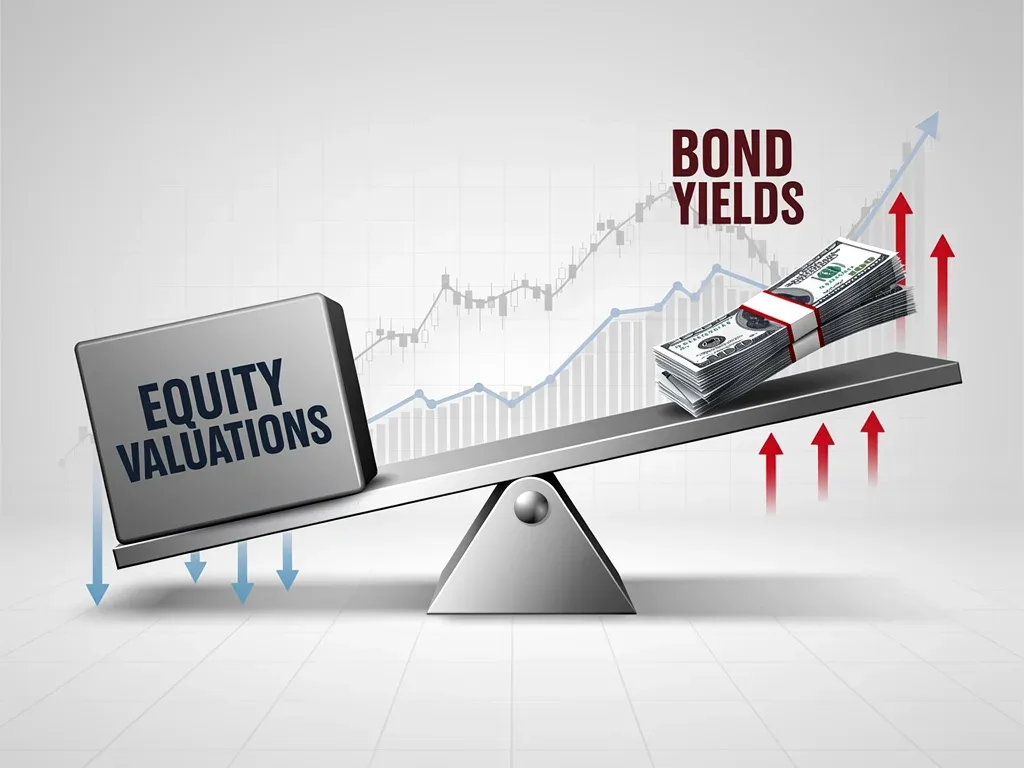
The relationship between bond yields and equity valuations is often inverse, and the rise in the 10-year Treasury yield to 4.1% is exerting considerable pressure on stock prices. Higher yields make fixed-income investments more attractive relative to equities, as investors can achieve a decent return with less risk. This recalibration forces a re-evaluation of how companies are valued, particularly growth stocks that rely heavily on future earnings projections.
When discount rates rise due to higher Treasury yields, the present value of future earnings decreases. This mathematical reality means that companies with earnings far out in the future, typically growth-oriented technology firms, see their valuations compress. Value stocks, often characterized by more immediate and stable earnings, may fare relatively better in such an environment, though they are not entirely immune to broader market shifts.
Shifting Investment Paradigms
The era of TINA (There Is No Alternative) to equities, prevalent during periods of ultra-low interest rates, is fading. Investors now have a viable alternative in bonds, which offers competitive yields without the volatility inherent in stock markets. This shift can lead to capital rotation out of equities and into fixed income, especially from institutional investors seeking stable returns.
Furthermore, higher borrowing costs for corporations can dampen earnings growth, as companies face increased expenses for debt servicing. This can further justify lower equity valuations. Companies with strong balance sheets and less reliance on external financing may be more resilient, while highly leveraged firms could face significant headwinds.
In essence, the 4.1% 10-year Treasury yield forces a more disciplined approach to equity investing, emphasizing fundamentals, cash flow generation, and sustainable business models over speculative growth narratives. The market is becoming more discerning, rewarding profitability and financial prudence.
Ripples Through Corporate Finance and Borrowing Costs
The elevation of the 10-year Treasury yield significantly impacts corporate finance, directly influencing borrowing costs for businesses across all sectors. As the benchmark rate rises, so too do the interest rates on corporate bonds, bank loans, and other forms of debt. This makes it more expensive for companies to raise capital for expansion, acquisitions, or even refinancing existing debt.
Companies that rely heavily on debt financing, especially those with high leverage ratios, will find their interest expenses increasing. This can squeeze profit margins and reduce available capital for reinvestment. Start-ups and smaller businesses, which often have less access to diverse funding sources, may feel this impact more acutely, potentially hindering innovation and growth.
Strategic Responses by Corporations
- Debt Refinancing Challenges: Companies with maturing debt face higher refinancing costs, which can impact their financial stability and operational flexibility.
- Capital Expenditure Review: Higher cost of capital leads businesses to scrutinize new projects more rigorously, demanding higher expected returns to justify investment.
- Focus on Cash Flow: Strong cash flow generation becomes paramount, allowing companies to self-fund operations and reduce reliance on expensive external financing.
- Mergers and Acquisitions: The M&A landscape can shift, with higher financing costs potentially slowing down deal activity or favoring all-cash transactions.
The higher 10-year Treasury yield at 4.1% is compelling corporate treasurers and CFOs to re-evaluate their capital structures and financing strategies. Prudent financial management and a focus on debt reduction or optimization become critical in this new interest rate environment.
Implications for Real Estate and Mortgage Markets
The real estate sector is particularly sensitive to changes in long-term interest rates, and the 10-year Treasury yield's rise to 4.1% has direct and significant implications for mortgage markets. Mortgage rates are closely tied to the 10-year Treasury, meaning that as the yield increases, so does the cost of borrowing for homebuyers and property developers.
Higher mortgage rates translate to increased monthly payments for prospective homeowners, reducing affordability and potentially cooling demand in the housing market. For commercial real estate, higher borrowing costs affect property valuations and development feasibility, leading to a potential slowdown in new construction and investment activity. Existing property owners with adjustable-rate mortgages may also see their payments increase, adding financial strain.
Navigating the Real Estate Landscape
The paradigm shift brought about by the 4.1% 10-year Treasury yield is forcing a recalibration of expectations within the real estate market. Buyers are facing a tougher affordability challenge, and sellers may need to adjust their price expectations. Developers are likely to become more cautious, prioritizing projects with strong underlying demand and robust financial models.
This environment could also lead to a decrease in refinancing activity, as existing homeowners with lower rates choose to stay put. For investors, the focus might shift from purely capital appreciation to income generation, with an emphasis on properties that can deliver consistent rental yields even amidst higher financing costs. The dynamic nature of the market means that adaptability and strategic planning are more crucial than ever.
The Broader Economic Landscape: Inflation and Growth
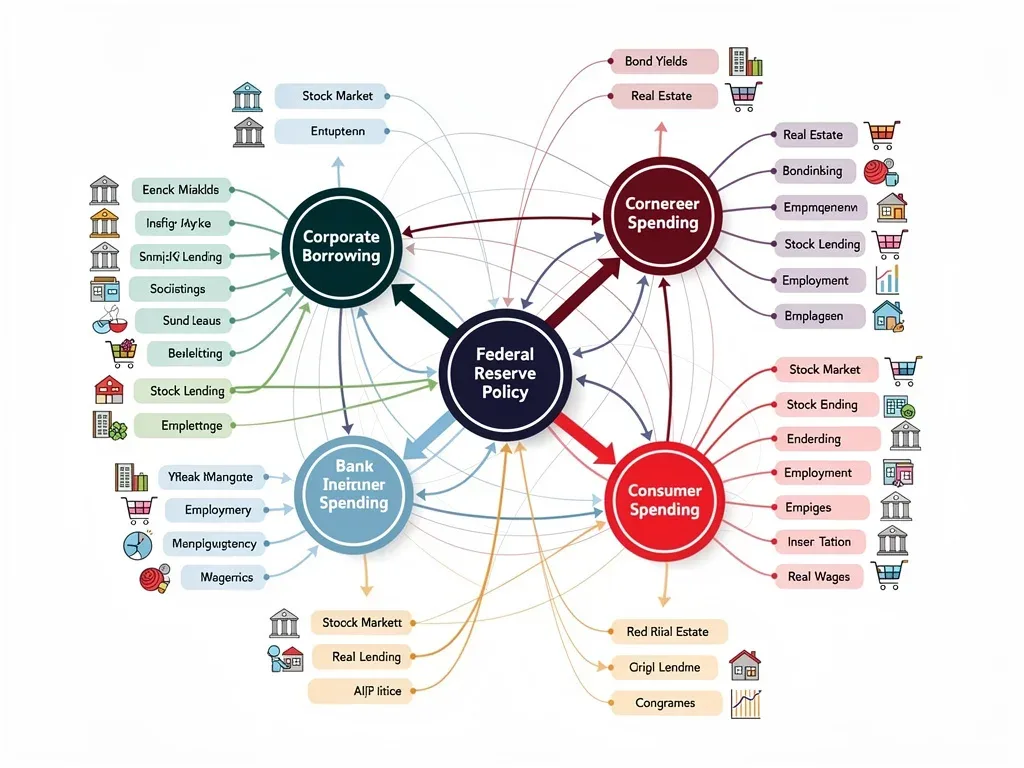
The 10-year Treasury yield at 4.1% is not an isolated phenomenon; it is deeply intertwined with the broader economic narrative of inflation and growth. This elevated yield reflects market expectations that inflation may remain stickier than previously anticipated, requiring the Federal Reserve to keep monetary policy tighter for an extended period. Such a scenario has a dual impact: it aims to curb inflation but also poses risks to economic growth.
Higher interest rates across the board can cool consumer spending and business investment, which are key drivers of economic expansion. While the Fed's goal is a 'soft landing' where inflation is tamed without triggering a recession, the path is narrow. The 4.1% yield suggests that the market is pricing in a higher probability of either prolonged moderate growth with elevated rates or a more significant slowdown as monetary policy takes full effect.
Policy Challenges and Market Reactions
Policymakers face the delicate task of balancing inflation control with economic stability. The current yield environment indicates that the market has confidence in the Fed's resolve to combat inflation, but also acknowledges the potential trade-offs. Businesses and consumers are already adjusting their behaviors in response to higher borrowing costs and the uncertainty surrounding future economic conditions.
- Consumer Spending: Higher rates on credit cards, auto loans, and mortgages can reduce discretionary spending, impacting retail and service sectors.
- Business Investment: Companies may delay or scale back expansion plans due to increased cost of capital and uncertain demand outlook.
- Government Debt: The cost of servicing the national debt increases, potentially crowding out other government spending priorities.
- Global Implications: Higher U.S. yields can attract global capital, strengthening the dollar but potentially putting pressure on other economies.
The current 10-year Treasury yield at 4.1% underscores a period of significant economic adjustment, where the emphasis shifts towards combating inflation, even if it means tempering growth expectations. The market's pricing of risk and return is being fundamentally reshaped.
Investment Strategies in a Higher Yield Environment
For investors, the 10-year Treasury yield at 4.1% necessitates a re-evaluation of established investment strategies. The 'free money' era is over, and a more discerning approach to portfolio construction is required. Fixed-income investments, once considered merely a hedge against equity volatility, now offer attractive standalone returns, prompting a potential reallocation of assets.
In this environment, active management may gain an edge over passive strategies, as identifying resilient companies and undervalued assets becomes more critical. Diversification across different asset classes and geographies, along with a focus on quality and strong balance sheets, will be key to navigating the evolving market landscape. Risk assessment also takes on new importance, as the cost of capital impacts every investment decision.

Adapting Your Portfolio
Investors should consider several adjustments to their portfolios:
- Re-evaluating Fixed Income: Bonds, particularly short-to-intermediate duration Treasuries and high-quality corporate bonds, offer competitive yields and a potential source of stable income.
- Selective Equity Exposure: Focus on companies with strong fundamentals, pricing power, low debt, and consistent free cash flow. Value stocks and dividend-paying companies might be more appealing.
- Alternative Investments: Explore alternatives like private credit or real assets that may offer diversification and inflation protection.
- Cash Management: Higher yields on money market funds and short-term instruments make cash a more attractive holding for liquidity and tactical opportunities.
The shift in the 10-year Treasury yield to 4.1% marks a return to a more traditional investing environment where capital has a real cost. This demands a more disciplined, value-oriented, and risk-aware approach from all market participants.
| Key Aspect | Brief Description of Impact |
|---|---|
| Equity Valuations | Higher discount rates reduce present value of future earnings, pressuring growth stock valuations. |
| Corporate Borrowing | Increased cost of debt for businesses, impacting expansion, refinancing, and profitability. |
| Real Estate & Mortgages | Higher mortgage rates reduce affordability and cool demand in both residential and commercial markets. |
| Economic Growth | Tighter monetary conditions aim to curb inflation but may temper consumer spending and business investment. |
Frequently Asked Questions About Treasury Yields
What is the 10-year Treasury yield, and why is it important?▼The 10-year Treasury yield is the return an investor receives on a U.S. government bond that matures in 10 years. It's crucial because it serves as a benchmark for long-term interest rates, influencing everything from mortgage rates to corporate borrowing costs and the valuation of assets across capital markets.
How does a higher 10-year Treasury yield affect stock prices?▼A higher yield typically makes fixed-income investments more attractive relative to stocks, leading investors to demand higher returns from equities. This often results in lower valuations for stocks, especially growth stocks, as the present value of their future earnings is discounted at a higher rate.
What does the 4.1% yield imply for the U.S. economy?▼The 4.1% yield suggests market expectations of persistent inflation and a Federal Reserve committed to tighter monetary policy for longer. This implies higher borrowing costs for consumers and businesses, potentially slowing economic growth while aiming to bring inflation under control.
Should investors change their strategies due to this yield increase?▼Yes, investors should re-evaluate their portfolios. Higher yields offer better returns on bonds, making them more competitive. A focus on quality, strong cash flow, and less leveraged companies in equities, alongside diversification, becomes more important in this new environment.
What is the relationship between the 10-year Treasury yield and mortgage rates?▼Mortgage rates are closely correlated with the 10-year Treasury yield. As the yield rises, mortgage rates typically follow suit, increasing the cost of borrowing for homebuyers and impacting housing affordability and demand.
Conclusion
The ascent of the 10-year Treasury yield to 4.1% undeniably marks a significant paradigm shift for U.S. capital markets. This elevated rate is not merely a technical adjustment; it represents a fundamental re-pricing of risk and return that reverberates across equities, corporate finance, real estate, and the broader economic landscape. Investors and businesses must adapt to an environment where capital is no longer cheap, demanding greater discipline, strategic foresight, and a renewed focus on fundamental value. While the path ahead may present challenges, understanding these shifts is crucial for navigating the evolving financial terrain and identifying new opportunities in this transformed market.
