U.S. Trade Deficit Contracts by $4.5 Billion: An Economic Analysis
Advertisements
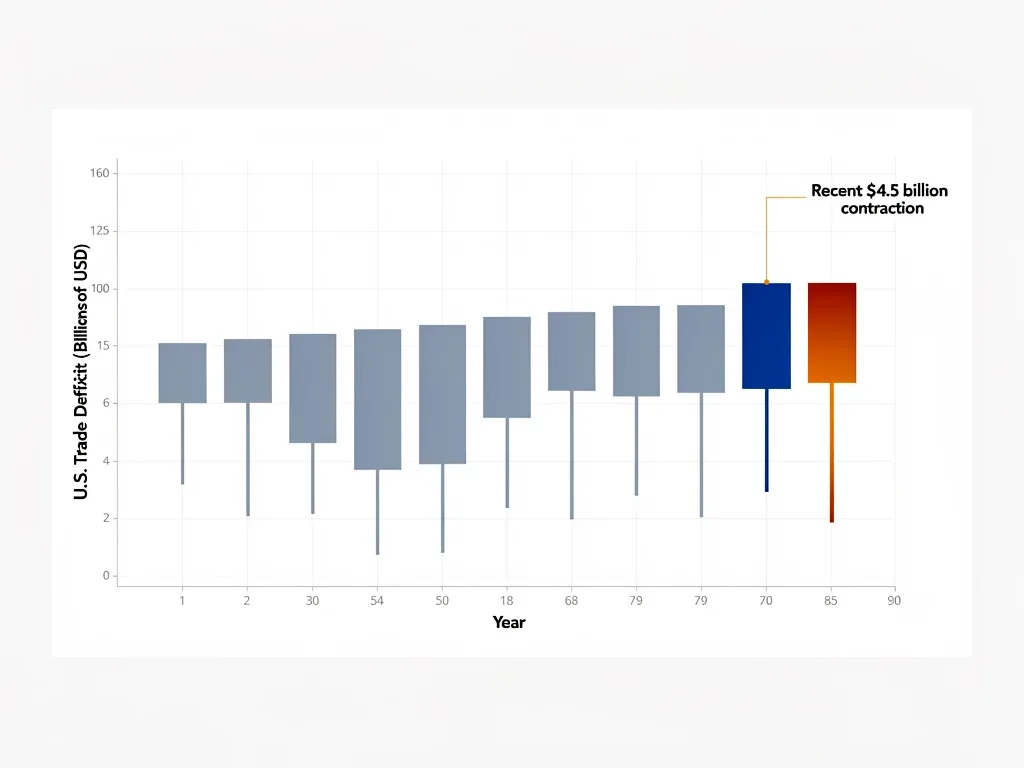
The U.S. trade deficit recently contracted by $4.5 billion, reflecting evolving global export demands and their profound impact on the nation's economic health and international trade dynamics.
The recent news that the U.S. trade deficit contracts by $4.5 billion: an economic analysis of shifting global export demands has certainly piqued the interest of economists, policymakers, and everyday citizens alike. What does this contraction signify for the American economy, and what factors are truly at play in this intricate global dance of imports and exports? Let's delve into the details.
Understanding the U.S. Trade Deficit
The U.S. trade deficit represents the amount by which the nation's imports of goods and services exceed its exports. A contraction in this deficit, as recently observed with a $4.5 billion reduction, indicates that the gap between what the U.S. buys from other countries and what it sells to them is narrowing. This can occur either through a decrease in imports, an increase in exports, or a combination of both. It's a key economic indicator, often reflecting the health of domestic production, consumer demand, and global economic conditions.
Historically, the U.S. has run a trade deficit for many years, driven by strong consumer demand for foreign goods and a relatively open economy. However, the magnitude and fluctuations of this deficit are closely watched, as they can influence currency values, employment, and overall economic growth. A sustained contraction might suggest a rebalancing of trade relations or a shift in the global economic landscape.
What Drives Trade Deficits?
Several factors contribute to the size and persistence of a trade deficit. These often include consumer spending habits, the strength of the domestic currency, international capital flows, and the competitiveness of domestic industries. For instance, a strong U.S. dollar makes imports cheaper for American consumers and exports more expensive for foreign buyers, potentially widening the deficit. Conversely, a weaker dollar could help narrow it.
- Consumer Demand: High domestic demand for imported goods.
- Exchange Rates: A strong dollar makes imports cheaper.
- Global Demand: Weaker foreign demand for U.S. exports.
- Production Costs: Differences in manufacturing costs globally.
Understanding these underlying drivers is crucial for interpreting the recent contraction. Is it a sign of robust export growth, or perhaps a slowdown in domestic consumption of imports? The answer likely involves a complex interplay of these elements, each contributing to the overall economic picture.
Analyzing the $4.5 Billion Contraction
The recent $4.5 billion contraction in the U.S. trade deficit is a notable event that warrants detailed examination. This reduction suggests a shift in the dynamics of international trade, potentially driven by various factors both domestically and globally. Pinpointing the exact causes requires looking at specific sectors and the broader economic environment.
One potential contributor to this contraction could be an increase in U.S. exports. Stronger demand from key trading partners for American goods and services, perhaps due to their own economic recoveries or specific market needs, would naturally boost export figures. Alternatively, a decrease in U.S. imports could also lead to a narrower deficit. This might stem from reduced consumer spending on foreign goods, a shift towards domestic production, or even supply chain disruptions that limit the availability of imports.
Key Sectors Influencing the Contraction
To fully grasp the nature of this contraction, it's essential to identify which sectors have experienced the most significant changes. For example, a surge in agricultural exports due to favorable global crop conditions or increased demand from a particular region could play a substantial role. Similarly, a decline in imports of consumer electronics or automotive parts could also contribute to the overall deficit reduction. These sectoral shifts often reflect underlying economic trends and policy impacts.
- Manufacturing Exports: Increased global demand for American-made machinery or technology.
- Energy Exports: Higher volumes of oil and gas exports due to international market conditions.
- Consumer Goods Imports: A potential dip in American consumer purchases of foreign goods.
- Services Trade: Growth in U.S. service exports, such as financial or consulting services.
The interplay between these sectors provides a more nuanced understanding of the deficit's movement. It's rarely a single factor but rather a combination of improvements in some areas and adjustments in others that leads to the overall contraction.
Shifting Global Export Demands
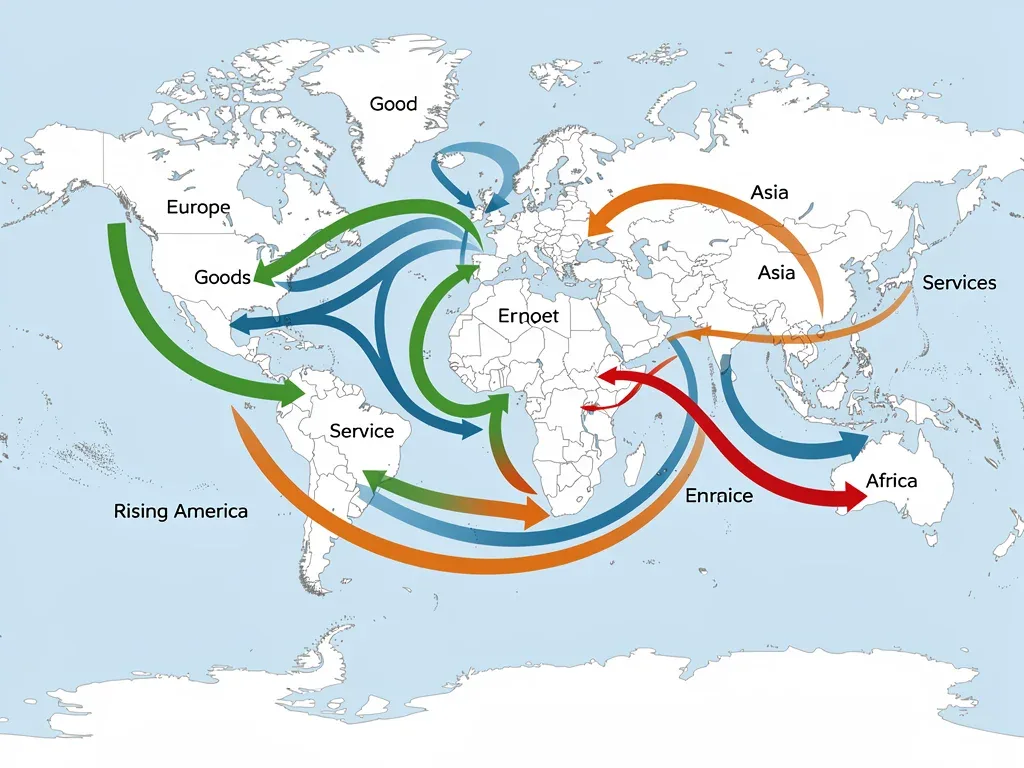
The phrase "shifting global export demands" is central to understanding why the U.S. trade deficit contracts by $4.5 billion: an economic analysis of shifting global export demands. This refers to changes in what other countries are buying and from whom. When global demand for U.S. goods and services increases, it directly boosts American exports, contributing to a smaller trade deficit. These shifts can be influenced by a myriad of factors, including economic growth in other nations, geopolitical developments, and technological advancements.

For instance, if major economies like those in Europe or Asia experience strong economic expansion, their need for raw materials, manufactured goods, and advanced technologies often rises. The U.S., with its diverse industrial base, is well-positioned to meet some of these demands. Conversely, if these economies face downturns, their demand for U.S. exports might soften, potentially widening the deficit. Therefore, monitoring global economic health is crucial for anticipating changes in U.S. trade balances.
Factors Driving Export Demand Changes
Several underlying forces contribute to the ebb and flow of global export demands. These are not static and can evolve rapidly, making international trade a dynamic and sometimes unpredictable arena. Understanding these factors helps to explain the recent contraction and anticipate future trends.
- Economic Growth Abroad: Stronger economies in partner countries increase their import capacity.
- Commodity Prices: Fluctuations in global prices for oil, agricultural products, or metals can impact export values.
- Technological Advancements: U.S. innovation creating new export markets for high-tech products.
- Trade Agreements: New or revised trade deals can open up or restrict access to foreign markets.
These elements collectively shape the international appetite for American products. A positive shift in any of these areas can significantly contribute to an increase in U.S. exports, thereby helping to narrow the trade deficit.
Economic Implications for the U.S.
A contraction in the U.S. trade deficit, particularly one of $4.5 billion, carries several significant economic implications for the nation. While a smaller deficit is often viewed positively, its specific impact depends on the underlying causes. If the contraction is driven by robust export growth, it suggests a healthy and competitive domestic economy, potentially leading to job creation in export-oriented industries and increased national income.
Conversely, if the contraction is primarily due to a significant drop in imports, it could signal a slowdown in domestic consumer demand or a weakening economy, which might not be as favorable. Therefore, discerning the primary drivers is crucial for a comprehensive economic assessment. A healthy trade balance is generally desirable as it can contribute to a more stable currency and reduce reliance on foreign capital.
Impact on Domestic Industries and Employment
The effects of a narrowing trade deficit ripple through various sectors of the U.S. economy. Increased exports mean more production, which in turn can lead to higher employment rates in manufacturing, agriculture, and services. Companies that successfully expand their international market share may invest more in research and development, further boosting innovation and competitiveness.
- Job Creation: Growth in export sectors often leads to new employment opportunities.
- Industrial Output: Increased demand for U.S. goods stimulates domestic production.
- Wage Growth: Stronger industries can support higher wages and better benefits for workers.
- Technological Advancement: Export competitiveness can drive innovation and efficiency.
On the other hand, if import reductions are due to a decline in consumer purchasing power, some domestic industries that rely on imported components or goods for resale might face challenges. A balanced analysis considers both the positive impacts of increased exports and any potential downsides from reduced imports.
Government Policies and Trade Balance
Government policies play a pivotal role in shaping the U.S. trade balance and influencing global export demands. Trade policies, such as tariffs, quotas, and trade agreements, can directly impact the cost and volume of imports and exports. For example, imposing tariffs on certain imported goods can make them more expensive, potentially reducing import volumes and encouraging domestic production. Similarly, negotiating free trade agreements can open up new markets for U.S. exports, boosting sales abroad.
Beyond direct trade policies, broader economic policies also have an effect. Fiscal policies, like government spending and taxation, can influence domestic demand and inflation, which in turn affect imports. Monetary policies, particularly interest rate decisions by the Federal Reserve, impact the value of the U.S. dollar, making exports more or less competitive on the global market. The recent contraction could partly be a reflection of past or ongoing policy decisions.
Recent Policy Impacts on Trade
Over the past few years, various policy initiatives have aimed to rebalance U.S. trade relationships. These have included efforts to reduce trade barriers for American products, address unfair trade practices by other nations, and promote domestic manufacturing. The effectiveness of these policies can be seen in shifts in trade data.
- Tariff Adjustments: Changes in import duties can alter trade flows.
- Trade Negotiations: Bilateral and multilateral agreements seek to enhance market access for U.S. goods.
- Domestic Production Incentives: Policies encouraging 'Made in America' can reduce reliance on imports.
- Currency Manipulation Concerns: Efforts to address perceived currency undervaluation by trading partners.
The long-term impact of these policies on the trade deficit is a subject of ongoing debate among economists. While some argue that protectionist measures can help narrow the deficit, others contend that they may lead to higher consumer prices and retaliatory actions from trading partners, ultimately harming overall economic welfare. The recent $4.5 billion contraction provides a data point for evaluating these policy effects.
Future Outlook and Challenges
Looking ahead, the future trajectory of the U.S. trade deficit will depend on a confluence of global and domestic factors. While a $4.5 billion contraction is a positive sign, sustaining this trend or further narrowing the deficit presents its own set of challenges. Global economic growth, particularly in major U.S. trading partners, will continue to be a significant determinant of export demand. Any slowdowns abroad could dampen the appetite for American goods and services.
Domestically, consumer spending patterns, inflation, and the strength of the dollar will also play crucial roles. A robust domestic economy with strong consumer demand might increase imports, potentially widening the deficit again. Conversely, if U.S. industries continue to innovate and become more competitive on the global stage, they could drive sustained export growth, helping to keep the deficit in check. Geopolitical stability and ongoing trade negotiations will also heavily influence the trade landscape.
Potential Headwinds and Opportunities
Several factors could either hinder or help the U.S. in managing its trade balance in the coming years. Supply chain resilience, for example, has become a major focus, and efforts to nearshore or reshore production could reduce import reliance. Technological advancements, particularly in areas like artificial intelligence and green energy, could open up new export opportunities for American companies.
- Global Economic Slowdown: A potential decrease in international demand for U.S. products.
- Inflationary Pressures: Higher domestic prices could make U.S. exports less competitive.
- Geopolitical Tensions: Trade disputes or conflicts can disrupt established trade routes and relationships.
- Technological Innovation: New U.S. products and services can create fresh export markets.
The ability of the U.S. to adapt to these shifting dynamics, both in terms of policy and industrial strategy, will be key to maintaining a favorable trade balance. The recent contraction provides a moment to assess these forces and strategize for future economic stability and growth.
| Key Aspect | Brief Description |
|---|---|
| Deficit Contraction | U.S. trade deficit reduced by $4.5 billion, indicating a narrower gap between imports and exports. |
| Export Demands | Shifting global demand for U.S. goods and services contributes significantly to the change. |
| Economic Impact | Potential for job creation, increased industrial output, and a more stable currency. |
| Policy Influence | Government trade and economic policies play a critical role in shaping trade balances. |
Frequently Asked Questions About the U.S. Trade Deficit
What does a U.S. trade deficit contraction mean for the economy?▼A contraction means the gap between U.S. imports and exports is narrowing. This can signal stronger export performance, reduced import demand, or a combination, potentially leading to job growth and a more balanced economy.
What caused the $4.5 billion reduction in the trade deficit?▼The reduction likely stems from a mix of increased U.S. exports, possibly driven by stronger global demand, and/or a decrease in imports, which could be due to domestic consumption shifts or supply chain changes.
How do global export demands influence the U.S. trade deficit?▼When other countries demand more U.S. goods and services, American exports increase. This boosts the nation's earnings from trade, directly contributing to a smaller trade deficit and a more favorable balance.
Are trade deficit contractions always positive for the U.S. economy?▼Not always. While often positive, the context matters. If the contraction is due to falling imports because of weak domestic demand, it could signal economic slowdown rather than robust growth, requiring deeper analysis.
What role do government policies play in the trade deficit?▼Government policies like tariffs, trade agreements, and monetary decisions significantly influence the cost and volume of imports and exports. These policies can either expand or contract the trade deficit.
Conclusion
The recent contraction of the U.S. trade deficit by $4.5 billion offers a compelling snapshot of the dynamic forces at play in the global economy. This shift underscores the intricate relationship between domestic economic health, international market demands, and strategic policy interventions. While the immediate causes may vary—from surging U.S. exports to nuanced adjustments in import patterns—the overall effect points to an evolving trade landscape. For the United States, this contraction can bring about positive implications, including potential job growth, enhanced industrial output, and a more stable economic outlook, provided it is driven by sustainable increases in export competitiveness rather than a decline in domestic demand. As we move forward, careful monitoring of global economic trends and adaptive policy-making will be essential to harness these shifts for sustained national prosperity.
