
National Unemployment Holds at 3.9%: Labor Force Changes Analyzed
The national unemployment rate remains steady at 3.9%, a critical figure prompting a deep dive into the recent changes in labor force participation and what these trends signify for the broader economic landscape.
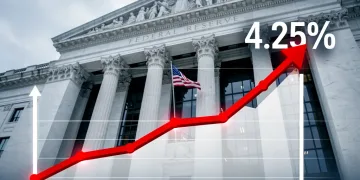
Federal Reserve Rate Outlook: Impact of 4.25% Policy Rate on U.S. Growth
The Federal Reserve's 4.25% policy rate significantly influences the U.S. economy, affecting borrowing costs, inflation, and investment decisions. This rate reflects the Fed's strategy to balance economic growth with price stability, impacting businesses and consumers nationwide.

Producer Price Index Rises 0.3%: Wholesale Cost Pressures Examined
The recent 0.3% increase in the Producer Price Index signals growing wholesale cost pressures, impacting the domestic supply chain and potentially leading to higher consumer prices across the United States. This rise warrants close monitoring for its ripple effects.

Commercial Real Estate Devaluation: Macroeconomic Exposure
Commercial real estate devaluation, a significant challenge for the $2.2 trillion sector, is influenced by macroeconomic shifts. Understanding these dynamics is crucial for investors and stakeholders seeking to manage exposure and mitigate financial risks effectively.

Fed's $7 Trillion Balance Sheet: Addressing Banking Liquidity Pressures
The Federal Reserve maintained a $7 trillion balance sheet posture primarily to address and mitigate significant liquidity pressures within the banking sector, ensuring financial system stability during periods of economic uncertainty and market stress.

Consumer Spending Rises 1.8%: Real Wage Gains Reshape Economy
Fueled by significant real wage gains, consumer spending has risen by 1.8%, profoundly reshaping the macroeconomic trajectory in the United States and influencing future economic stability and growth prospects.

Household Savings Rate Hits 4.6%: Macroeconomic Resilience Insights
The US household savings rate recently reached 4.6%, a significant indicator revealing evolving consumer behavior and shifting liquidity reserves that are crucial for understanding macroeconomic resilience.
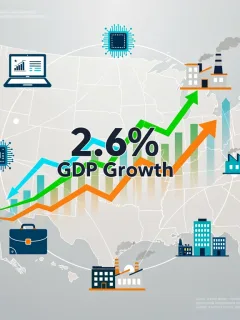
U.S. GDP Expands by 2.6%: Key Sector Growth Insights
The U.S. GDP recently expanded by 2.6%, driven by robust performance in key sectors like technology, manufacturing, and consumer services, indicating a resilient economic landscape.

New 15% Tariff Adjustments: Ripple Effect on U.S. Manufacturing
New 15% tariff adjustments are poised to significantly reshape U.S. manufacturing productivity, influencing everything from raw material costs and supply chain resilience to global market competitiveness and domestic job creation.
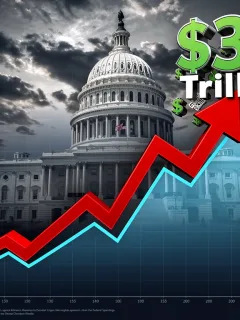
US National Debt: $36 Trillion & Federal Spending Impact
The rising $36 trillion US national debt significantly impacts federal spending by diverting substantial portions of the budget to interest payments, potentially reducing funds for essential public services and future investments, posing profound economic challenges.